

Last updated:
Quick answer: The best engineered stone alternatives for kitchen benchtops in NZ include porcelain slabs, sintered stone (Dekton), granite, marble, compact laminate, timber, concrete, and the new generation of low-silica and silica-free engineered surfaces — each offering different trade-offs across price, durability, and aesthetics.
Engineered stone (that glossy, joint-free quartz surface you’ll find in kitchens from Remuera to Red Beach) has dominated the Auckland benchtop market for the better part of two decades. It’s heaps popular, and for good reason: consistent colour, low porosity, and a range of looks that suit everything from a Grey Lynn villa renovation to a brand-new Millwater build. But it’s no longer the only smart choice on the table.
If you’re redesigning your kitchen right now, the benchtop conversation is more interesting than it’s ever been. Across the Tasman, Australia banned engineered stone benchtops, panels and slabs from 1 July 2024, a ban Safe Work Australia describes as a world first, made in response to rising silicosis among engineered stone workers. New Zealand hasn’t followed. MBIE consulted from December 2024 to March 2025 on options ranging from tighter workplace controls to a potential ban. As things stand, engineered stone is still legal to buy and install in New Zealand, though regulation is tightening and the direction of travel is clear.
Meanwhile, Caesarstone, one of our supply partners, now markets its New Zealand range as crystalline silica free mineral surfaces, and Cosentino has cut the silica content of Silestone. New surface technologies are arriving in NZ from Europe at pace. And some of the alternatives that were once considered premium-only are now genuinely competitive on price.
The bottom line: there’s never been a better time to look beyond default engineered stone. Whether you’re drawn to the drama of a full-slab porcelain benchtop, the warmth of oiled timber, the permanence of granite, or the next-generation look of sintered stone, this guide covers the ten best engineered stone alternatives available in New Zealand right now. We’ll walk through honest pros and cons, real NZ price ranges per lineal metre, maintenance realities, and which material works best for which type of kitchen — so you can make a decision you’ll still be happy with in fifteen years.
What Is an Engineered Stone Benchtop?
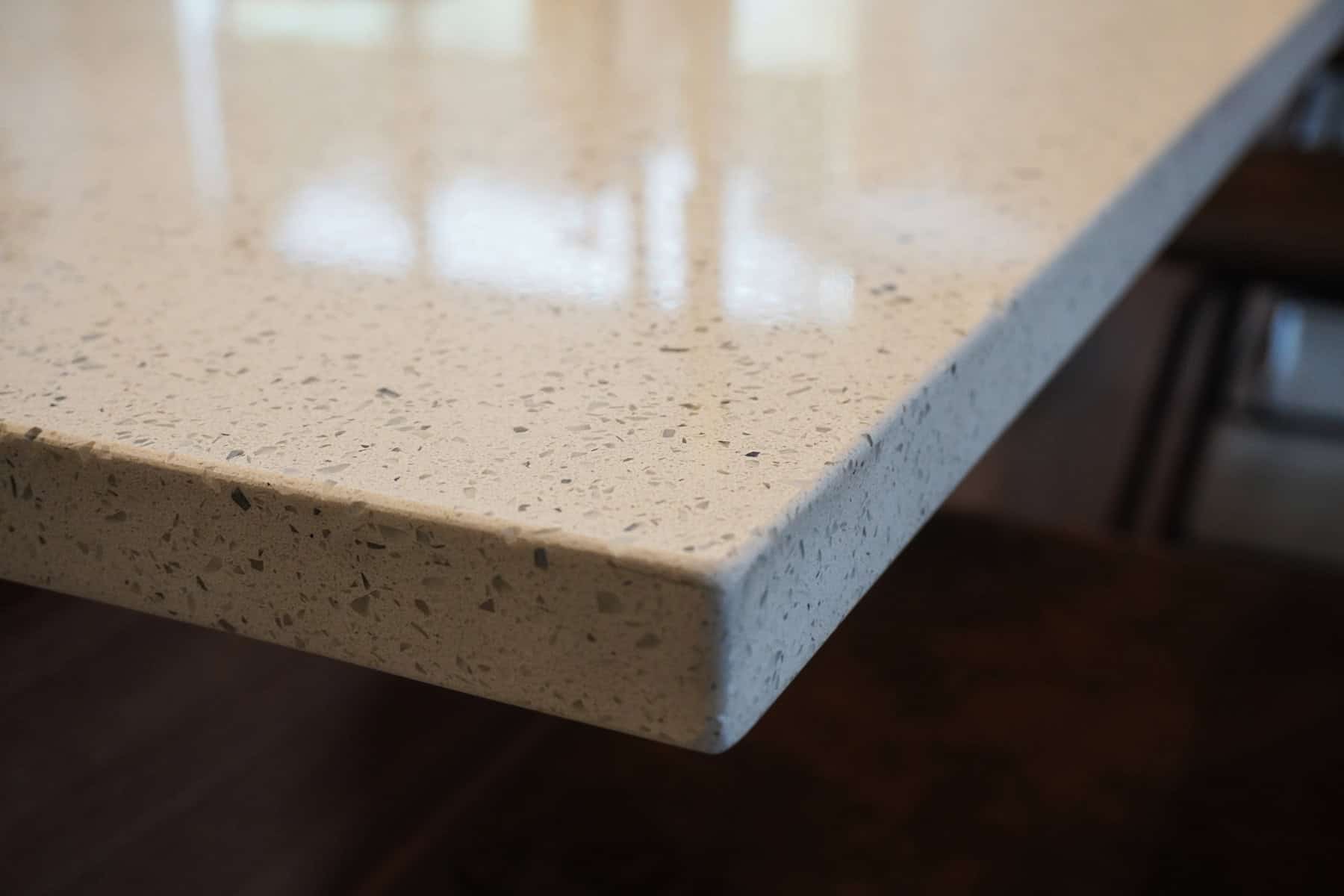
An engineered stone benchtop is a manufactured slab made mostly of crushed quartz and other minerals bound together with resin, then cut and polished to size by a stone fabricator. You’ll see the same product called quartz, composite stone, man-made stone or manufactured stone, and brand names like Caesarstone and Silestone get used as shorthand for the whole category. The reason it matters which name you’re given is silica: WorkSafe states that engineered stone can contain in excess of 90% crystalline silica, against less than 45% for natural stone such as granite.
What engineered stone does well, and where it struggles
- Consistent colour and pattern. Slabs match from one to the next, so long runs and islands join cleanly.
- Low porosity. It doesn’t need sealing like granite or marble, and everyday spills wipe off.
- Heat is its weak point. Direct heat from a pan can mark or crack it, so it sits in the “moderate, avoid direct heat” row of our tables below. Use a trivet.
- Edges and corners chip if something heavy catches them, which is why a small arris or pencil round on the edge is worth asking for.
What engineered stone benchtops cost in NZ
On the figures in this guide, engineered stone runs about $400 to $800 per lineal metre installed. A lineal metre here means one metre along a standard 600mm-deep bench, which is 0.6 m² of surface, so a price quoted per square metre will look bigger for the same slab. The number moves with the colour, edge profile, sink and hob cut-outs, waterfall ends and how far the fabricator has to carry the slab. Our kitchen benchtop costs guide goes through the full breakdown, and the rest of this page compares engineered stone with the ten alternatives worth looking at.
Why Auckland Homeowners Are Rethinking Engineered Stone Benchtops
Before we get into the alternatives, it’s worth understanding why this conversation is happening at all — because it’s not just regulatory pressure driving it. Taste is shifting. Technology has caught up. And some of the downsides of engineered stone that have quietly frustrated homeowners for years are finally getting honest airtime.
The Silica Story: What’s Actually Happening in New Zealand
WorkSafe New Zealand puts it plainly: engineered stone can contain in excess of 90% crystalline silica, considerably higher than natural stone such as granite, which sits under 45%. When engineered stone is cut, shaped or drilled during fabrication and installation, it generates respirable silica dust that can cause silicosis, an irreversible and potentially fatal lung disease. A Public Health Communication Centre briefing estimated that roughly 1,000 New Zealand workers have been exposed while fabricating engineered stone over the past 15 years, and that applying Australian rates, around 250 of them could go on to develop silica-related disease.
Australia’s ban was the first of its kind anywhere in the world. In New Zealand, MBIE consulted from 18 December 2024 to 18 March 2025 on how work with engineered stone should be regulated. The options included specific mandatory controls on processing engineered stone, licensing of workplaces that fabricate it, mandatory health or exposure monitoring, and a potential ban on its import, use and supply. MBIE published its summary of submissions on 24 November 2025, and its consultation page lists no decision since (checked 30 Sep 2026). Engineered stone is still legal to buy and install here, so the regulatory picture is still open, and that uncertainty is shaping decisions homeowners and suppliers are making right now.
💡 Design tip: If you do choose engineered stone for your Auckland kitchen, ask the fabricator how they control silica dust in their workshop and on site (wet cutting, on-tool extraction, respiratory protection) and what accreditation they hold. WorkSafe’s engineered stone guidance is the reference for what good practice looks like.
The good news for homeowners is this: the health risk from silica dust is a fabrication and installation issue, not a liveability issue. Your installed engineered stone benchtop does not release silica dust during normal use. The risk is to the trades who cut and shape it — which is why the regulatory focus is on workplaces, not kitchens. That said, understanding the broader context helps you make an informed choice, particularly if you value knowing your renovation isn’t creating harm somewhere down the supply chain.
What’s Changed in the Alternatives Market
Even setting aside the regulatory question, engineered stone alternatives have improved dramatically in the last five years. Porcelain slab technology now produces thin benchtop panels with the visual depth and colour variation of natural stone, at a fraction of the weight. Sintered stone products like Dekton and Lapitec have become far more accessible in NZ as distribution has improved. And compact laminate, the solid-core cousin of standard laminate, is available in NZ and holds its own against stone on several durability measures.
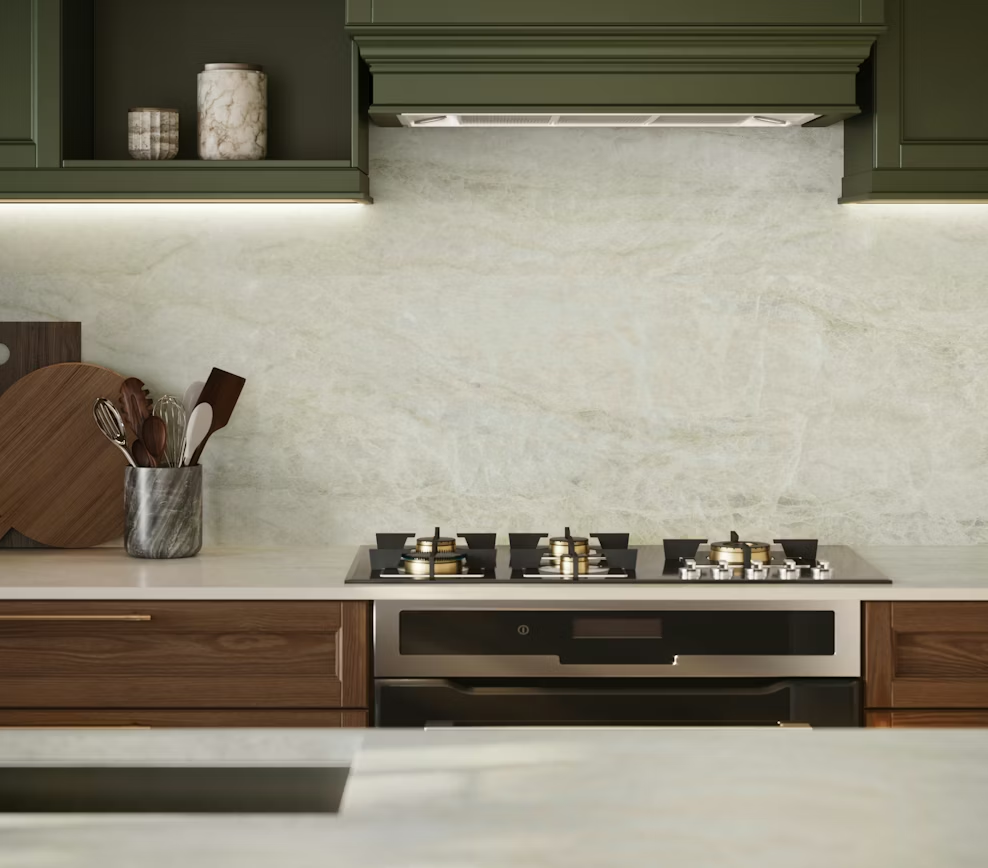
Meanwhile, the low-silica and silica-free engineered surface category has moved faster than most people realise. Cosentino reformulated Silestone with its HybriQ+ technology and now sells it as a mineral low-silica surface. Caesarstone’s New Zealand range is now marketed as crystalline silica free. These products look and perform like traditional engineered stone but address the fabrication health concerns directly. They’re currently available through select suppliers in New Zealand and represent the direction the market is heading.
Matching Material to Kitchen Type
One of the most useful things we do in our initial consultations at Little Giant Interiors is help clients understand that benchtop material selection isn’t just about aesthetics — it’s about matching the material’s actual performance characteristics to how a kitchen genuinely gets used. A household with young kids and a serious home baker need completely different things from a benchtop.
A material that looks stunning in a magazine shoot might be a poor match for a busy family kitchen with heavy daily use, hot pans, red wine, and the full chaos of Kiwi entertaining. Conversely, a material you’d never look twice at in a showroom might turn out to be the perfect workhorse benchtop that still looks immaculate a decade later. That’s the conversation we have before any material decision gets made, and it shapes everything that follows in the design process.
“The clients who are happiest with their benchtops five years later are the ones who chose the material that matched their lifestyle, not the one that matched their Pinterest board. Both can be the same choice, but only when you understand what each material actually asks of you.”
— Little Giant Interiors Design Team
With that context set, let’s get into the ten alternatives worth knowing about — in order of increasing price point, from most accessible to most premium.
Options 1 & 2: Laminate and Compact Laminate Benchtops — The Underrated Workhorses
If you’ve been assuming laminate is the bargain-bin option you outgrow as soon as the budget allows, the last five years of product development might surprise you. Standard laminate and its high-performance sibling, compact laminate, span a huge range — from basic postform to commercial-grade surfaces that genuinely rival stone on some performance metrics.
Standard Laminate Benchtops
Standard laminate (sometimes called HPL, high-pressure laminate) is one of the most common benchtop materials in New Zealand homes, and it’s earned that position honestly. Laminate benchtops in NZ typically cost between $120 and $350 per lineal metre installed, making them accessible at virtually any renovation budget. They’re lightweight, easy to fabricate without silica dust, available in hundreds of colours and textures through suppliers like Laminex NZ, and simple to repair or replace if damaged.
Modern laminate has come a long way from the flimsy, easily-chipped surfaces of 1980s kitchens. Today’s grades feature significantly improved scratch resistance, realistic stone and timber textures, and matt finishes that don’t show fingerprints. The weak points remain: standard laminate is vulnerable at the joins and edges where moisture can penetrate, it can swell if water sits on it for extended periods, and it isn’t heat-proof — put a hot pan directly on a laminate surface and you’ll know about it. Use trivets and wipe up spills promptly, and a well-made laminate benchtop will give a family kitchen many years of service.
💡 Design tip: If you’re going with laminate, square-edge profiling with an integrated splashback upstand looks far more contemporary than the old bullnose edge — and eliminates the most common moisture entry point. Ask your designer about one-piece upstand options.
Compact Laminate — A Genuine Stone Alternative
Compact laminate is a different product entirely from standard laminate, and it deserves more attention in the NZ market than it currently gets. Made from multiple layers of resin-impregnated kraft paper compressed under extreme heat and pressure, compact laminate is the same material used for commercial washroom partitions, laboratory benchtops, and food-service counters in commercial kitchens. It’s dense, homogeneous (the colour runs right through the panel — no chipboard core), and genuinely impressive on performance.
In a domestic kitchen, compact laminate benchtops offer better heat tolerance than standard laminate (still use a trivet for pans straight off the hob), excellent impact resistance, resistance to most common household chemicals, and, critically, no silica dust during fabrication. Compact laminate benchtops in NZ typically cost between $350 and $600 per lineal metre installed, putting them comfortably in engineered stone territory on price while sidestepping the silica issue entirely. Ask your fabricator which compact products they cut and what thicknesses they hold, because availability varies.
The visual range isn’t quite as broad as stone, and the surface doesn’t join as invisibly as engineered stone or porcelain — joins will show. But for a kitchen where performance is the priority and you want something contemporary and fuss-free, compact laminate is a genuinely compelling option that we’re recommending more often at the Auckland kitchens we design, build and fit out of our Rosedale factory.
| Material | NZ Cost (installed, per lm) | Heat Resistance | Silica Risk |
|---|---|---|---|
| Standard Laminate | $120–$350 | Low — use trivets | None |
| Compact Laminate | $350–$600 | Better than laminate, use trivets | None |
| Engineered Stone (for reference) | $400–$800 | Moderate — avoid direct heat | Yes (fabrication) |
Options 3 & 4: Timber and Concrete Benchtops — Character and Warmth
Not every kitchen needs to be all hard edges and cool stone. Two of the most characterful benchtop materials available in New Zealand, solid timber and poured concrete, occupy a different emotional register entirely. They’re materials that develop personality over time, and for the right kitchen, there’s nothing else quite like them.
Timber Benchtops
Timber benchtops have been in New Zealand kitchens since kitchens existed, and they’re not going anywhere. The warmth, tactile quality, and visual richness of a solid hardwood or engineered timber benchtop genuinely can’t be replicated by any synthetic surface — and for owners of Auckland villas, bungalows, or mid-century homes in suburbs like Ponsonby, Mt Eden, or Epsom, timber benchtops can feel like the only honest choice for their space.
In NZ, solid timber benchtops are most commonly made from Rimu, Oak, Tawa, Maple, or Spotted Gum, with engineered timber options (a hardwood veneer over a stabilised core) offering improved resistance to humidity-driven movement. Timber benchtops in NZ typically cost between $350 and $900 per lineal metre installed, depending heavily on the species, thickness, and edge profile chosen.
The trade-off is maintenance. A timber benchtop requires regular oiling (typically two to four times a year, more in the first year) and is vulnerable to water damage if spills aren’t wiped up promptly. It scratches and dents over time, though many owners consider this part of the appeal rather than a flaw. It should never be used as a cutting board directly (use a chopping block), and it’s not appropriate for use around a sink without very careful waterproofing of the surrounding area.
Timber is a brilliant material for kitchen islands and secondary work surfaces, where it brings warmth and contrast without having to manage moisture near the sink. If an island is part of the plan, our kitchen island guide covers sizes, seating and what it adds to the cost.
💡 Design tip: Consider using timber only on your kitchen island and pairing it with porcelain or stone on perimeter benchtops. You get the visual warmth and contrast without putting timber in a high-moisture zone near the sink.
Concrete Benchtops
Poured-in-place or precast concrete benchtops occupy a genuine niche in the Auckland kitchen market — they’re not for everyone, but for the right kitchen they’re extraordinary. Concrete benchtops are fully custom, can be cast into any shape including integrated sinks and drainage channels, and have a weight and materiality that no other product can match.
The process is labour-intensive, which is reflected in the cost: concrete benchtops in NZ typically range from $700 to $1,500 per lineal metre, and that range is wide because concrete work varies hugely in quality and complexity. The material must be professionally sealed to resist staining — unsealed concrete is extremely porous and will absorb coffee, red wine, and oil immediately. Even with sealing, concrete benchtops require periodic resealing and are not as stain-proof as engineered stone or porcelain.
Minor hairline cracking is also common with concrete over time (some owners love this as a patina; others find it frustrating). Set concrete doesn’t release silica dust in normal use. Cutting and grinding concrete does carry silica risk, which is why cast-in-place work that avoids dry cutting has a different exposure profile from engineered stone fabrication.
“Concrete is the one material where we spend more time on the maintenance conversation than the design conversation. It suits people who want a kitchen that looks like it grew out of the house rather than being installed into it, and it rewards that taste. But concrete asks something of you every year, and if a client isn’t up for that, we’ll say so before it’s poured rather than after.”
— Little Giant Interiors Design Team
If you love the idea of concrete but not the maintenance overhead, keep reading — sintered stone (option 6) gives you a very similar aesthetic with stone-level durability.
Options 5, 6 & 7: Granite, Marble, and Natural Stone — The Real Thing
Before engineered stone dominated the market, natural stone was the prestige benchtop choice for Auckland’s premium kitchens. It still is, for clients who want a material that’s genuinely unique, that won’t ever be exactly replicated, and that can last the lifetime of the building. The natural stone category covers a wide range — from accessible granites through to rare marbles and quartzites that push the price ceiling well above any engineered product.
Granite Benchtops
Granite is the practical workhorse of the natural stone family. It’s one of the hardest and most heat-resistant natural stone options available, with excellent scratch resistance and, once sealed, good stain resistance in a kitchen environment. Every slab is unique, with natural variation in pattern and colour that you simply can’t get from engineered stone.
In NZ, granite benchtops are supplied and fabricated by specialist stone merchants. Granite benchtops typically cost between $500 and $1,200 per lineal metre installed in New Zealand, with the range depending on the granite origin, thickness (20mm vs 30mm), edge profile complexity, and the complexity of cutouts for sinks and cooktops.
Granite does contain crystalline silica. WorkSafe puts natural stone such as granite at less than 45%, against more than 90% for engineered stone, so fabricating it still produces silica dust and the same safe-handling controls apply.
Granite requires sealing on installation and periodic resealing every two to four years — a minor ongoing commitment that most owners manage without issue. It doesn’t need the careful daily attention that timber or marble demands. For clients who want the permanence, uniqueness, and natural material story of stone without the high maintenance of marble, granite is a strong choice.
Marble Benchtops
Marble is the most aspirational benchtop material in the Auckland kitchen market — and also the most misunderstood. Marble in a kitchen comes with one fact you can’t design around: it etches. Acidic foods (citrus juice, wine, vinegar, coffee) react chemically with the calcite in marble, leaving permanent dull marks called etch marks that are distinct from staining. Even water can etch certain marble types over time.
This is not a question of maintenance technique; it’s a material property. If you cook regularly and want a benchtop that looks pristine with minimal intervention, marble is probably not the right choice for your primary benchtop. If you love the look of marble and are genuinely prepared to live with the patina that comes, or you’re planning a low-use kitchen in a high-end property, it can be extraordinary.
Marble benchtops in NZ typically cost between $700 and $2,000+ per lineal metre installed, with Calacatta and Statuario varieties (the bright white with bold veining that you see everywhere on design blogs) sitting at the premium end. Honed (matte) marble shows etch marks less obviously than polished marble, worth knowing if marble is genuinely your preference. Specialist stone merchants in Auckland hold marble slabs, and it’s worth seeing the actual slab before it’s cut.
Quartzite, The Natural Alternative to Engineered Stone
Quartzite is one of the most frequently confused materials in the benchtop market — often mixed up with quartz (engineered stone) by homeowners who are told they’re getting something natural, only to later discover they’re looking at a synthetic product. True quartzite is a naturally metamorphic rock, harder than granite, with a surface beauty that rivals marble without marble’s acid sensitivity.
The confusion matters because real quartzite is genuinely excellent for kitchen benchtops — it has the look of marble in many varieties (Taj Mahal quartzite, White Macaubas) but without the etching problem, combined with granite-level hardness. Quartzite benchtops in NZ typically cost between $800 and $2,000+ per lineal metre installed, placing them firmly in the premium tier. Ask your supplier for confirmation that the product is genuinely quartzite (not just a trade name that sounds like it) before committing.
| Natural Stone | NZ Cost (installed, per lm) | Best For | Watch Out For |
|---|---|---|---|
| Granite | $500–$1,200 | Durability + uniqueness | Periodic resealing |
| Marble | $700–$2,000+ | Aesthetics, low-use kitchens | Etching from acids |
| Quartzite | $800–$2,000+ | Marble look without etching | Verify it’s genuine quartzite |
Options 8 & 9: Porcelain Slabs and Sintered Stone — The High-Performance Premium Tier
If you want the visual drama of natural stone with none of its maintenance demands, and you want a surface that can handle a hot pan directly without flinching, you’ve arrived at the right section. Porcelain slab benchtops and sintered stone products like Dekton are where a growing share of premium kitchen enquiries are heading, and for good reason. They’re technically exceptional surfaces that are finally becoming accessible enough in NZ to recommend beyond ultra-high-end projects.
Porcelain Slab Benchtops
Large-format porcelain slab benchtops, available in thin and standard thicknesses, have transformed what’s possible in kitchen design over the last decade. Porcelain is fired at very high temperatures, producing a surface that is non-porous, highly stain-resistant and able to handle hot cookware. It doesn’t require sealing, it won’t etch from acids, and it holds its colour in a sunny north-facing kitchen.
The visual range is exceptional. Modern large-format porcelain tiles and slabs convincingly replicate Carrara marble, Calacatta veining, dark basalt, concrete, and terrazzo — often with better consistency across large surfaces than natural stone. Porcelain still contains some crystalline silica, but far less: Laminex states its Laminam porcelain has a silica content of 15% to 20%, against the more than 90% WorkSafe gives for engineered stone. Cutting it still needs proper dust control.
Porcelain benchtops in NZ typically cost between $700 and $1,500 per lineal metre installed, with cost influenced primarily by slab size, thickness, the complexity of fabrication (cutouts for undermount sinks are demanding work in a thin material), and the brand and origin of the slab.
The main practical limitation of thin-slab porcelain is brittleness during fabrication — it’s a demanding material to work with, and it requires an experienced stone fabricator with specialist tooling. Make sure whoever is fabricating your porcelain benchtop has demonstrated experience with the format. Done well, it’s genuinely exceptional. Done poorly, you’ll have cracks at the cooktop cutout within a year.
💡 Design tip: Porcelain slabs used as both benchtop and matching splashback (bookmatched or continuous) produce one of the most striking contemporary kitchen looks available — no grout lines, unbroken from worktop to wall. It’s particularly effective with a marble or veined pattern.
Sintered and Ultracompact Stone: The High-Tech Option
Sintered or ultracompact stone is a newer category of surface, made by pressing mineral raw materials under enormous pressure and then firing them. Cosentino says the press that makes Dekton applies 25,000 tons of uniform pressure, that the result has null porosity, and that its process lets Dekton outperform standard porcelain.
In practical terms, Dekton and similar sintered stone products (Lapitec, Neolith) offer very high scratch resistance, true thermal resistance (you can place a hot pan directly on the surface without damage), zero porosity, complete UV stability, and resistance to chemical staining. Cosentino’s Dekton page doesn’t state a crystalline silica figure, so ask for the safety data sheet on the colour you’re considering and expect the fabricator to use the same dust controls as for any stone.
Sintered stone benchtops in NZ typically cost between $900 and $2,000+ per lineal metre installed. Dekton is available in NZ through specialist stone suppliers and select kitchen cabinetry companies. The range of colours and patterns is impressive — including looks that credibly replicate polished concrete, ultra-white minimalist surfaces, dramatic dark stones, and warm limestone aesthetics.
If we’re being direct: sintered stone is one of the best-performing benchtop surfaces available anywhere right now. The reason it hasn’t completely displaced engineered stone in the NZ market is cost and the smaller network of local fabricators with specialist experience. As NZ distribution improves and fabrication skills broaden, we expect it to keep gaining ground at the premium end.
Which porcelain and sintered stone brands you can actually get in New Zealand
Brand availability matters more with these surfaces than with any other benchtop category, because the fabrication skill and the tooling are brand-adjacent. The names you will see quoted in Auckland are Dekton and Silestone (both Cosentino), Neolith, Lapitec, Laminam and Florim on the porcelain side, and Caesarstone where the client wants an engineered surface. Not every stone merchant carries every range, and lead times differ sharply between a stocked colour and an indent slab.
Two practical questions to put to a supplier before you fall for a sample. First, is that colour held in stock in New Zealand or indented from Europe, because the answer is the difference between four weeks and four months. Second, how many kitchens has the fabricator done in that specific product, because thin porcelain and sintered stone punish inexperience at the cooktop cut-out.
“Sintered stone is the material where the performance story actually matches the marketing. Very few products live up to the specs sheet the way Dekton does in real-world kitchen use. The only honest caveat is fabrication expertise, it demands a skilled hand.”
— Little Giant Interiors Design Team
| Surface | NZ Cost (installed, per lm) | Direct Heat | Silica (fabrication) | Sealing Required |
|---|---|---|---|---|
| Porcelain Slab | $700–$1,500 | Yes | Lower (Laminam 15–20% silica) | No |
| Sintered Stone (Dekton) | $900–$2,000+ | Yes | Ask for the data sheet | No |
Option 10: Low-Silica and Silica-Free Engineered Surfaces, the Market’s Own Answer
This category deserves its own section because it is the industry’s own answer to the silica problem, and it has arrived faster than the regulation has. Low-silica and silica-free engineered surfaces look and perform much like traditional engineered stone, but the quartz has been cut back or replaced with other minerals and recycled materials. Read the labels carefully though, because the two big brands have taken meaningfully different routes and the marketing language blurs them.
Silestone with HybriQ+ by Cosentino: low silica, not zero
Cosentino’s Silestone is one of the most widely marketed reformulated engineered surfaces in New Zealand, and it is worth being precise about what it is. Cosentino describes Silestone as a mineral low-silica surface, not a silica-free one. Its HybriQ+ technology, introduced in 2020, reduces the crystalline silica content rather than removing it: every Silestone colour now carries a label stating the maximum crystalline silica present, either max 40% (the Q40 range) or max 10% (the Q10 range, sold as Silestone XM). Cosentino states that since 2023 all Silestone colours are manufactured with HybriQ+, using 99% reused water, 100% renewable electricity and a minimum of 20% recycled materials.
That is a substantial reduction against the standard engineered stone figure of more than 90% crystalline silica, and it keeps the scratch resistance, stain resistance and colour range that made Silestone popular. It is not, however, a silica-free product, and any supplier telling you otherwise is overselling it. Pricing is broadly comparable to premium engineered stone, roughly $600 to $900 per lineal metre installed, though this varies with supplier and complexity.
Caesarstone: a crystalline-silica-free mineral surface
Caesarstone, which is available through Little Giant Interiors and carries a 10-year warranty, has gone further than a reduction. Its New Zealand range is now presented as crystalline silica free mineral surfaces, with the colours on its NZ site individually labelled that way. For clients who want the engineered surface look, the familiar colour range and a brand with a long track record, that removes the fabrication question entirely rather than shrinking it.
If you are comparing the two, the short version is this: Caesarstone’s NZ mineral surfaces are marketed as silica free, while Silestone with HybriQ+ is low silica at a stated maximum of 10% or 40%. Both are a large step down from standard engineered stone. Only one of them takes the crystalline silica out altogether, and the labels are the place to check rather than the brochure headline.
Our advice at Little Giant Interiors: if you’re set on engineered stone aesthetics and performance, the reformulated low-silica and silica-free ranges are the responsible choice right now. They’re the direction the industry is heading, they look and behave like traditional engineered stone in daily use, and they ensure you’re not contributing to an ongoing workplace health issue even if the NZ regulatory picture is yet to fully resolve.
💡 Design tip: When requesting a quote for engineered stone, ask your supplier for the crystalline silica percentage on the specific colour, in writing, and request the product data sheet. Silestone prints a maximum percentage on every colour and Caesarstone labels its NZ mineral surfaces silica free, so the information exists. This is a legitimate question and any reputable supplier will have the information to hand. When the quotes come in, our guide to comparing kitchen quotes shows how to line them up.
The Direction of Travel
The trajectory is clear. Our read is that the NZ engineered stone market will keep moving to low-silica and silica-free formulations, because the big brands have already moved (Caesarstone and Cosentino both have) and MBIE’s options include tighter controls and a potential ban. The silica-free category will keep growing as distribution improves.
This means the current moment is actually a good one to be making a benchtop decision. The alternatives are more mature than they’ve ever been, the low-silica engineered stone products are here now, and the sintered stone and porcelain categories are hitting a price point where they’re genuinely accessible for a broader range of Auckland renovation budgets. If you want to understand your options in detail, including how they interact with your cabinetry choices and overall kitchen design, that’s exactly the conversation we have in our free in-home consultations. Check out our kitchen benchtop costs guide or use our benchtop cost calculator tool to get a fast estimate for your kitchen dimensions. If the doors are changing at the same time, our guides to thermoformed cabinet doors and kitchen splashback ideas cover the two decisions that sit either side of the benchtop.
Replacing Just the Benchtop: Overlays, Straight Swaps and What They Really Cost
Not every benchtop decision comes with a whole new kitchen attached. A good share of the enquiries we get are from Auckland homeowners whose cabinetry is sound but whose benchtop has had it, and the question is always the same: can we replace just the top?
Usually, yes. Whether it’s worth doing depends on what’s underneath.
Straight benchtop replacement
A straight swap keeps your existing cabinet boxes and fits a new benchtop over them. It works when the carcasses are square, dry and structurally sound, and when the new material’s weight is within what the boxes can carry. Stone, porcelain and sintered slabs are heavy, so 16mm or 18mm particle-board boxes that have been through a leak under the sink often need reinforcing or replacing first.
The work itself is quick. Template, fabricate, remove the old top, fit the new one, reconnect plumbing. Most straight benchtop replacements are done in a single day on site once the slab has been fabricated, with a two to four week lead time between template and install depending on the material. Because you’re only paying for the top, the sink cut-out and the fitting, a benchtop swap is a fraction of the cost of a new kitchen and the visual change is out of all proportion to the spend.
The catch worth knowing about: the splashback almost always has to come off with the old benchtop, and the cabinetry underneath is exposed to a day of dust and disruption. Budget for making good behind the bench.
Benchtop overlays
An overlay bonds a thin new surface directly over the existing benchtop rather than removing it. Thin porcelain, compact laminate and some ultra-thin stone products can be used this way. It’s faster still, it avoids disturbing the splashback, and it’s the cheapest route to a new-looking surface.
Overlays only work if the existing top is flat, sound and not swollen. An overlay laid over a laminate top that has already swollen at the sink cut-out will telegraph every flaw underneath within a year, so we won’t quote one without seeing the substrate. Edge detailing is also more limited, and the finished bench sits slightly higher than it did, which matters if you have an appliance under the bench with tight clearance.
The cheapest stone-look options in New Zealand
If the driver is budget rather than material, the honest ranking is fairly stable. Stone-look laminate is the cheapest way to get the appearance of stone at $120 to $350 per lineal metre installed. Entry-level engineered stone in a plain colour with a square edge is the cheapest genuine stone product, typically toward the lower end of the $400 to $800 per lineal metre band. Remnant or offcut slabs, sold cheaply by stone merchants because they are too small for a full kitchen, can put granite or engineered stone into an island or a small galley run for well under the usual figure.
The cost drivers that catch people out are not the material at all. Waterfall ends, mitred edges, undermount sink cut-outs, drainer grooves and splashback returns all add fabrication hours, and on a small kitchen those hours can outweigh the slab itself. If your budget is tight, spend it on the material and keep the edge profile simple.
💡 Design tip: Before you commit to a benchtop-only replacement, open a cabinet door and press the base of the box beside the dishwasher and under the sink. If it flexes or feels soft, you have a moisture problem that a new benchtop will simply sit on top of.
Full Comparison: All 10 Engineered Stone Alternatives at a Glance
The complete picture: all ten options side by side, with honest NZ pricing and the headline trade-offs. Use this as your starting point before coming in for a consultation where we can factor in your specific kitchen layout, cabinetry palette, and how you actually use your kitchen.
| Material | NZ Cost (per lm, installed) | Heat Resistance | Maintenance | Best For |
|---|---|---|---|---|
| Standard Laminate | $120–$350 | Low | Very low | Budget renovations, rentals |
| Compact Laminate | $350–$600 | Good | Very low | Performance with no stone dust |
| Timber | $350–$900 | Poor | Medium-high (oiling) | Islands, traditional homes |
| Concrete | $700–$1,500 | Good | Medium (sealing) | Custom, architectural kitchens |
| Granite | $500–$1,200 | Excellent | Low (periodic seal) | Durability + natural character |
| Marble | $700–$2,000+ | Good | High (etching) | Prestige / low-use kitchens |
| Quartzite | $800–$2,000+ | Excellent | Low | Marble look without etching |
| Porcelain Slab | $700–$1,500 | Excellent | Very low | Premium, low-maintenance |
| Sintered Stone (Dekton) | $900–$2,000+ | Exceptional | Very low | Top-tier performance |
| Low-Silica / Silica-Free Engineered | $600–$900 | Moderate | Very low | Engineered stone look, silica cut back or removed |
| Engineered Stone (reference) | $400–$800 | Moderate | Very low | Still valid with proper dust controls |
Note: All pricing is indicative for the NZ market as of 2025–2026. Prices vary by supplier, kitchen dimensions, edge profile, sink cutout complexity, and region. Add a 10–15% contingency buffer to all estimates. Use our benchtop cost calculator for a faster estimate based on your specific kitchen dimensions.
How to Choose the Right Kitchen Benchtop Material for Your Auckland Home
The comparison table is a useful starting point, but the decision is rarely made in a table. It’s made in a conversation about how you actually live in your kitchen. This is how we think about the choice in practice.
Match Material to Use Pattern First
If your kitchen is the centre of daily life (packed school lunches, nightly cooking, weekend baking, the inevitable red wine spillage), your benchtop needs to be bulletproof. Laminate, compact laminate, granite, porcelain, or sintered stone are all excellent choices here. Marble, timber, and concrete all require a lifestyle adjustment that some households simply won’t make.
If your kitchen is a considered, less-heavily-used space, think a Herne Bay or Remuera home where aesthetics lead the brief and daily cooking is more occasional, the full range opens up. Marble becomes viable. Timber becomes beautiful. Concrete becomes art.
Consider the Whole Kitchen, Not Just the Benchtop in Isolation
One of the most common mistakes we see is clients making a benchtop decision in isolation from the cabinet door material, the splashback, and the flooring. A cold, dense material like dark sintered stone can look extraordinary against the right cabinetry but feels heavy and oppressive against the wrong one. A warm timber benchtop needs a complementary palette around it to land well. It is also why it helps to understand how custom kitchen cabinets are actually made before you lock a surface in. This is why the free 3D design render we provide as part of our process at Little Giant Interiors is so valuable — you see the benchtop in context before a single piece is fabricated.
Match the Benchtop to the House
A benchtop that looks dated or shows wear is one of the first things a buyer notices, so think about the house as well as your own taste. In a home where buyers expect premium finishes, the gap between laminate and porcelain on a per-metre basis is small next to what the kitchen is worth to the sale. In a rental or a first home you plan to move on from, a $2,000 per lineal metre marble top is unlikely to earn its cost back. If you’re renovating on the North Shore, our guide to kitchen renovations on Auckland’s North Shore covers the rest of the kitchen around the benchtop.
💡 Design tip: Not sure what the market expects in your suburb? Check recent sold listings on homes.co.nz or ask your real estate agent what buyers comment on during appraisals. Kitchen benchtops come up more often than almost any other single feature.
Whatever material you’re leaning towards, the smartest next step is getting into a room with a designer who knows the NZ supplier landscape, who has installed all of these materials in real Auckland kitchens, and who can show you physical samples in the context of your cabinetry choices. That’s exactly what we do — and it starts with a free in-home consultation. For a fast price estimate based on your kitchen size, try our benchtop replacement cost calculator before you book.
Conclusion: The Best Kitchen Benchtop Is the One That Fits Your Life
Engineered stone is still a valid option for New Zealand kitchens in 2025 and 2026 — when fabricated with the correct dust controls, and increasingly in reformulated low-silica or silica-free ranges, it remains one of the most practical benchtop surfaces available. But it’s no longer the only intelligent default choice. The alternatives have genuinely caught up.
Porcelain slabs handle heat better at a comparable price point. Sintered stone like Dekton is among the toughest surfaces you can buy. Compact laminate gives a high-durability option with no stone dust, at engineered stone prices. Natural stone (granite, quartzite, even marble in the right context) offers a uniqueness and material integrity that engineered stone can’t replicate. And the reformulated engineered surfaces give you the same aesthetic with the crystalline silica cut right back, or taken out altogether.
The key is choosing based on your kitchen, your lifestyle, your property tier, and an honest conversation about what each material actually asks of you over time. That conversation is what we do best. Book a free in-home consultation with Little Giant Interiors and we’ll bring the samples to you, talk through the options in your actual space, and produce a complimentary 3D design render so you can see exactly what your chosen material looks like in your kitchen before anything gets ordered.
➡ Book your free in-home design consultation with Little Giant Interiors
➡ Use our free benchtop cost calculator to estimate your project
➡ Learn more about our kitchen renovation service in Auckland
Is engineered stone banned in New Zealand?
No. Engineered stone is not banned in New Zealand as at September 2026, although Australia introduced a world-first ban from 1 July 2024. MBIE consulted from December 2024 to March 2025 on options including mandatory controls, licensing of fabrication workplaces, health monitoring and a potential ban, and published its summary of submissions in November 2025. No decision has been announced on its consultation page. If you specify engineered stone, ask the fabricator how they control silica dust.
What is the best alternative to engineered stone for kitchen benchtops in NZ?
It depends on your priorities. For performance and low maintenance, porcelain slabs ($700–$1,500/lm) or sintered stone like Dekton ($900–$2,000+/lm) are outstanding. For budget, standard laminate ($120–$350/lm) or compact laminate ($350–$600/lm) are excellent. For character and natural material, granite ($500–$1,200/lm) or quartzite ($800–$2,000+/lm) are strong choices. For engineered stone aesthetics with lower silica risk, the reformulated ranges are the best option: Caesarstone markets its NZ mineral surfaces as crystalline silica free, and Silestone with HybriQ+ is low silica at a stated maximum of 10% or 40%.
How much does a porcelain benchtop cost in NZ?
Porcelain slab benchtops in New Zealand typically cost between $700 and $1,500 per lineal metre installed. Cost varies based on slab thickness, brand and origin, complexity of sink and cooktop cutouts, and your fabricator's experience with large-format porcelain. Porcelain handles heat and stains well with no sealing required, which makes it one of the lowest-maintenance premium benchtop options.
What is sintered stone and is it available in New Zealand?
Sintered or ultracompact stone is made by pressing mineral raw materials under enormous pressure and firing them. Cosentino says Dekton's press applies 25,000 tons of uniform pressure and that the result has null porosity. Dekton and Neolith are the names you'll hear most, both available in New Zealand through specialist stone suppliers. It's scratch-resistant, handles heat and needs no sealing. Cosentino doesn't state a silica figure on its Dekton page, so ask for the data sheet on your colour.
Does marble work in a kitchen benchtop in NZ?
Marble can work beautifully in a kitchen but requires honest expectations. It etches — acids in citrus, wine, and coffee leave permanent dull marks on polished marble surfaces, regardless of sealing. Honed (matt) marble shows etch marks less obviously. Marble is better suited to low-use prestige kitchens, bathroom vanities, or feature islands where it's used primarily as a visual element. If you love the look of marble for a busy kitchen, consider quartzite or porcelain slabs with marble-effect patterns instead.
What is compact laminate and how does it compare to engineered stone?
Compact laminate is a dense, through-colour surface material made from resin-impregnated kraft paper layers compressed under heat and pressure — the same material used in commercial washrooms and laboratory benchtops. Unlike standard laminate, it has no chipboard core. It handles heat better than standard laminate, has excellent impact and chemical resistance, and contains no stone, so cutting it produces no crystalline silica dust. Cost in NZ is typically $350–$600 per lineal metre installed, making it directly comparable to entry-level engineered stone.
What benchtop material is most heat-resistant for an NZ kitchen?
Sintered stone (Dekton, Neolith) and porcelain slabs are the most heat-resistant kitchen benchtop materials available in NZ — both can handle direct contact with hot pots and pans. Granite is also excellent for heat resistance. Engineered stone, marble and compact laminate have moderate heat tolerance and can be damaged by direct heat. Standard laminate and timber are the most vulnerable to heat damage and require trivets at all times.
How do I use the LGI benchtop cost calculator?
The Little Giant Interiors benchtop cost calculator is a free online tool at littlegiants.co.nz/benchtop-replacement-cost-calculator-tool. Enter your approximate kitchen dimensions and it returns an estimated cost range for your benchtop replacement in under 60 seconds, covering a range of materials from laminate through to premium stone options. It's a useful starting point before booking a free in-home consultation where exact measurements and a full fixed-price quote are produced.
Are there low-silica or silica-free engineered stone options in NZ?
Yes, and it is worth knowing the difference. Caesarstone's New Zealand range is now marketed as crystalline silica free mineral surfaces, with the colours labelled that way on its NZ site. Cosentino's Silestone is a mineral low-silica surface: its HybriQ+ technology reduces rather than removes the crystalline silica, and every colour carries a label stating a maximum of either 40% (Q40) or 10% (Q10, sold as Silestone XM). Both are a long way below the more than 90% found in standard engineered stone. Ask for the figure on your specific colour in writing.
Which kitchen benchtop is best for a busy family kitchen in Auckland?
For a busy Auckland family kitchen, the best benchtop materials are porcelain slab, sintered stone (Dekton), compact laminate, or granite. All are highly durable, stain-resistant, and require minimal daily maintenance. Standard laminate is also a practical choice at a lower budget point if you use trivets and wipe spills promptly. Marble, timber, and concrete are not recommended as primary benchtops in high-use family kitchens without a clear commitment to their maintenance requirements.
Can I replace just my kitchen benchtop and keep the cabinets?
Yes, in most cases. A straight benchtop replacement fits a new top to your existing cabinet boxes and is usually completed in a single day on site, with a two to four week lead time between template and install. It works when the carcasses are square, dry and strong enough to carry the new material, which matters most with stone, porcelain and sintered slabs. Expect the splashback to come off with the old benchtop and budget for making good behind the bench.
What is a benchtop overlay and when does it work?
A benchtop overlay bonds a thin new surface, usually porcelain, compact laminate or ultra-thin stone, directly over the existing benchtop instead of removing it. It is faster and cheaper than a full replacement and often leaves the splashback undisturbed. It only works over a flat, sound substrate. An overlay laid over a laminate top that has already swollen around the sink cut-out will show every flaw underneath, so the existing bench needs checking first.
What are the cheapest stone or stone-look benchtops in NZ?
Stone-look laminate is the cheapest route to the appearance of stone at roughly 120 to 350 dollars per lineal metre installed. Entry-level engineered stone in a plain colour with a square edge is the cheapest genuine stone product, usually near the bottom of the 400 to 800 dollars per lineal metre range. Remnant and offcut slabs from stone merchants can put granite or engineered stone into an island or small galley run for less again. Keeping the edge profile simple saves more than switching material.
What is an engineered stone benchtop?
An engineered stone benchtop is a manufactured slab made mostly of crushed quartz and other minerals bound with resin, also sold as quartz, composite or man-made stone. It gives consistent colour, low porosity and tight joins, but it doesn't like direct heat. WorkSafe states engineered stone can contain in excess of 90% crystalline silica, which is why fabrication is regulated and why low-silica and silica-free versions now exist. On our figures it costs about 400 to 800 dollars per lineal metre installed.
Have you been putting off your kitchen renovation?
We offer flexible finance options to help you get your dream kitchen sooner. Learn more about our interest-free finance options.
References
- WorkSafe New Zealand – Engineered stone and exposure to respirable crystalline silica
- MBIE – Work with engineered stone and materials containing crystalline silica (consultation)
- Public Health Communication Centre – Beautiful benchtops: how should we protect our workers?
- Laminex New Zealand – Laminex laminate surfaces
- Cosentino New Zealand – Silestone, the first low-silica surface (HybriQ+ technology)
- Caesarstone New Zealand – crystalline silica free mineral surfaces
- Safe Work Australia – Engineered stone ban
- Laminex New Zealand – Laminam porcelain benchtops
- Cosentino New Zealand – What is Dekton