

Last updated:
Last updated: 06 Jul 2026
Custom wardrobes look like a simple decision until you start pricing them. A walk-in for a Remuera villa, a built-in for a Mt Eden bungalow alcove, and a sliding-door reach-in for a CBD apartment all sit under the one banner of “wardrobe systems NZ”, yet the materials, hardware, and process behind each are different, and so is the cost.
This is an honest walk-through of what’s actually available in Auckland, what the hardware does (and what it doesn’t), and where a custom wardrobe from Little Giant Interiors fits against the kitset and wire-system options at the other end of the market.
What we mean by “wardrobe systems”
The term covers three different things, and people use them interchangeably even though they aren’t the same:
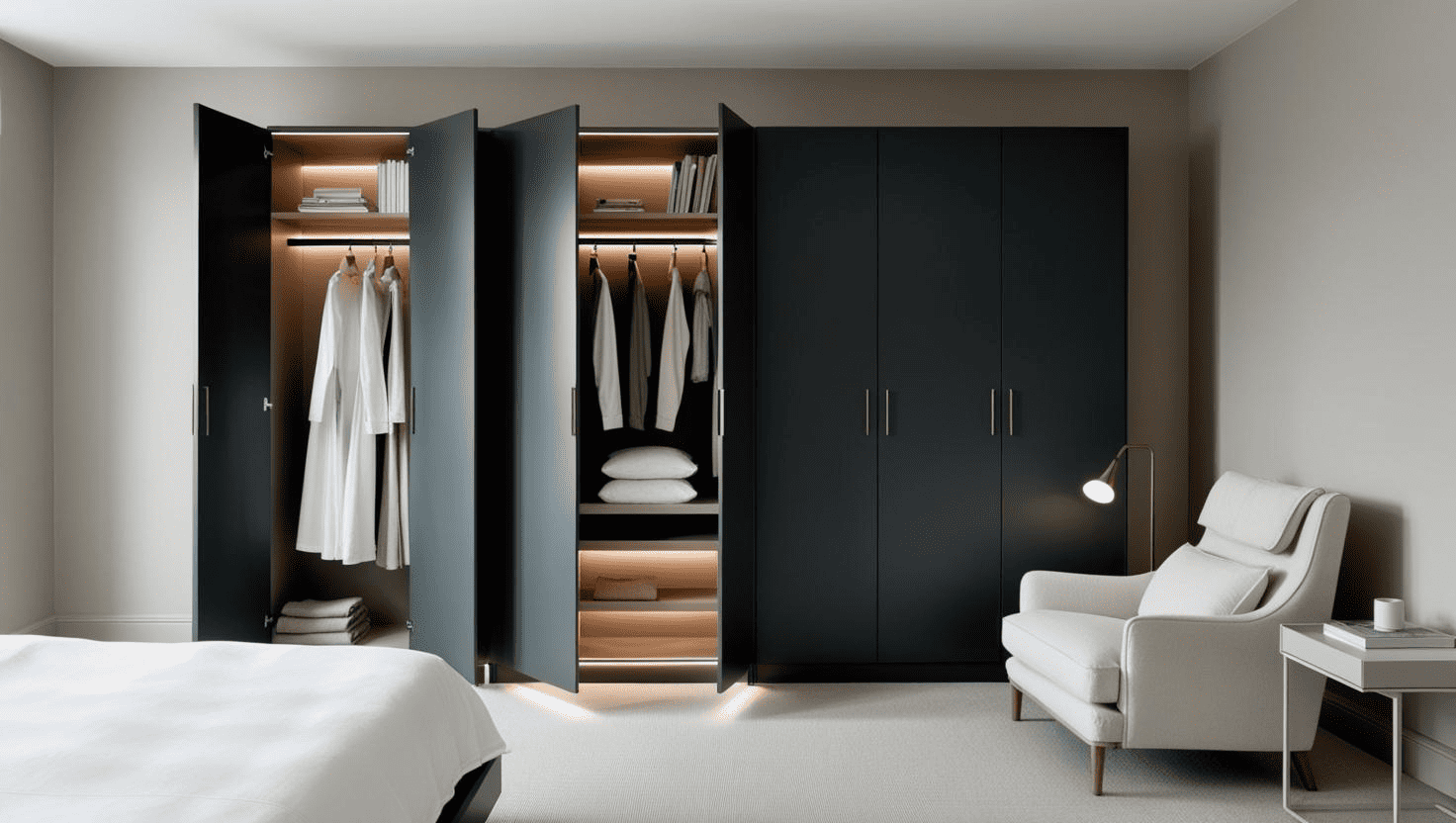
- Custom built-in wardrobes — designed, manufactured, and installed for a specific room. Made from melamine or acrylic panels, fitted with proper hardware, finished to match the rest of the house. This is what we manufacture at our Auckland factory.
- Kitset wardrobes — flat-pack systems with pre-cut panels, sold by retailers and assembled on site. Cheaper and faster, but limited by the kit’s standard sizes.
- Wire shelving systems — open metal racks and rails, ventilated, low cost. Common in rentals and budget builds.
The right one for your home depends on three things: the space, the budget, and how long you’re staying. A renter doesn’t need a 20-year custom build. A homeowner in a $1.5m property usually doesn’t want wire shelving on display.
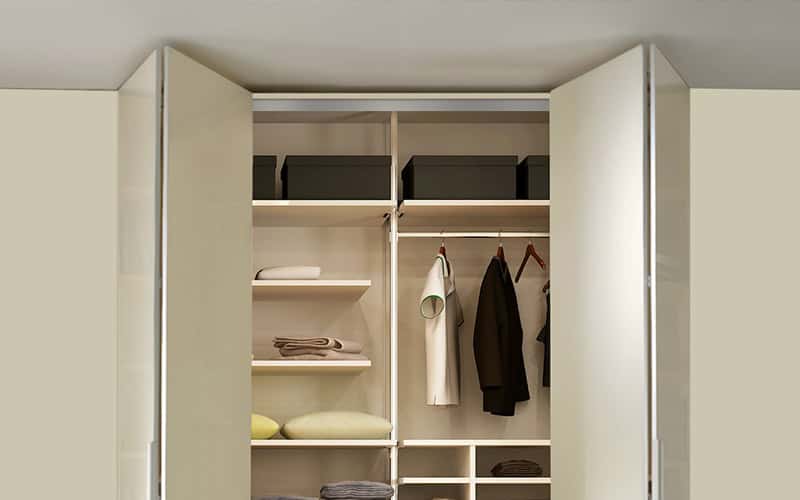
The three options compared
| Option | Best for | Indicative cost (3m wide) | Lifespan |
|---|---|---|---|
| Wire system | Rentals, short-term storage, garages | $300–$800 | 5–8 years |
| Kitset | Standard reach-ins, fixed budgets | $800–$2,000 | 8–12 years |
| Custom built-in | Bespoke fit, walk-ins, character homes, resale value | $2,500–$8,000+ | 20+ years (with proper hardware) |
The cost ranges above are indicative for a 3m wide unit. Anything wider, two-storey walk-ins, or premium finishes (acrylic, timber veneer) push higher. Your designer at Little Giant will quote a fixed price once the design and materials are locked in.
Wire and kitset wardrobe systems: the honest version
Most of what gets written about wardrobes online is about custom builds, because that’s where the margin is. But plenty of Auckland homes are better served by a wire or kitset system, and it’s worth being straight about what each does well.
Wire wardrobe systems
A wire wardrobe system is open ventilated shelving and rails, usually powder-coated or zinc-plated steel, mounted to a wall track. The appeal is real: it’s the cheapest option, it goes in fast, air moves through it so nothing gets musty, and you can see everything at a glance. For a rental, a garage storage wall, or a spare-room cupboard, a wire system does the job for a few hundred dollars.
Where it falls down is finish and load. Folded clothing slips through the gaps unless you add liners, small items need baskets, and the exposed steel look reads as budget in a main bedroom. Wall-mounted rails also rely on the wall behind them; in an older villa with lath-and-plaster or dwang spacing that doesn’t line up, fixings can pull loose under load. If you want ventilated storage that still looks considered, we build the same effect into custom cabinetry with mesh drawer fronts and open shelving in Melteca.
Kitset wardrobes
A kitset (flat-pack) wardrobe sits between wire and custom. You get real panels and doors, usually melamine, cut to standard modular sizes and assembled on site. For a square, standard-depth reach-in on a fixed budget, a kitset can be a sensible call, and it will outlast a wire system comfortably.
The limits show up the moment the space isn’t standard. Kitset modules come in fixed widths and depths, so an alcove that’s 2,340mm wide gets a 2,100mm run of cabinetry and 240mm of filler panel or wasted gap. Scribing to an out-of-square wall, working around a sloped villa ceiling, or fitting a sub-500mm apartment alcove is exactly what a kitset can’t do and a custom build can. That’s the trade: kitset saves money up front and gives some of it back in wasted space.
What a custom wardrobe actually costs
The most common question we get is some version of “what’s the price?” — and the honest answer is that a custom wardrobe is priced on what goes into it, not on a per-metre rate. Three things move the number more than anything else:
- Internals over box. The cabinet box is the cheap part. Drawers, pull-out rails, shoe racks, and illuminated hanging add up faster than an extra metre of hanging space does.
- Finish. Melteca and standard Laminex laminate sit at the base. Acrylic feature doors add roughly 25–40% over melamine for the same door area; timber veneer more again.
- Hardware class. BLUM runners and soft-close hinges cost more than budget import hardware, but they’re the parts that decide whether the wardrobe still works in ten years.
For a 3m wide built-in with Melteca carcasses, a couple of drawer banks, and BLUM hardware, most projects land in the $2,500–$5,000 range. Walk-ins, premium finishes, and full-height ceilings run higher. Every quote we give is fixed once the design and materials are signed off, so the number you approve is the number you pay.
Hardware that earns its keep
The cabinet box is the cheap part of any wardrobe. The hardware — runners, hinges, soft-close mechanisms — is where the cost lives, and it’s where cheap builds fail first. We specify BLUM hardware as standard for every wardrobe we manufacture, for two reasons: it carries a lifetime mechanical warranty, and it doesn’t give up after five years of daily use.
Drawer runners
BLUM LEGRABOX runners come in two load classes: 40kg and 70kg dynamic capacity. The 70kg version is rated to 100,000 open-close cycles in BLUM’s own testing, enough for roughly 30 years of normal household use. For wardrobes, the 40kg class handles folded clothing, accessories, and trouser drawers without complaint. The 70kg class is for laundry baskets, deeper drawers, and anything heavy.
Cheaper import runners are rated to 25–30kg and tend to sag within 18–24 months once loaded. The cost difference per drawer is usually $40–$80. Not worth saving if you’re paying for a 20-year wardrobe.
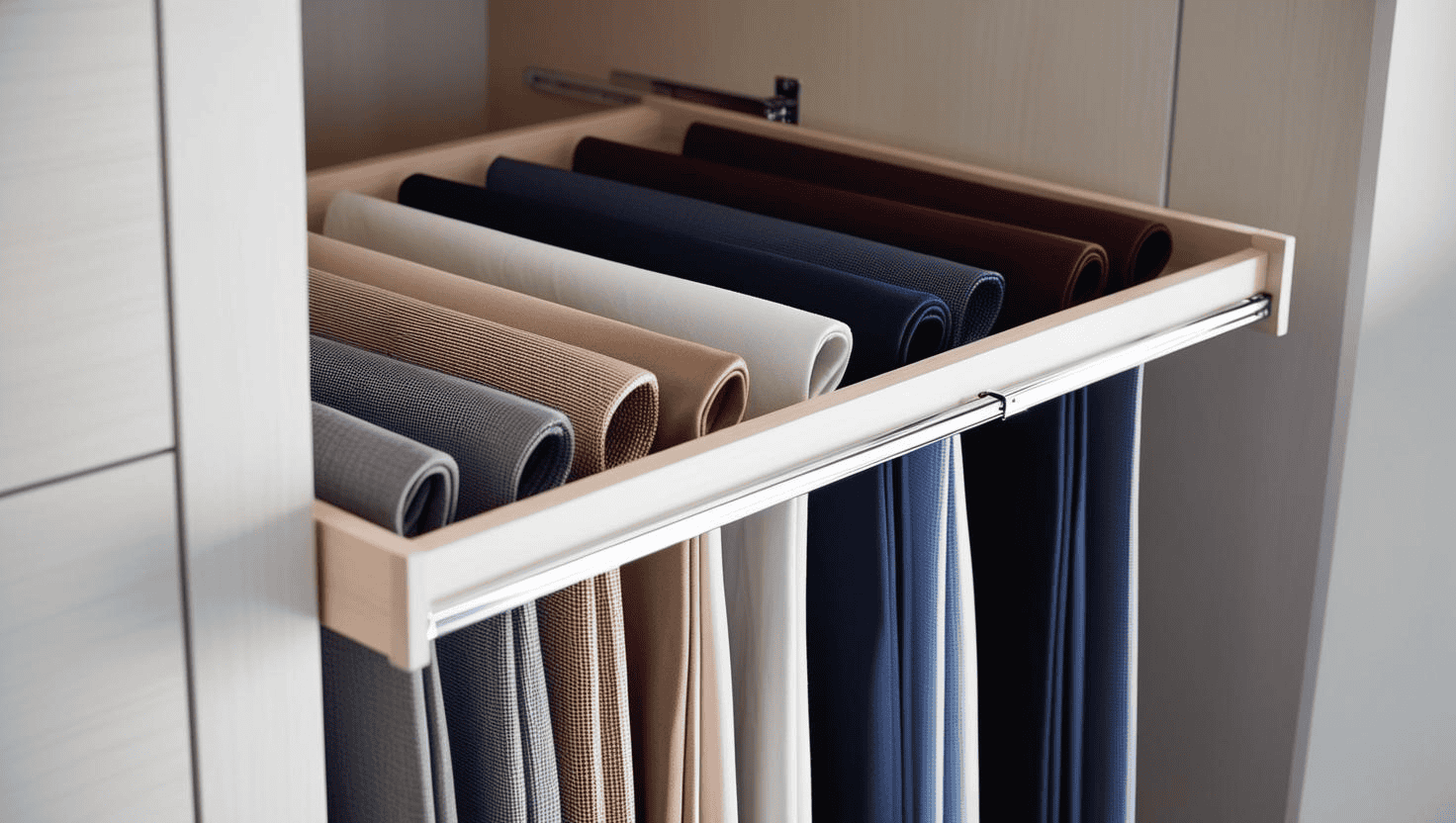
Soft-close hinges
Soft-close hinges aren’t required by any code in residential wardrobes; that’s a claim that gets repeated and isn’t accurate. They are, however, standard in everything we manufacture, because the cost difference per door is small and the difference in daily use is obvious. A standard hinge slams when you let go of the door. A soft-close hinge catches the last 30mm of travel and brings it home without noise. In a household with kids closing doors at speed, the hinges are also the only thing standing between the door and the cabinet box.
Sliding door tracks
Sliding doors save the floor space that hinged doors need for swing, which is useful in apartments, small bedrooms, and anywhere a door swing would block a path. The trade-off is that the track needs to be maintained, and you only ever see half the wardrobe at once.
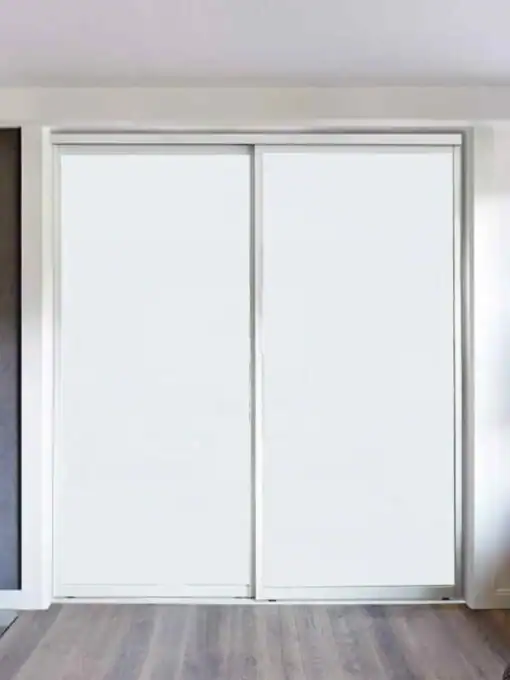
Sliding door system — image via novainterior.co.nz
Mirrored sliding doors do help small rooms feel larger by reflecting daylight back into the space. That’s basic optics, not a study finding. They also need to be installed plumb: a mirror sliding on a track that’s 3mm out of true will not run smoothly, and that’s where most cheap installs come undone.
Materials — what we use and why
Every cabinet manufacturer in Auckland is using one of four core materials for the cabinet box and doors. The differences matter:
| Material | Where it’s used | Warranty (residential) | Notes |
|---|---|---|---|
| Melteca (Laminex NZ) | Cabinet boxes, doors, shelves | 10 years | NZ-made, scratch-resistant, the workhorse |
| Laminex laminate | Doors, panels, vertical surfaces | Up to 10 years (premium ranges) | Wider colour range, premium finishes |
| Acrylic panels (Laminex) | High-gloss or matte feature doors | Up to 10 years (premium ranges) | Velvet-touch matte finish, fingerprint-resistant on selected ranges |
| Bestwood / Dezignatek thermoformed | Profiled doors (shaker-style, routed) | Check the maker’s current warranty (manufacturer-specific) | For traditional or character-home aesthetics |
We’re a Laminex, Melteca, Bestwood, Dezignatek, BLUM, and Häfele specifier. These are the suppliers we order from week in, week out. Warranty figures above come direct from each manufacturer’s published terms — Laminex’s published warranty for Melteca is 10 years. Your designer confirms the exact cover for the materials you choose.
Why Auckland-specific factors actually matter
Some of the “Auckland is humid” advice that gets written about wardrobes is overstated. Indoor humidity in a properly ventilated Auckland bedroom isn’t structurally different from Wellington or Hamilton. What does matter:
- Coastal exposure. If your wardrobe backs onto an external wall in Mission Bay, Takapuna, or Devonport, salt-laden air can affect internal hardware over time. We use stainless steel or zinc-plated runners as standard, which handle this without issue.
- Older character homes. Villas and bungalows in Mt Eden, Ponsonby, and Grey Lynn rarely have square walls or level floors. A built-in wardrobe needs to be scribed to the actual wall, not the theoretical one. Kitset wardrobes don’t do this well.
- Apartment depth. CBD and Newmarket apartments often have alcoves under 500mm deep, too shallow for a standard hanging rail (which needs about 580mm). Custom builds can work around this with sliding hangers or pull-out rails; kitsets usually can’t.
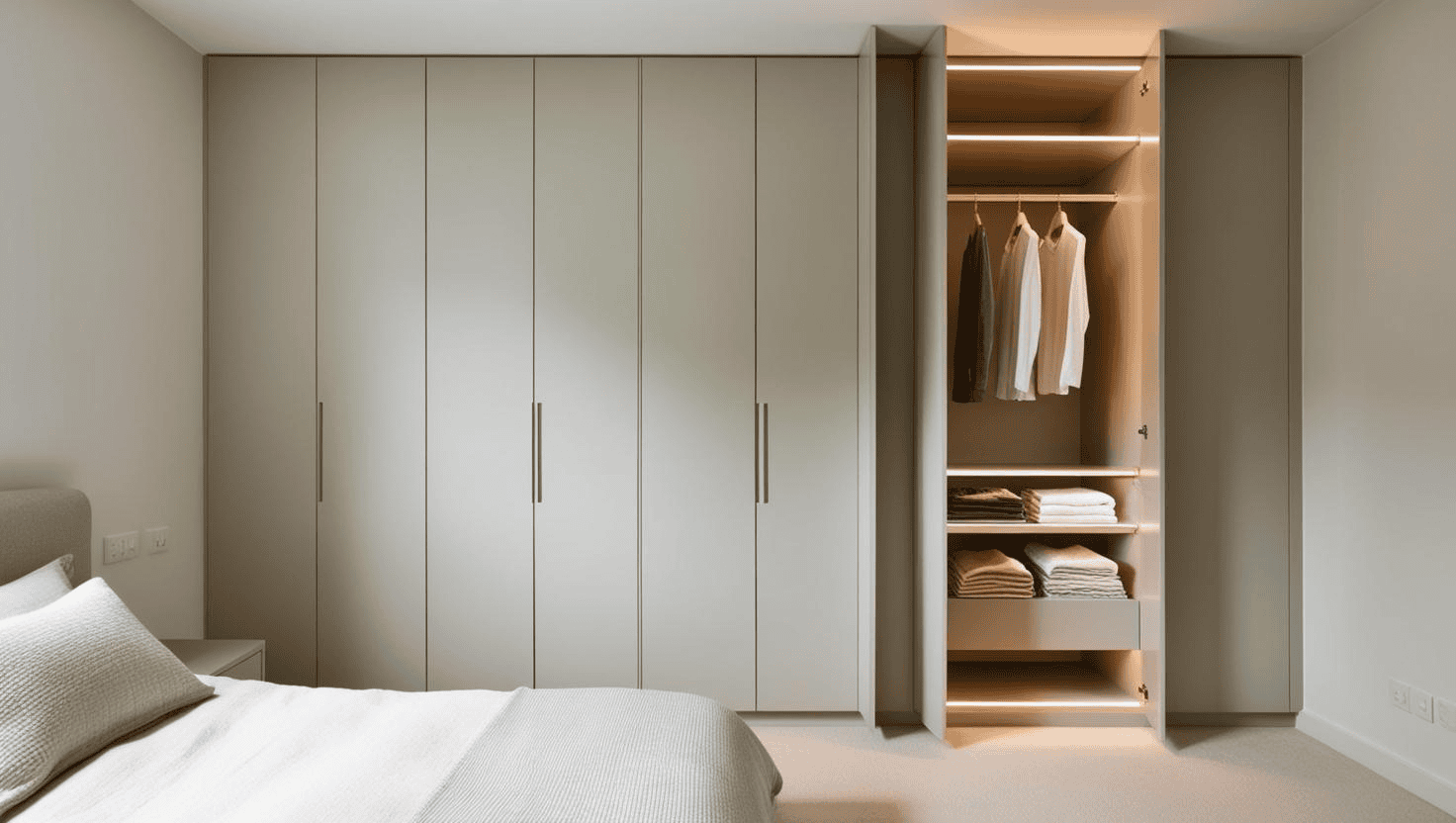
What walk-in vs reach-in actually means for the design
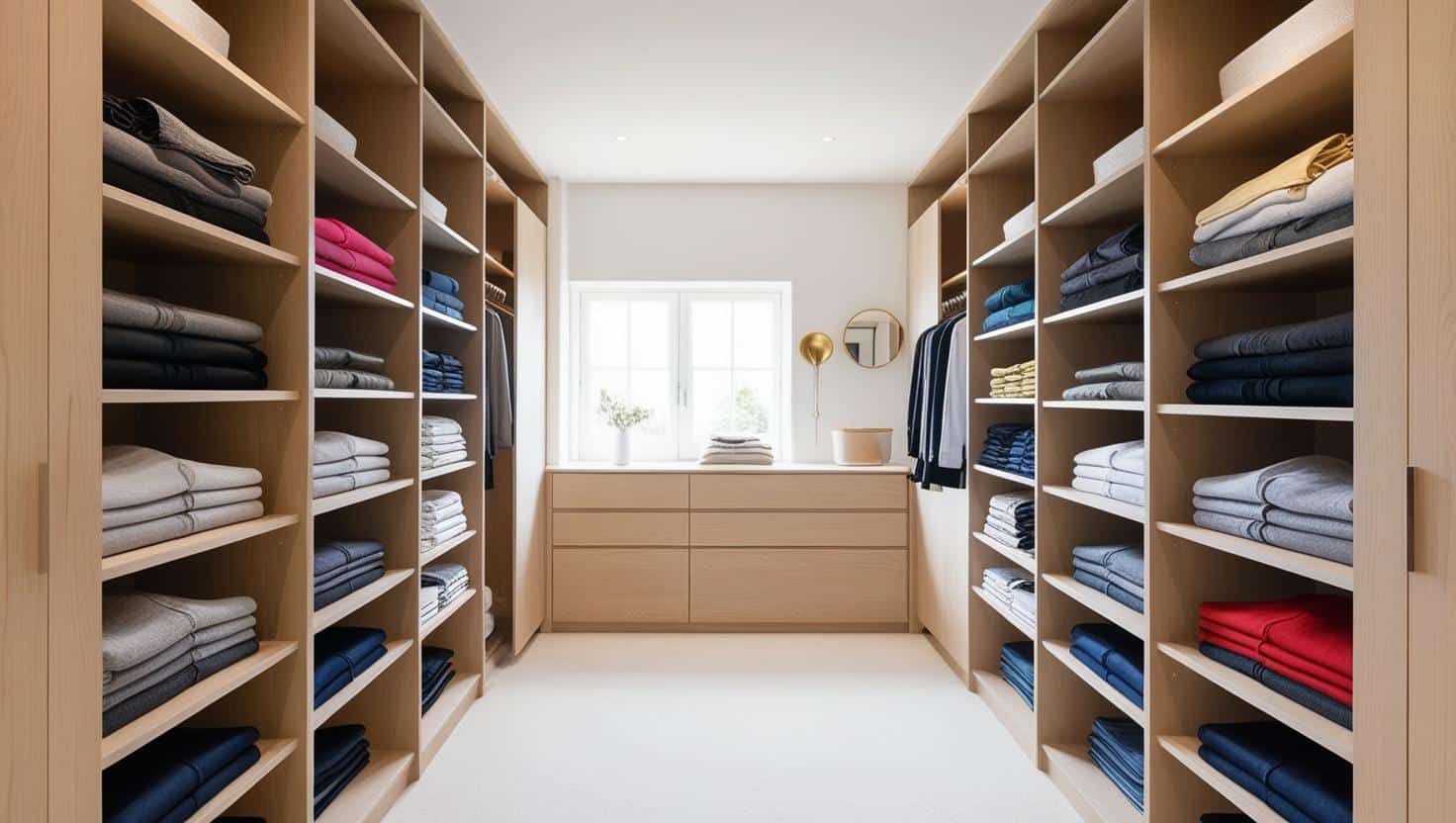
A reach-in is the standard wardrobe you’ve grown up with: doors on the front, hanging and shelving behind. A walk-in is a small room dedicated to storage. The decision usually comes down to floor area:
- Under 8m² bedroom: reach-in is the right call. A walk-in eats too much floor.
- 8–12m² bedroom: either works. A reach-in with full-height doors and good internal layout often beats a small walk-in for usable storage per dollar.
- 12m²+ bedroom: walk-in becomes worthwhile, especially if you can borrow space from an adjacent room or hallway.
Full-height reach-ins (2.4–2.7m, taking the cabinet to the ceiling) deliver meaningfully more hanging and shelf space than the standard 2.1m height. The top shelf becomes seasonal storage rather than wasted void above a cabinet. For a typical 3m wide unit, the extra height adds roughly one full shelf-bay of usable storage on each side. Useful, not transformative.
How we design, manufacture, and install
This is where custom from Little Giant differs from anything you can buy off a shelf. Design, manufacture, and install under one roof means one point of accountability, not three suppliers blaming each other when something doesn’t fit.
1. Free in-home consultation
One of our designers visits your home, measures the space, talks through how you’ll actually use it (hanging vs folded, shoes, accessories, anything seasonal), and discusses style. You’ll have a preliminary 3D design within 1–2 working days.
2. Materials and fixed quote
Once you’ve chosen materials, hardware, and finishes, the design is costed precisely. Fixed price, not an estimate that drifts. This is also when we order, and most materials are in our Auckland factory within a week.
3. Manufacturing in our Auckland factory
We manufacture in our 700m² Auckland facility. The cabinetry is cut on automated CNC machines, then run through a German laser edge-bander for the final finish. The laser bonds the edge tape to the panel without glue lines and without manual buffing, and the result is a clean edge that doesn’t peel.
4. Installation
Installation typically takes 1–2 days, managed by a project manager who walks through the finished work with you. Once you sign off, you receive the warranty documentation covering installation, materials, and hardware.
“The most common upgrade we make on a renovation is taking the existing 2.1m wardrobe to full height. It costs a few hundred more in materials, but the storage gain is real, and the room reads as more considered.” — the Little Giant Interiors design team
When custom makes sense — and when it doesn’t
Being honest about this: a custom wardrobe isn’t the right call for every situation. Where it pays off:
- You’re staying in the home 5+ years
- The wardrobe space is non-standard (alcove, sloped ceiling, character home)
- Resale value of the home is $1.2m+ and the wardrobes will be looked at by buyers
- You want hardware that lasts (BLUM, Häfele) rather than replace-every-five-years budget hardware
Where a kitset or wire system is the smarter choice:
- Renting
- Garage, laundry, mudroom, or pantry where appearance matters less than function
- Short-term hold property
- Budget is tight and a standard reach-in shape fits the space
For a deeper look at fitting storage into tricky footprints, our guide to custom wardrobe and storage for small spaces covers the layout side, and freestanding wardrobes is worth a read if you’re weighing a non-fixed option.
Frequently asked questions
What does a custom wardrobe cost in Auckland?
A 3m wide built-in custom wardrobe with BLUM hardware and Melteca finishes typically falls in the $2,500–$5,000 range. Walk-ins, premium acrylic or timber veneer finishes, and full-height ceilings push higher. We provide a fixed quote after the initial design consultation, so there is no estimate-creep once the design is signed off.
How long does a custom wardrobe take from quote to installation?
Typically 4–6 weeks from sign-off. Design and materials selection takes 1–2 weeks, manufacturing 2–3 weeks, and installation 1–2 days. Faster turnarounds are possible for simple builds; complex walk-ins with multiple finishes take longer.
Are kitset or custom wardrobes better value?
It depends on the space. For a square, standard-depth reach-in on a tight budget, a kitset wardrobe is good value and will outlast a wire system. The moment the space is non-standard — an out-of-square villa wall, a sloped ceiling, or a shallow apartment alcove — a custom build recovers the space a kitset wastes in filler panels, and the hardware lasts far longer.
Are sliding doors better than hinged doors?
For tight spaces, yes: they save the swing clearance a hinged door needs. For most bedrooms with room to spare, hinged doors give you full access to the wardrobe at once and tend to be more durable long-term with no track wear. Mirrored sliding doors are useful in small or low-light bedrooms because of reflected daylight.
What is the difference between a wire, kitset and custom wardrobe system?
A wire system is open ventilated steel shelving, cheapest and fastest, best for rentals and garages. A kitset is flat-pack melamine panels in fixed modular sizes, assembled on site, good for standard reach-ins. A custom built-in is designed, manufactured and installed for your exact space, scribed to the wall and fitted with proper hardware, and lasts 20+ years.
Which wardrobe company should I use in Auckland?
Look for a company that designs, manufactures, and installs under one roof, so accountability sits in one place. Ask where the cabinetry is actually made, what hardware brand they specify (BLUM and Häfele are the marks of a quality build), and whether the quote is fixed. Little Giant Interiors manufactures every wardrobe in our own 700m² Auckland factory.
Can I add a wardrobe system to an existing wardrobe?
Often yes. We can fit out an existing alcove or wardrobe box with BLUM and Häfele internals — pull-out trouser racks, drawer inserts, shoe shelves, illuminated rails — without rebuilding the whole box. It is worth doing when the existing cabinetry is sound but the internals are wasted.
Do I need consent for a built-in wardrobe?
No. Built-in wardrobes are fitted joinery, not structural work, so no building consent is required. The exception is if you are moving walls or altering the room structure to fit a walk-in, which is structural work and may require consent — check with Auckland Council or a Licensed Building Practitioner before starting.
The next step
If you’re considering a custom wardrobe, the most useful thing is a 30-minute in-home consultation with one of our designers. We’ll measure, talk through how you use the space, and give you a preliminary 3D design within 1–2 working days. No cost, no obligation.
Book a free in-home consultation →
You can also see more of our wardrobe work and the broader process on our custom wardrobes service page.