

Last updated:
Freestanding Wardrobes NZ: When They’re Smart, and When a Built-In Wins
Quick answer: A freestanding wardrobe in NZ is the smart call when you’re renting or need flexible, short-term storage you can take with you. For a home you’re staying in, a built-in custom wardrobe fits the space properly, lasts longer, and actually adds resale value.
You’ve got a bedroom with no wardrobe. Maybe it’s a 1920s villa in Grey Lynn with a shallow recess that fits nothing off the shelf. Maybe it’s a rental in Mt Eden where you can’t touch the walls. Either way, you’ve typed “freestanding wardrobe NZ” into Google, and the first page is a wall of flat-pack units from the big-box stores — assemble it yourself, move it when you move.
That might be exactly what you need. But a freestanding wardrobe is the right answer for some situations and a quiet money-pit in others, and almost nobody selling them will tell you which is which. They’re in the business of shifting units.
We’re not. We design and build custom wardrobes from our own factory in Auckland, so we’ve got no reason to talk you into a $1,500 box you’ll replace in five years — or out of one when it’s genuinely the sensible buy. This guide is the honest version: what a freestanding wardrobe actually is, when it’s the smart move, where it falls down in a real Auckland home, and when a built-in earns its higher price. Costs both ways. No catalogue.

What a Freestanding Wardrobe Actually Is (and Who It’s Built For)
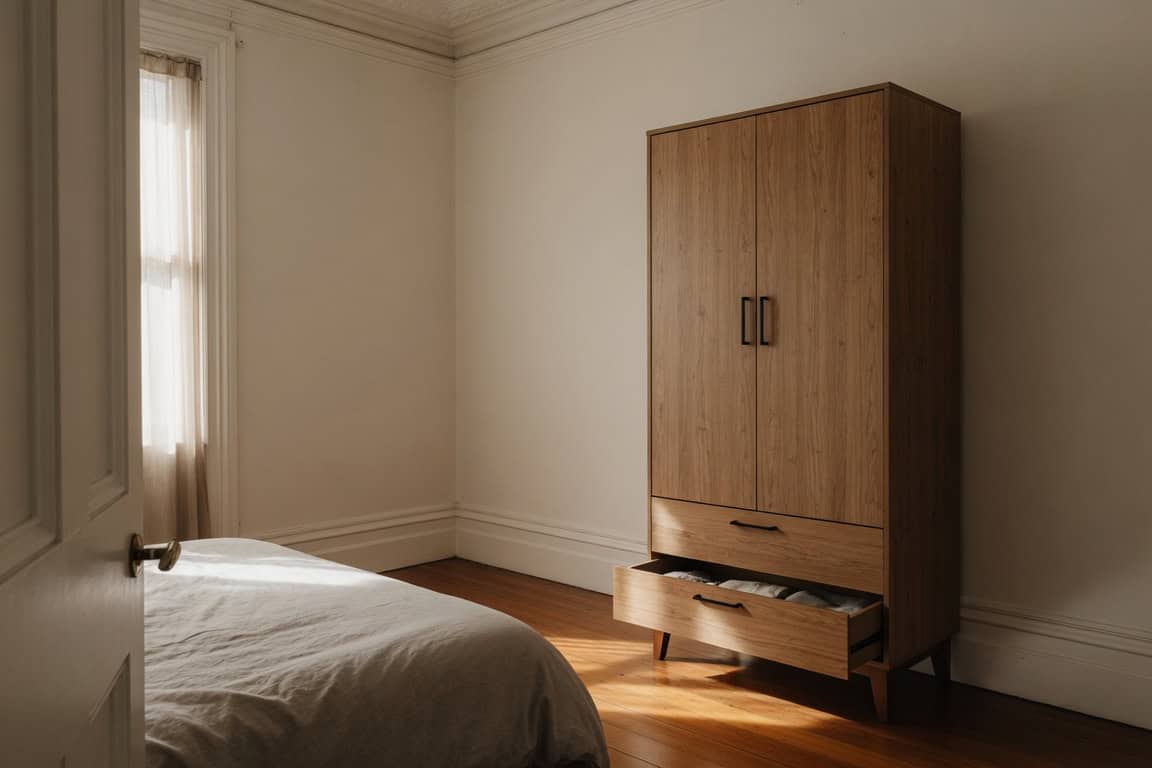
A freestanding wardrobe is a standalone unit — a box with doors, a hanging rail, sometimes a few shelves or drawers. It isn’t fixed to the wall. It arrives flat-packed or pre-assembled, you put it where you want it, and it leaves with you when you go. That portability is the entire point — and it’s both the best and the worst thing about it.
You’ll find them in a few broad shapes, and the differences matter more than the showroom lets on.
The main types you’ll see in NZ
Flat-pack and kitset units are the cheapest and most common. They’re built from melamine-faced particleboard or MDF, joined with cam-locks and dowels, and you assemble them yourself with an allen key and a bit of patience. Quality varies wildly at this end — a $200 unit and an $800 one can look the same in a photo and feel completely different once they’re loaded with winter coats.
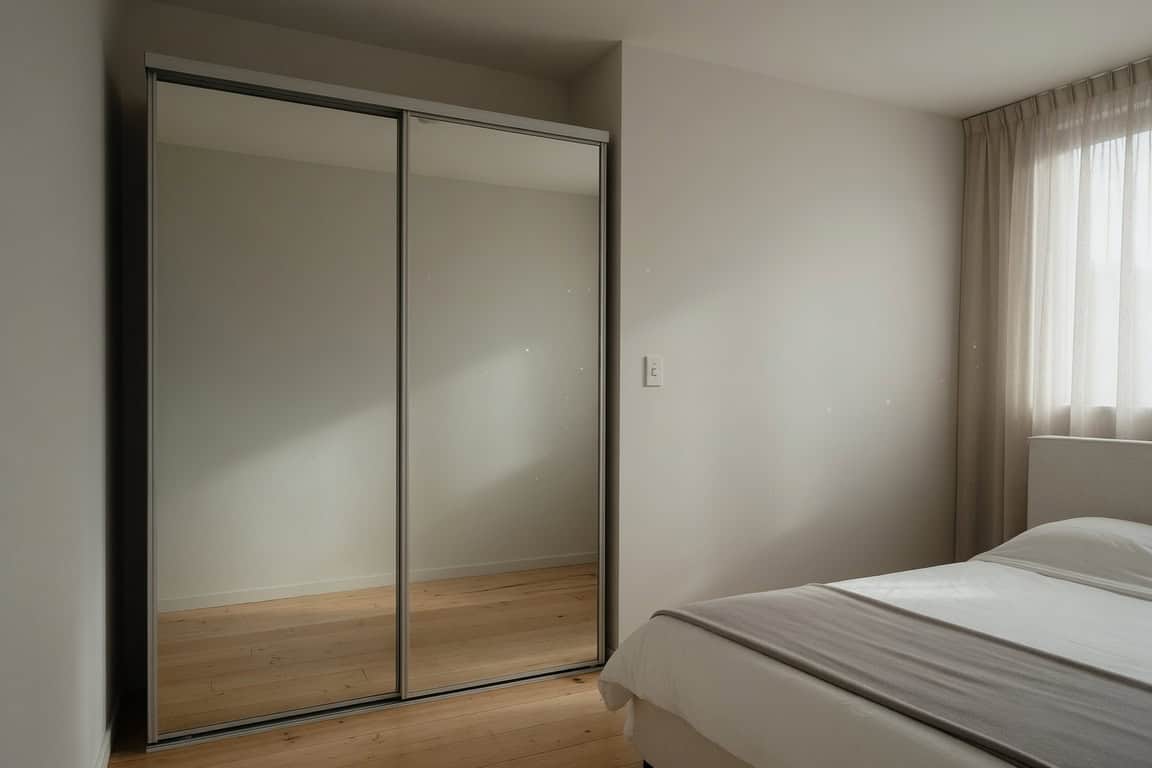
Hinged-door units are the classic shape: full access to everything, but you need clear floor space for the doors to swing. Sliding-door units give that floor space back, which is why they suit tight apartment bedrooms and narrow villa rooms — though you lose a bit of internal reach. Modular or “system” wardrobes sit a step up again, letting you bolt towers and drawers together, but you’re still working within fixed module sizes, not your actual room.
There’s a sturdier tier above the flat-pack. A handful of NZ makers build heavier freestanding units from thicker board with better hardware, sometimes with an install service. Better gear, longer life — but the price climbs toward where a proper built-in starts, which is a comparison worth keeping in your back pocket for later.
Flat-pack or ready-built — what you’re really choosing
The cheapest units arrive flat and you build them. Budget an evening, a clear floor, and a second pair of hands for the big panels. The thing to watch isn’t the assembly — it’s what you’re assembling: 16mm board sags faster than 18mm under a full rail of clothes, and a stapled back racks out of square far quicker than a unit with a properly braced one. Ready-built units cost more and take two people to carry up the stairs of a Grey Lynn villa, but they skip the flat-pack lottery. Either way, check the hinges and runners before you buy — that’s where cheap wardrobes fail first.
What they cost
Freestanding wardrobes in NZ run from about $150 for a basic flat-pack up to roughly $2,000 for a larger kitset system with sliding mirror doors and drawers (all figures GST-inclusive, based on current NZ retail pricing). The cheap end is genuinely cheap. The top end starts to overlap with the bottom of the custom range, which is where the maths gets interesting.
💡 Design tip: Measure your ceiling height before you buy, not just the wall width. Most freestanding units stop around 1.8–2.1m, leaving dead air above them. In an Auckland villa with 2.7m studs, that’s nearly a metre of storage you’ve paid rent on and can’t use.
Which raises the real question this guide exists to answer — not what a freestanding wardrobe is, but whether it’s right for you. The product pages skip that part. If you want the full picture on a permanent fit-out, our overview of custom wardrobes in Auckland covers the built-in side. But before you write freestanding off, there are real situations where it’s the smarter buy — and that’s where we’ll start.
When a Freestanding Wardrobe Is the Smart Call
Here’s where we’ll back the freestanding option without flinching. If you don’t own the room, or you won’t be in it long, a freestanding wardrobe is usually the right answer — and a built-in would be a waste of money.
You’re renting
This is the big one, and it’s not just convenience — it’s the law. Under the Residential Tenancies Act 1986, a built-in wardrobe counts as a major fixture, not a minor change. According to Tenancy Services, tenants can’t renovate, alter or add major fixtures unless the landlord agrees in writing — and even then, anything you fix in place either has to come out at the end of the tenancy or becomes the landlord’s property.
Think that through. You’d be paying a few thousand dollars to permanently improve someone else’s asset, then either ripping it out (and making good the damage) or handing it over for free. A freestanding wardrobe sidesteps all of it. You buy it, you use it, you load it onto the trailer when you move to the next place. For renters, that’s not a compromise — it’s the only sensible call.
One catch worth knowing if you’re in an apartment or townhouse: unit-title properties have body corporate rules on top of your tenancy agreement, so even a landlord-approved built-in can hit a second layer of approval. Freestanding skips that too.
You’re only there for a season
Students flatting near the University, a young couple in their first rental in Sandringham, anyone in a place they’ll leave inside a couple of years — a freestanding unit makes sense. You’re not going to recoup the cost of a built-in over twelve months, and you can’t take a built-in with you. When the home is temporary, the storage should be too.
The room genuinely can’t take a built-in — yet
Sometimes you own the place but a built-in isn’t on the cards this year. A spare room that’s about to become a nursery, then a study, then a guest room. A heritage bedroom where you’re not ready to commit to fixed joinery. A garage or sleepout that needs storage now, not after a renovation. A good freestanding wardrobe buys you flexibility while you work out what the space wants to be.
💡 Design tip: If you might go built-in later, don’t overspend on freestanding now. A mid-range unit you’ll move to the sleepout or sell on Trade Me in two years is smarter than a premium one you’ll regret pouring money into.
What to check before you buy a freestanding wardrobe
If freestanding is your call, a few minutes of checking saves you from the units that die young. Board thickness is the big one — 18mm carcasses hold their shape under a loaded rail far better than the 16mm in the cheapest units. Look for soft-close hinges and metal drawer runners rather than plastic, because those are the parts that wear first. In a small Mt Eden bedroom, sliding or mirrored doors buy back the floor space hinged doors steal, and the mirror throws light around a dim room. Measure the depth, too — most units need around 580–600mm to take a coat hanger sideways, and plenty of Auckland bedrooms can’t spare it once the bed’s in.
So that’s the honest case for buying one. If any of those is you, stop reading and go get a freestanding wardrobe — you don’t need us. But if you own your Auckland home and you’re staying put, the picture changes, because this is where freestanding starts costing you more than the sticker price suggests.
Where Freestanding Wardrobes Fall Short in an Auckland Home
For a home you’re keeping, the freestanding wardrobe has three weaknesses that don’t show up on the price tag: it doesn’t fit, it doesn’t last, and it doesn’t count toward your home’s value. None of those matter for a rental. All of them matter when it’s your house.
It’s a box in a space that isn’t box-shaped
Auckland’s housing stock is not friendly to standard furniture. Villas and bungalows have shallow recesses, picture rails, and skirting that a rectangular unit has to sit proud of. Apartments have columns and odd corners. A freestanding wardrobe is a fixed-size box — so you either leave gaps down the sides, block a window, or give up that metre of space above it. You’re storing your clothes around the furniture instead of around your room.
A built-in does the opposite. It’s drawn to the exact width, scribed to the wall, and runs floor-to-ceiling — so an awkward Ponsonby alcove becomes usable storage instead of wasted air.
The materials don’t love an Auckland winter
Most flat-pack carcasses are melamine-faced particleboard held together with cam-locks. It’s fine furniture for what it is. But Auckland bedrooms get damp and condensation-prone over winter, and over time those joints loosen, doors start to sag on their hinges, and any unsealed board edge can swell where it meets moisture. A flat-pack wardrobe that’s moved house twice and weathered five Auckland winters usually looks every bit of its age.
“People ask us why a custom wardrobe costs more than the flat-pack they saw online. The honest answer is it’s a different thing. The flat-pack is furniture you assemble and eventually replace. A built-in is part of the house — drawn to the room, fixed properly, and warranted for years. You’re not paying more for the same wardrobe. You’re paying for one that’s still there in fifteen years.”
— Little Giant Interiors Design Team
It walks out the door with you — and adds nothing on the way
This is the one people miss. A freestanding wardrobe is furniture, so it contributes nothing to your home’s value. When you sell, it leaves. Built-in storage, on the other hand, is exactly the kind of detail Auckland buyers notice when they walk through. Organised, made-to-measure wardrobes read as a finished home; a wobbly flat-pack in the corner reads as a job not done.
Then there’s the cost-per-year trap. A $1,500 freestanding unit sounds cheap next to a built-in. But replace it twice over a decade — because it sagged, or didn’t survive the move, or just dated — and you’re $4,500 deep with nothing fixed to show for it. We break the full numbers down in our guide to the cost of a custom wardrobe in NZ, but the short version is that “cheap” and “cost-effective” aren’t the same word.
Important note: A freestanding wardrobe that’s secured to the wall with an anti-tip bracket is far safer in a home with young kids. Tall, top-heavy units can tip if a child climbs the shelves or drawers. If you do buy freestanding, fix it to a stud.
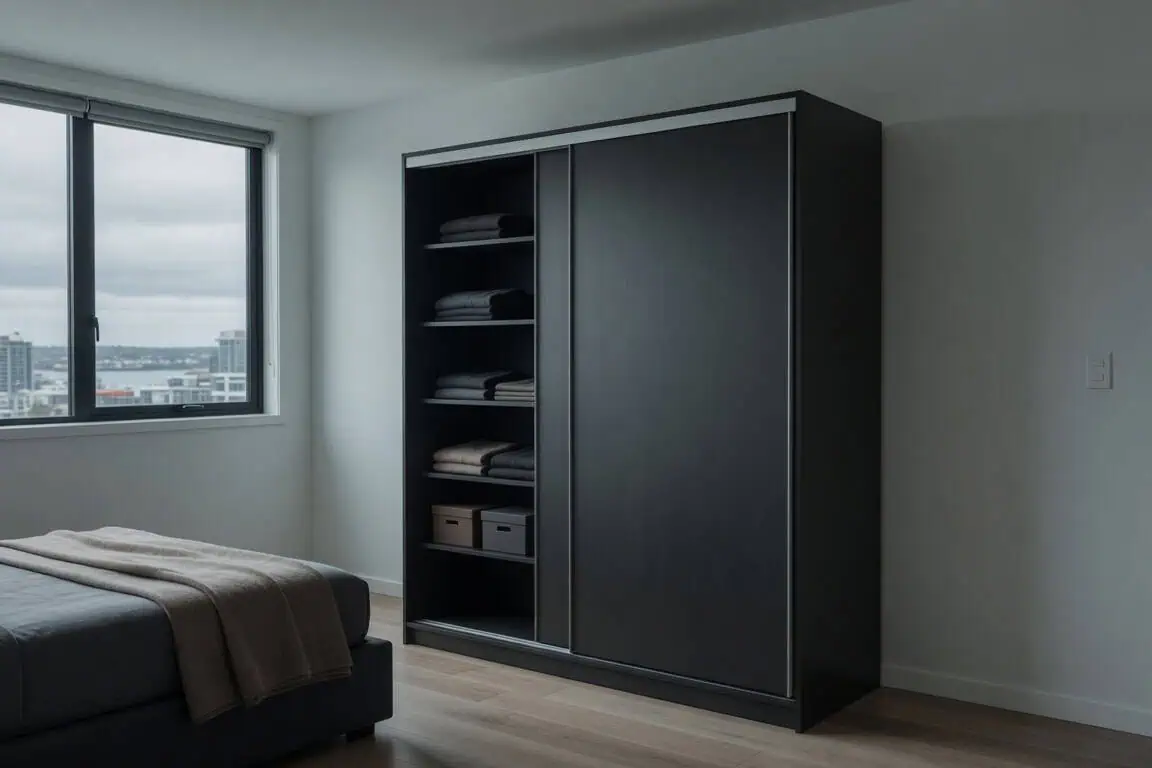
None of this means freestanding is bad. It means it’s right for renting and wrong for staying. So when you are staying, what does the alternative actually look like — and is it worth the jump in price?
When a Built-In Wardrobe Wins (and How We Make Ours)
If you own your home and you’re in it for the long run, a built-in wardrobe wins on every count that matters once you’re past the sticker price: fit, lifespan, and what it adds to the house. It’s not the cheaper option up front. It’s the one that stops costing you money after year one.
Made to the room, not to a module
A custom built-in is drawn to your exact space — the real width, the real ceiling height, the awkward angle in the corner. We manufacture every piece in our own 700m² factory in Rosedale, Auckland, using a German laser edge-bander that finishes each panel edge cleanly without the manual gluing and buffing that flat-pack edges get. That precision is why a built-in sits flush to a villa wall instead of leaving the gaps a standalone box can’t avoid.
Inside, you choose the layout: hanging height for long coats versus shirts, drawer banks where you want them, shelving for shoes, the lot. We build with hardware that earns its keep — BLUM soft-close runners and hinges so drawers glide and doors don’t slam, and Häfele fittings for sliding tracks and clever internal storage. Carcasses and finishes come from Laminex and Melteca, so colours and woodgrains are matched to NZ ranges that are easy to live with and easy to clean.
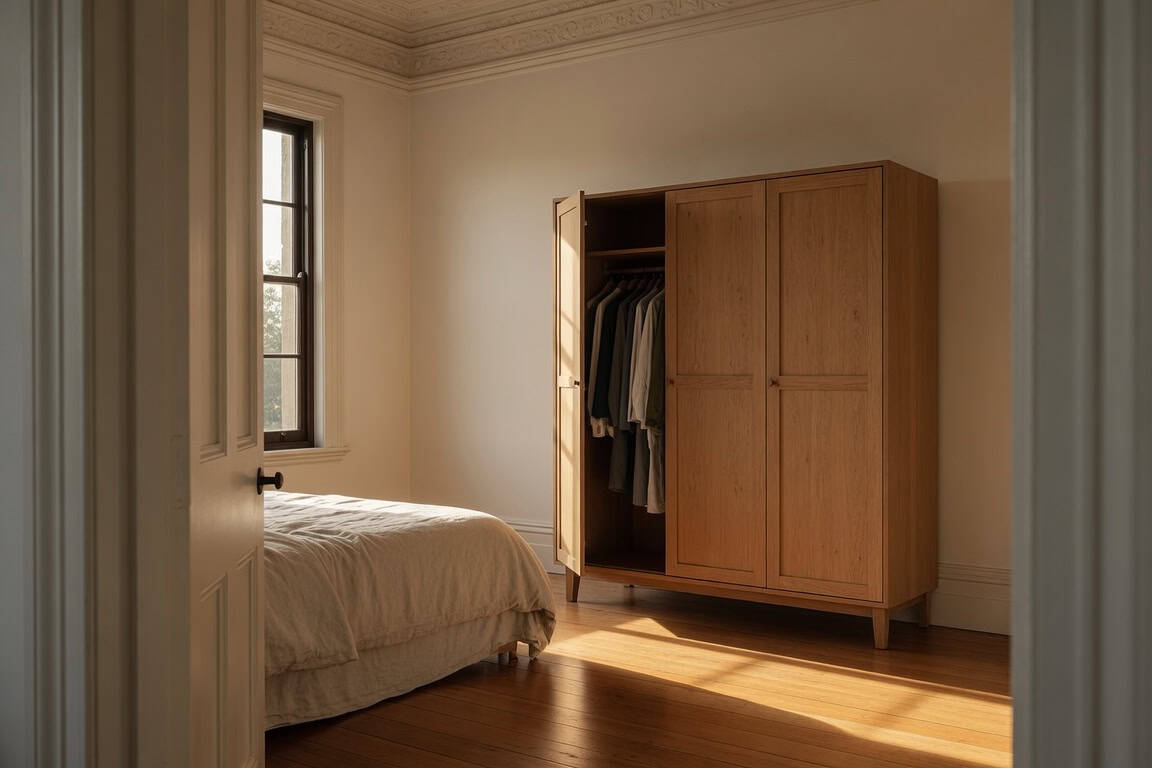
What it costs — the honest range
Custom built-in wardrobes in Auckland typically run from around $2,500 for a straightforward reach-in up to $15,000 or more for a full walk-in with premium finishes and soft-close everything (GST-inclusive figures from our own Auckland projects). Yes, that’s more than a flat-pack. But it’s fixed to your home, its panels and laminates carry a 10-year guarantee, and it doesn’t need replacing every time you move a couch. For the full breakdown of what drives the number, our custom wardrobe cost guide walks through it.
How the process runs
It runs from first chat to handover, and it starts with a free in-home consultation. One of our designers comes to you, measures up, and listens to how you actually use the space — because a couple in Howick storing surf gear and school uniforms needs something different from a downsizer in Remuera. You get a free preliminary 3D design back, so you can see the wardrobe in your room before you commit a cent. From there it’s estimate, design sign-off, manufacture in our factory, and a tidy install — usually wrapped up on site in a couple of days.
We’d be straight with you, though: a built-in takes weeks, not the afternoon a flat-pack takes. Custom is made to order, so the lead time is real. We see the same pattern over and over in older Auckland homes — a villa bedroom where the only “wardrobe” was a shallow recess and a tension rail, turned into floor-to-ceiling storage that finally uses the full stud height. The trade is that you wait once and live with it for fifteen years, instead of assembling a replacement every few.
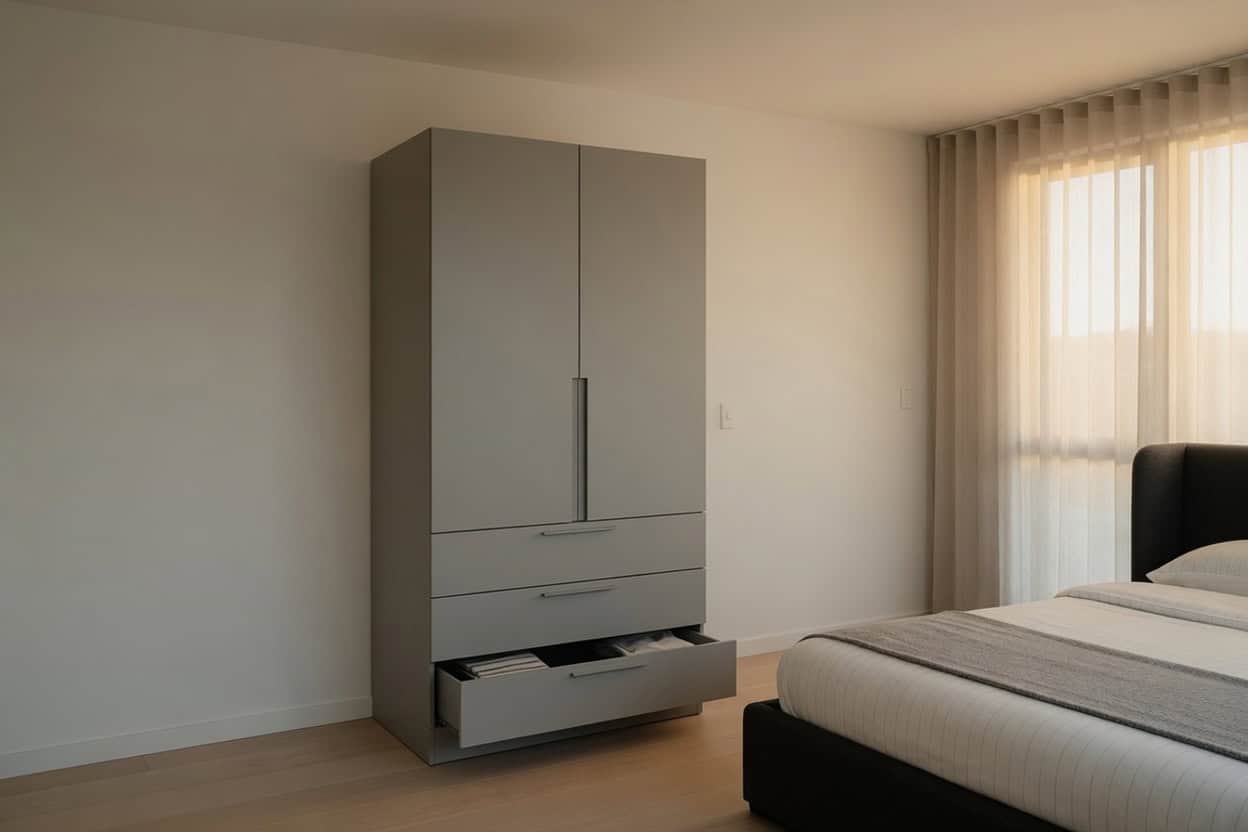
| What matters | Freestanding wardrobe | Built-in custom wardrobe |
|---|---|---|
| Upfront cost (NZ, incl GST) | ~$150–$2,000 | ~$2,500–$15,000+ |
| Fit to the room | Fixed box — gaps and wasted height | Made to measure, floor-to-ceiling |
| Typical lifespan | ~5–10 years, often less after a move | 15+ years, 10-year guarantee on panels and laminates |
| Adds home value? | No — leaves with you | Yes — buyers notice fitted storage |
| Best for | Renters, short stays, temporary rooms | Homes you own and are staying in |
| The verdict | Smart for temporary | Smart for permanent |
💡 Design tip: If you’re on the fence, run the cost over the time you’ll be in the home. Staying five years or fewer? Freestanding probably wins. Ten years or more in a place you own? A built-in is usually cheaper by the time you’d have replaced the flat-pack twice.
The decision really does come down to one question: are you staying or going? Get that straight and the rest follows.
➡ Book your free in-home design consultation with Little Giant Interiors
➡ See how our design and build process works
➡ Learn more about our custom wardrobes in Auckland
Are freestanding wardrobes any good?
For the right situation, yes. A freestanding wardrobe in NZ is a solid choice if you're renting, flatting, or only in a room short-term — it's affordable, portable, and you can take it with you. Where they fall short is in a home you own long-term: they don't fit awkward spaces well, the flat-pack materials wear over time, and they add nothing to your home's value. Match the wardrobe to how long you'll be there.
How much does a freestanding wardrobe cost in NZ?
Freestanding wardrobes in NZ generally run from about $150 for a basic flat-pack up to roughly $2,000 for a larger kitset with sliding mirror doors and drawers (GST-inclusive, based on current NZ retail pricing). The cheaper units are melamine particleboard you assemble yourself. By comparison, a custom built-in wardrobe in Auckland starts around $2,500 — more upfront, but made to measure and built to last.
What's the difference between a freestanding and a built-in wardrobe?
A freestanding wardrobe is standalone furniture — a fixed-size box you assemble, move around, and take with you. A built-in is custom-made to your exact room, fixed in place, and runs floor-to-ceiling. Freestanding suits renters and temporary spaces. Built-in suits homes you own: it fits properly, lasts far longer, carries a warranty, and adds resale value because it stays with the house.
Can I install a built-in wardrobe if I'm renting?
Not without your landlord's written permission. Under the Residential Tenancies Act 1986, a built-in wardrobe is a major fixture, and Tenancy Services confirms tenants can't add major fixtures unless the landlord agrees. Anything you fix in place usually has to be removed at the end of the tenancy or becomes the landlord's property. For renters, a freestanding wardrobe you can take with you is almost always the better option.
How long does a freestanding wardrobe last?
A flat-pack freestanding wardrobe typically lasts around 5–10 years, and often less if it's been moved house a few times. The cam-lock joints loosen, doors can sag, and unsealed board edges can swell in damp Auckland bedrooms over winter. A custom built-in wardrobe is built to last 15 years or more, and our panels and laminates carry a 10-year guarantee.
Do freestanding wardrobes add value to your home?
No. A freestanding wardrobe is furniture, so it leaves with you when you sell and contributes nothing to the property's value. Built-in, made-to-measure storage is different — Auckland buyers read fitted wardrobes as a finished, well-kept home. If resale matters to you and you own the property, a built-in is the better long-term investment.
What size freestanding wardrobe should I get?
Measure the wall width, the depth you can spare (most units need around 580–600mm), and crucially your ceiling height. Many freestanding wardrobes stop at 1.8–2.1m, so in a high-stud Auckland villa you'll have unused space above. Leave clearance for hinged doors to swing, or choose sliding doors in a tight room. If you find yourself wishing it went to the ceiling, that's usually the sign a built-in suits the space better.
Are flat-pack wardrobes safe around children?
Only if they're secured. Tall freestanding wardrobes can be top-heavy and tip if a child climbs the open drawers or shelves. Always fix a freestanding unit to a wall stud with an anti-tip bracket in any room a child uses. Built-in wardrobes are fixed to the structure by design, so tipping isn't a risk — one more reason they suit family homes.
Is a built-in wardrobe worth the extra cost?
If you own your home and you're staying, usually yes. A custom built-in costs more upfront — around $2,500 to $15,000+ in Auckland — but it fits your space exactly, lasts 15+ years, and adds value rather than walking out the door. Once you factor in replacing a freestanding unit every few years, the built-in often works out cheaper over a decade. For renters or short stays, the freestanding option still wins.
How long does it take to get a custom wardrobe made in Auckland?
A custom built-in wardrobe takes weeks, not days, because it's made to order in our Auckland factory. The process runs from a free in-home consultation and 3D design through to manufacture and install, with the on-site fit usually finished in a couple of days. It's a longer wait than assembling a flat-pack, but you do it once and live with it for years rather than rebuilding storage every move.
Have you been putting off your kitchen renovation?
We offer flexible finance options to help you get your dream kitchen sooner. Learn more about our interest-free finance options.