


Quick answer: A high-end kitchen comes from the details, not the price tag. In Auckland, the look is built on a solid benchtop, a precise cabinetry finish, quality soft-close hardware, layered lighting and integrated appliances. Get those right and a mid-range budget can still read as luxury.
Walk into a kitchen that feels genuinely high-end and you usually can’t point to one thing that does it. It’s the way the drawers glide shut without a sound, the benchtop that turns the corner without an ugly join, the cabinetry that sits flush and even under the light. That polish is what most Auckland homeowners are chasing when they say they want a “luxury” kitchen. The good news is it’s more about design decisions than deep pockets.
We design, manufacture and install custom kitchens out of our Auckland factory, so we see exactly where a high-end result comes from, and where money gets wasted. Here’s how the look is actually built, material by material, plus an honest take on what a high-end kitchen renovation costs in Auckland and how to get the feel for less.
What Actually Makes a Kitchen Look High-End
A luxury kitchen isn’t a list of expensive brands. It’s the sum of a handful of choices that work together: quality surfaces, a considered finish, hardware that performs, and lighting and layout that make the space feel calm and generous. Miss any one of them and the whole room drops a grade, no matter how much you spent.
Three principles sit underneath almost every high-end kitchen we build:
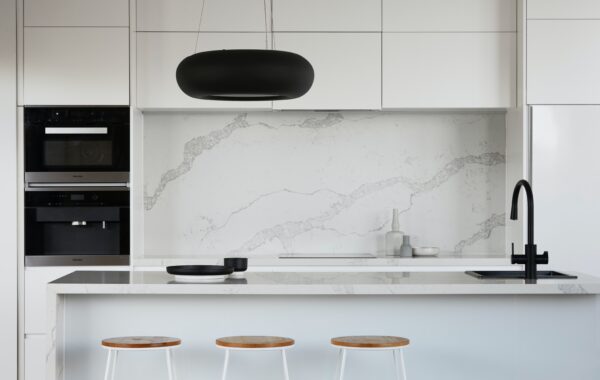
Restraint over decoration. Fewer materials, used well, always reads richer than a room trying to do everything. A single stone that runs from the benchtop up the wall will feel more considered than three competing finishes.
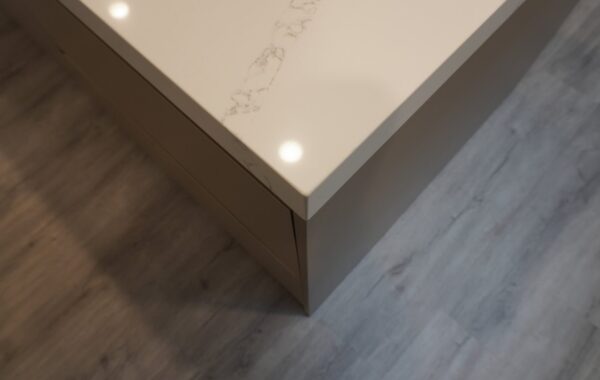
Precision in the joinery. Consistent gaps between doors and drawers, flush fronts, and clean edges are the tell of a properly made kitchen. This is where custom manufacturing earns its keep, because the tolerances come off the machine rather than being fudged on site.
Function you can feel. Soft-close everything, drawers that open fully, corners that actually give you the storage back. Luxury is a kitchen that works hard without you thinking about it.
💡 Design tip: Before you spend on statement materials, get the layout and the cabinetry precision right. A modest laminate kitchen that’s beautifully made will out-class a marble kitchen with sloppy joinery every time.
High-End Kitchen Renovations in Auckland: Where the Money Goes
Auckland homeowners searching for high-end or luxury kitchen renovations usually want to know one thing first: what does it cost, and what am I paying for? There’s no single number, because a kitchen’s price is driven by size, layout changes, materials and appliances. But it helps to know where the budget actually lands.
As a rough guide from the projects we quote, a mid-range custom kitchen in Auckland typically runs from around $25,000 to $45,000, and a genuinely high-end custom kitchen, larger footprint, stone throughout, premium appliances and specialist storage, commonly sits from about $50,000 upward. Those are indicative ranges for cabinetry, benchtops and installation, not fixed quotes, and appliances are usually costed separately.
The biggest cost drivers in a high-end reno are consistent:
- Benchtops: engineered or natural stone, especially with a waterfall end or a thick profile, is one of the largest line items.
- Cabinetry finish: a full custom colour, textured woodgrain or acrylic gloss costs more than a standard laminate.
- Storage engineering: pull-out pantries, corner mechanisms and internal drawer systems add up fast, and they’re where a lot of the “high-end” feel lives.
- Layout changes: moving plumbing, adding an island or opening a wall pulls in other trades and lifts the total.
- Appliances: integrated and premium appliances can quietly match the cost of the cabinetry.
For a full breakdown by material and size, our guide to kitchen benchtop costs in NZ is a good place to start, and you can get a quick estimate with our kitchen cabinetry cost calculator.
Luxurious Benchtop Finishes
The benchtop is the surface you touch, cook on and look at most, so it sets the tone. High-quality materials look the part and stand up to real Auckland family life.
Natural and Engineered Stone
Natural stones like marble and granite carry unique veining and character, available through NZ suppliers such as Universal Granite and UniQuartz. Engineered stone, including brands like Caesarstone, offers the stone look with more consistency and easier care, and there’s a growing range of low-silica options worth asking about. Archant is another NZ surfaces supplier with colours and finishes that mimic natural stone.
Thickness and Detail
A thicker benchtop, or the illusion of one through a mitred edge, reads more substantial and more expensive. A 20mm stone with a built-up 40mm edge is a common way to get the chunky, high-end look without the weight and cost of a solid slab. A waterfall end, where the stone runs down the side of an island to the floor, is the single most effective luxury detail for the money.
💡 Design tip: Book-matching the veining across a benchtop and its waterfall end is what separates a designer kitchen from a builder’s kitchen. Ask your fabricator whether your slab allows it before you commit.
Premium Cabinetry Finishes
The finish on your cabinetry does more heavy lifting than almost anything else, because it’s the largest visible surface in the room.
- Gloss or matte: gloss reflects light and feels sleek and modern; matte is understated and hides fingerprints better, which matters in a busy family kitchen. Dezignatek thermoformed doors offer both in smooth, wrap-finished profiles.
- Textured woodgrains and laminates: the current generation of textured surfaces from Laminex and Melteca look and feel remarkably close to real timber and stone, at a fraction of the cost. Laminex carries up to a 10-year warranty on its premium ranges.
- Custom colour: a tailored, painted-look finish in a soft neutral or a deep, confident tone is one of the clearest signals of a considered, high-end kitchen.
Because we manufacture in-house on German machinery, the edge-banding and finish come off the line consistent every time, which is exactly the precision that makes a cabinetry finish read as premium rather than flat-pack. If you’re weighing your options, our comparison of kitchen cabinet materials breaks down how each finish performs.
High-Quality Hardware and Mechanisms
Hardware is where a kitchen stops looking expensive and starts feeling expensive. It’s also where cheap kitchens give themselves away within a year.
- Soft-close drawers and hinges: quality drawer systems and hinges from BLUM and Hettich glide shut silently and keep doing it for years. Both carry lifetime mechanical warranties on their core hardware, which tells you how they’re built.
- Storage systems: pull-out pantries, corner units and internal organisers from Häfele turn awkward cabinets into genuinely usable space. For drawer boxes we lean on BLUM; for the broader hardware range, hinges, sliding and folding systems, and lighting, Häfele covers it.
- Handles and profiles: matte black, brushed nickel and warm brass are the finishes doing the work right now. Or go handleless with a J-pull or channel profile for the cleanest look of all, which we cover in our handleless kitchen guide.
“The fastest way to make any kitchen feel high-end is to upgrade the drawers. Full-extension, soft-close runners with a quality internal system change how the kitchen feels to use every single day, and it costs a fraction of a stone upgrade.”
— Little Giant Interiors Design Team
Thoughtful, Layered Lighting
Lighting is the most underrated part of a luxury kitchen. One central light will flatten even the best materials. Layering is what gives a room depth.
- Under-cabinet lighting: LED strips light the workspace and make a stone splashback or benchtop glow.
- Statement pendants: two or three pendants over an island create a focal point and anchor the room.
- Ambient and accent: recessed downlights for even coverage, plus a warm accent light inside a glass-front cabinet or a display niche for the finishing touch.
Integrated Appliances
Nothing says high-end like a kitchen where the appliances disappear into the cabinetry. Integrated fridges and dishwashers behind matching door fronts keep the eye on your design rather than a wall of stainless steel.
- Built-in ovens and integrated fridges that sit flush with the cabinetry give that clean, uncluttered wall.
- Concealed or integrated rangehoods keep the focus on your benchtop and splashback.
New Zealand buyers are well served here: Fisher & Paykel is the strong local option, with Bosch, Miele and Gaggenau covering the premium end. Plan appliance choices early, because integration affects the cabinetry design from day one.
Sophisticated Splashbacks
The splashback is a chance to add personality or to double down on restraint.
- Continuous stone: running your benchtop material up the wall is the most luxurious option, with no grout lines to interrupt the surface.
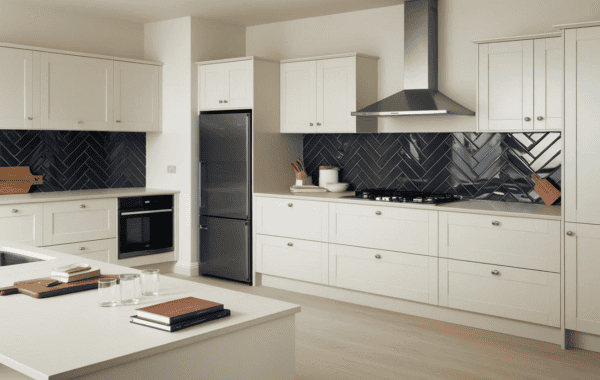
- Tiles: classic subway tiles, or a hand-glazed or textured tile, add character behind the cooktop.
- Glass: a single sheet of coloured glass gives a sleek, easy-clean finish that suits a modern kitchen.
A High-End Look Doesn’t Have to Mean a High-End Price
Here’s the part most people don’t expect from a custom manufacturer: you don’t have to spend big to get the look. The trick is knowing which elements carry the luxury feel and spending there, while choosing smart, hardworking materials everywhere else.
The comparison below shows indicative Auckland ranges for the same kitchen design specified two ways. These are ballpark figures to show the gap, not a quote:
| Element | Premium spec (indicative) | Smart-value spec (indicative) |
|---|---|---|
| Benchtop | Natural stone with waterfall end | Engineered stone, mitred edge |
| Cabinetry finish | Acrylic gloss or full custom colour | Premium textured laminate |
| Hardware | Full BLUM drawer systems throughout | BLUM on key drawers, quality hinges elsewhere |
| Splashback | Continuous stone up the wall | Tiled or single-sheet glass |
| Result | The full luxury statement | Reads high-end for noticeably less |
The design choices carry the look. Where you put a stone splashback, how you profile a benchtop edge, whether the drawers are soft-close, these decide whether a kitchen feels luxurious far more than the raw spend does.
➡ Book your free in-home design consultation with Little Giant Interiors
➡ See how our design and build process works
➡ Explore the custom kitchens we design and build for Auckland homes
What makes a kitchen look high-end?
A high-end kitchen comes from a few details working together: a quality benchtop with a thick or mitred edge, a precise cabinetry finish, soft-close hardware, layered lighting and integrated appliances. Consistent joinery, flush fronts and even gaps matter more than expensive brands. Restraint, using fewer materials well, almost always reads richer than a busy room.
How much does a high-end kitchen renovation cost in Auckland?
As an indicative guide, a mid-range custom kitchen in Auckland typically runs from around $25,000 to $45,000, while a genuinely high-end custom kitchen commonly starts from about $50,000 for cabinetry, benchtops and installation. Appliances are usually costed separately. The biggest drivers are stone benchtops, custom cabinetry finishes, storage engineering and any layout changes.
Can you get a luxury kitchen look on a budget?
Yes. Spend on the elements that carry the luxury feel, a waterfall or mitred-edge benchtop, quality soft-close drawers and a good layout, and choose smart, hardworking materials elsewhere. A premium textured laminate with well-made joinery reads high-end for far less than solid stone and acrylic throughout.
What benchtop material looks most high-end?
Natural stone with visible veining reads as the most luxurious, especially with a waterfall end and book-matched grain. Engineered stone gives a very similar look with more consistency and easier care. A thick or built-up mitred edge adds the substantial, expensive feel regardless of which stone you choose.
Are integrated appliances worth it in a luxury kitchen?
If a clean, uncluttered look is your goal, yes. Integrated fridges and dishwashers behind matching cabinetry fronts keep the eye on your design rather than a wall of appliances. They cost more and need to be planned into the cabinetry from the start, so decide early. Fisher & Paykel, Bosch and Miele all offer strong integrated ranges in NZ.
What kitchen hardware gives the best high-end feel for the money?
Drawer systems. Full-extension, soft-close runners with a quality internal organiser change how the kitchen feels every day and cost far less than a stone upgrade. BLUM and Hettich both carry lifetime mechanical warranties on their core hardware, which is why we use them on the drawers that get the heaviest use.
What kitchen colours look expensive?
Deep, confident tones like forest green, navy and charcoal read as high-end, especially paired with warm timber or brass accents. Soft, muted neutrals are timeless and let the materials speak. Two-tone schemes, a darker island against lighter perimeter cabinetry, add depth without feeling busy.
How long does a custom kitchen take to build in Auckland?
From design sign-off, a custom kitchen typically takes several weeks to manufacture and install, depending on materials and the complexity of the design. Because we manufacture in our own Auckland factory rather than importing, we control the timeline and avoid the long waits that come with overseas-made cabinetry. We confirm your timeframe at the design stage.
Have you been putting off your kitchen renovation?
We offer flexible finance options to help you get your dream kitchen sooner. Learn more about our interest-free finance options.