

Last updated:
Quick answer: To clean kitchen cabinets in NZ, wipe them with a soft cloth and warm water with a little detergent, apply any cleaner to the cloth rather than the door, and dry the surface afterwards. Abrasives like Jif and neat Janola are banned by name in the supplier care sheets, and using them can void your warranty.
The care sheet that came with your new kitchen isn’t advice. It’s a condition of the warranty, and almost nobody reads it.
Read the actual documents and it gets more interesting. Laminex New Zealand names the products you must never use on Melteca, and two of them are sitting under most Kiwi sinks right now. Caesarstone won’t cover a benchtop that’s had a hot oven tray put on it. Dezignatek won’t cover a thermoform door that’s been steam-cleaned. Every one of those warranties runs on its own clock, so how long you’ve got to report a problem depends on which part of the kitchen the problem is in.
We install these products every week out of our Rosedale factory, which means we’re also the people who take the phone call when a door has gone cloudy or a benchtop has a ring burned into it. Plenty of those calls end the same way. The damage is real, the homeowner is gutted, and the warranty doesn’t cover it because of something that took ten seconds to do and can’t be undone.
So this is the guide we wish came taped to the inside of every cupboard door. What to clean with, what to keep away from each surface, what quietly destroys cabinetry in an Auckland kitchen, and exactly where the warranty stops.
How To Clean Kitchen Cabinets: The Products NZ Suppliers Ban By Name
Most cleaning guides tell you to avoid abrasives. True, and useless, because they never tell you what counts as one. The NZ suppliers are far more specific than that. They name brands.
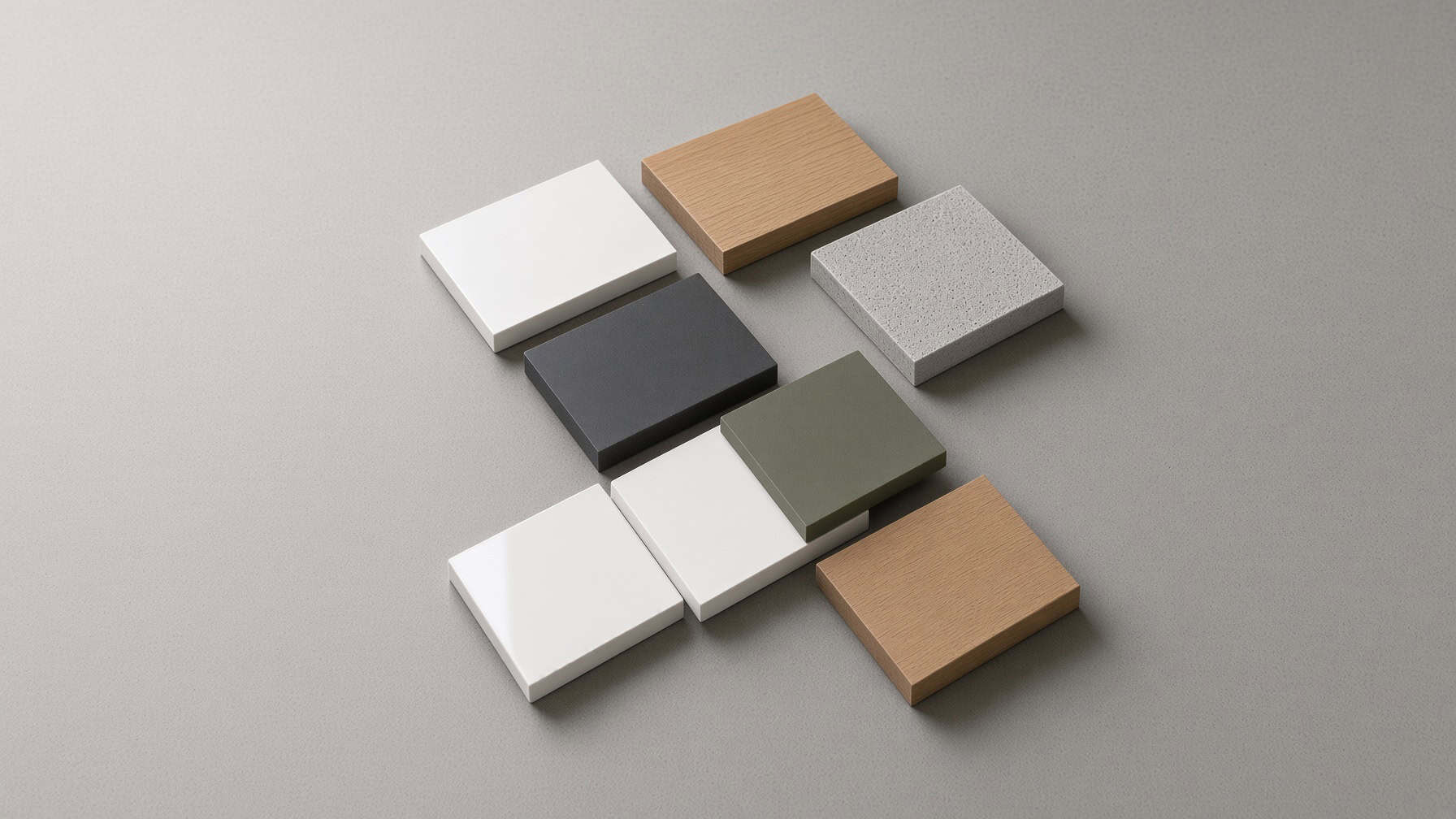
The Melteca Care and Maintenance Sheet issued by Laminex New Zealand in November 2022 opens with a flat prohibition: never use Jif, Ajax, Chemico, Brasso, oven cleaners, neat Janola, wire wool, scourer pads or sandpaper. That is not a paraphrase. Those are the products listed, and Jif and Janola between them probably live in eight out of ten Auckland kitchens.
Dezignatek, who make a large share of the thermoformed vinyl doors in New Zealand homes, publish their own list. Their care guide bans Jif, Vim and Chemico on any decorative surface, and then goes further than Laminex does: do not use paint thinners, solvents or methylated spirits under any circumstances.
The Janola Trap: Neat Is Banned, Diluted Is Recommended
This is where a blanket rule steers you wrong. Laminex bans neat Janola outright. But in the very same document, under stain and mark removal, it recommends diluted Janola for stubborn marks, at one part Janola to three parts water, wiped down afterwards with a warm damp cloth.
Same product. Banned at full strength, recommended at a quarter strength. If you’ve been splashing neat bleach on a mark and hoping for the best, you’ve been doing the one version of it the manufacturer specifically prohibits.
The same document also allows acetone from the pharmacy for finger marks, smearing and stickiness, and methylated spirits or mineral turpentine for newsprint. Not what you’d guess from the generic advice. And it only holds for Melteca panels.
Why There Is No Single Safe Cleaner For A Modern Kitchen
This is the part that catches people out, and it’s why a one-bottle-does-everything approach fails.
A typical custom kitchen holds four or five different materials sitting within arm’s reach of each other. They don’t agree with each other about cleaning. Laminex recommends acetone on Melteca. Blum’s own cleaning and maintenance manual lists acetone solvents and nitro thinners among the products that must not be used on their hardware. So the acetone that lifts a mark off your cabinet door face is on the prohibited list for the drawer runner half a metre away.
Methylated spirits runs the same way in reverse. Laminex recommends it on Melteca for newsprint and dye marks. Dezignatek bans it outright on thermoform. If your kitchen has Melteca carcases and thermoform doors, and plenty of Auckland kitchens do, then one bottle under the sink is correct for half the kitchen and banned on the other half. Same cloth, same afternoon, two different outcomes.
💡 Design tip: Keep the care sheets. When your kitchen is handed over, photograph every supplier care document and save them in an album on your phone titled with your address. When a mark appears in year four, you will not remember whether the doors were thermoform or acrylic, and the treatment for the two is different.
The Microfibre Surprise
Microfibre cloths have a reputation as the safe option for everything. Blum’s manual disagrees where hardware is concerned, noting that microfibres might harm surfaces in the event of scrubbing. Their prohibited list also covers scrubbing household cleaners and bristly cloths or sponges, strong alkaline or strong acid substances, chloral cleaners, and anything whose chemical name starts with tri or tetra.
Blum’s own position on maintenance is refreshingly short. Blum products are maintenance-free. They need cleaning, not servicing.
What To Use On What
| Surface | Everyday method | Never use |
|---|---|---|
| Melteca and melamine | Soft cloth, warm water, a little detergent. Finish with streak-free glass cleaner | Jif, Ajax, Chemico, Brasso, oven cleaner, neat Janola, wire wool, scourers, sandpaper |
| Thermoform vinyl doors | Warm damp cloth with excess water removed, then dry cloth | Methylated spirits, solvents, thinners, Jif, Vim, Chemico, citrus cleaners, steam cleaners |
| Acrylic doors | Warm water and detergent, rinse with damp cloth | Brushes, scourers, scrapers, paper towels, dry-wiping |
| Engineered stone benchtops | Warm soapy water and a clean damp cloth | High or low pH cleaners, plant oil soaps, paint strippers, abrasive scourers |
| Blum hardware and runners | Soft damp cloth, then dry. Commercial stainless cleaner on steel | Acetone, nitro thinners, strong acids or alkalis, chloral cleaners, scrubbing |
Print that, stick it inside the cupboard under the sink, and you’ve removed the single biggest cause of avoidable cabinetry damage we see.
How To Clean Kitchen Cabinets And Benchtops, Surface By Surface
Very little of this takes real effort. It is mostly about doing small things promptly rather than doing big things occasionally.
Laminated Doors And Carcases
Laminex’s instruction is that a soft cloth should always be used, and that cleaning products go onto the cloth rather than directly onto the product. That second half is the bit everyone skips. Spraying a cleaner straight at a door pushes liquid into the join between the door face and the edge tape, and that join is where delamination starts. Cloth first. Every time.
For textured finishes such as pearl, organic and puregrain, the same sheet notes that periodic use of a soft brush may be necessary to remove dirt build-up and the residue left behind by some spray-on cleaners. Textured doors look superb in a Grey Lynn villa kitchen and they do hold onto grime in a way flat finishes do not.
Thermoform Doors And The Steam Problem
Thermoformed vinyl is durable and it is not waterproof. Dezignatek are direct about the distinction: their doors are water-resistant but not waterproof, and care should be taken that they do not have excessive exposure to water, steam or extreme humidity.
Their care guide carries an explicit warning against steam cleaners on or around the doors, because moisture can permeate around the door edge and lead to delamination of the thermoform vinyl. Steam mops are standard kit in a lot of Auckland homes now. Run one along a kickboard for a couple of years and the bottom edge of your doors is what pays for it.
Acrylic And High-Gloss Finishes
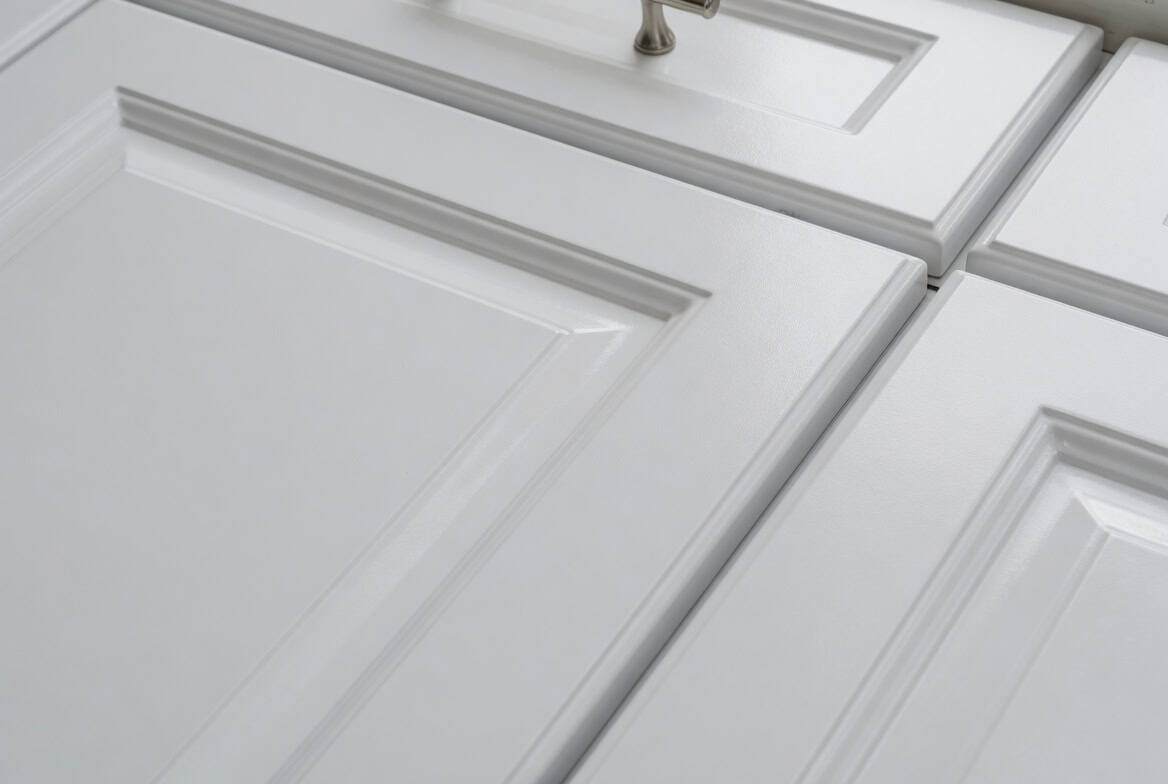
Acrylic has genuinely good scratch resistance, and it punishes two habits nobody thinks of as risky. Dezignatek’s product care guide says to avoid paper towels and not to dry-wipe the acrylic surface. Dry-wiping drags whatever dust is on the door across the door. On a high-gloss finish in a Takapuna apartment with afternoon light coming in, you will see every one of those micro-scratches.
Damp cloth, then dry cloth. That order matters.
Dark And Matte Doors: The Finish With A Warranty Catch
Dark matte cabinetry has been the dominant look in Auckland kitchens for several years now. It is also the finish with the most maintenance built into it, and there is a warranty consequence most people never see coming.
The Melteca warranty explicitly lists wipe marks on darker colour surfaces among the things it does not cover. Not a defect. A characteristic. Caesarstone takes a similar line on its concrete-look finishes, noting that temporary marks common to that finish, such as metal marks and fingerprints, are part of the patina and are not covered.
None of that means you should avoid dark or matte. It means you should choose it knowing what you are signing up for, and it means a soft cloth and a proper dry-off are not optional on those doors.
💡 Design tip: If you love the matte look but live with kids and a busy kitchen, run it on the doors away from the cooking zone and put a more forgiving finish on the run beside the hob and the bin. We do this split constantly and it reads as a deliberate two-tone rather than a compromise.
Engineered Stone Benchtops
Caesarstone’s own guidance for its mineral surfaces is a splash of warm soapy water, avoiding plant oil soaps, wiped with a clean damp cloth. For anything tougher they recommend a 3M Foam Scrub with cream cleanser on the foaming side, worked gently in a circular motion, with the lather left up to two minutes. Dried spills should be softened with water for several minutes before you attempt anything.
For rust or metal marks they specify a small amount of K2r rust and stain remover or oxalic acid on a damp cloth, and no abrasive scourer. On dark surfaces they advise against cream-coloured cleaning products, and to use caution with anything at a high or low pH.
Two habits carry more weight than any product. Always place hot cookware on a trivet or hot pads, and always use a cutting board. The reason those two sit at the top of Caesarstone’s list is not tidiness. It is that both of the things they prevent are excluded from the warranty, which is where we go next.
What Actually Voids A Cabinetry Warranty In New Zealand
Warranty documents are written to be skimmed and filed. Read properly, they are the clearest maintenance instructions you will ever get, because they tell you precisely which behaviours the manufacturer has decided are your responsibility.
Care Compliance Is A Condition, Not A Suggestion
The Melteca warranty applies only to panels that have been installed, maintained, used and protected in the manner recommended by Laminex New Zealand in its published literature. That single clause turns the care sheet from guidance into a contractual requirement.
Caesarstone’s New Zealand warranty card does the same thing from the other direction, stating that it does not cover damage resulting from the product not being cleaned in accordance with the Caesarstone Care and Maintenance Guide. Dezignatek’s exclusions include the product not being regularly maintained in accordance with their care guide.
All three suppliers have made following the care sheet a precondition of cover. Nobody reads them. They’re two pages long.
The Exclusions That Catch Auckland Homeowners
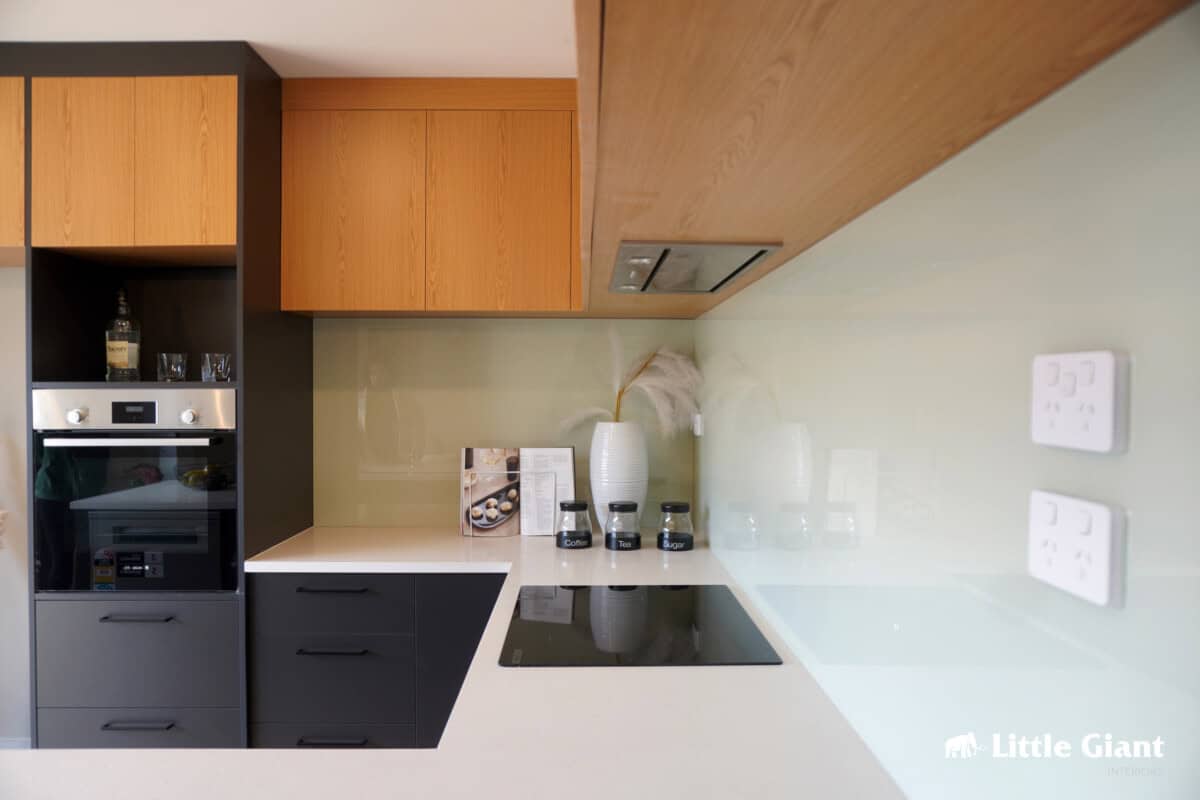
The Melteca warranty does not cover defects caused by physical abuse, misuse, accidents, exposure to excessive heat, exposure to excessive moisture, the use of solvents or inappropriate cleaning products, improper maintenance, normal wear and tear, scratches, scuffs, burns, stains, wipe marks on darker colour surfaces, or exposure to chemical products. It also excludes general fading and discolouration from direct and indirect light, and advises that exposure to sunlight should be avoided.
Caesarstone excludes damage from placing hot items, including hot pans, electric frying pans or oven trays, directly on the slab. It excludes damage from products containing trichlorethane or methylene chloride, such as paint removers and strippers, and from cleaning agents with high alkaline or pH levels.
Caesarstone also treats cracking and chipping as not being material faults at all. Their position is that cracks come from externally induced mechanical stress after installation, with settlement, movement, or excessive weight such as someone standing or sitting on the benchtop given as the likely causes. Cracks running from a sink cut-out, a cooktop cut-out or an L-shaped cut-out are specifically listed as not covered. Chipping is described as the direct result of an impact to the edge.
Dezignatek’s exclusions include poor design or detailing that puts doors too close to heat-generating appliances, exposure to excessive heat or moisture, damage from mould, mildew, fungi or bacteria, fading from UV, doors modified by being cut or drilled, and doors moved after installation.
Important note: None of these warranty exclusions removes your rights under the Consumer Guarantees Act 1993. The Melteca warranty states that its goods are supplied subject to such guarantees as cannot be excluded under that Act, and Dezignatek states its warranty is in addition to it. A supplier exclusion and your statutory rights are two different things.
Three Warranties, Three Different Clocks
This is the detail we’ve never seen written down anywhere, and it’s the one most likely to cost you money.
Every warranty has a deadline for reporting a problem. In a single kitchen, they’re all different.
| Supplier | Time to report a defect | Who you claim through |
|---|---|---|
| Laminex NZ (Melteca panels) | Within 7 days of first becoming aware of it, or of when it ought reasonably to have been identified | Laminex New Zealand, in writing |
| Caesarstone NZ | Within 28 days of the event giving rise to the claim | Laminex New Zealand as distributor, by written notice |
| Dezignatek | Within 30 days of the defect becoming apparent | Your joiner or kitchen manufacturer, who inspects first |
Seven days is the one that hurts. A homeowner who notices something odd on a panel, decides to keep an eye on it over summer, and rings in March about something first spotted in January has, on the strict wording, already missed the window. We’re not saying every claim gets refused on a technicality. We’re saying the clause is there, you didn’t know about it, and the fix costs nothing: report things when you notice them, not when they finally annoy you enough.
Your Warranty Probably Does Not Survive The Sale Of Your House
Worth knowing before you use it as a selling point. The Melteca warranty states plainly that it is not transferable or assignable, and the Caesarstone New Zealand warranty says it applies to the original purchaser and is not transferable to subsequent owners. Both also exclude material that has been moved from its original place of installation.
Dezignatek runs differently, with the benefit of its 10-year warranty transferring to the homeowner on installation of the cabinetry.
Our own position sits apart from all of it. The guarantee published on our guarantee page is transferable to new owners, and it sets out the full schedule: Laminex 10 years, Caesarstone 10 years, Melteca 10 years, PrimePanels 10 years, Bestwood 10 years, Blum, Hettich and Blanco lifetime, general installation 5 years, and electrical workmanship 12 months. Laminex’s own Melteca panel warranty document runs for 10 years on Melteca Standard, Hi-Gloss and Jumbo panels and starts from the earlier of delivery or payment in full, which is worth noting because that clock can begin before your kitchen is even installed.
How To Tell If A Defect Is Actually A Defect
Dezignatek reference the MBIE standard for visual defects, and it is a genuinely useful test you can run yourself. A visual flaw counts if it is apparent when viewed in normal interior lighting, from a distance of between 600mm and one metre, at an unobstructed angle of 45 degrees.
Stand a comfortable arm’s length back, in the light the room normally has. If you can see it, it’s worth reporting. If it only shows up when you press your face to the door with a torch at a raking angle, it isn’t a defect by the standard the industry actually uses.
One more piece of practical trivia. Every genuine Caesarstone slab is stamped on the underside with a batch code and a unique nine-digit serial number, and in most cases you can see it by opening the cupboard under your sink and looking up. If you ever need to prove what you have got, it is right there.
“The saddest calls we take are the ones where the damage is completely fixable but the cause was completely preventable. A steam mop run along the kickboards. An oven tray straight onto the stone. Nobody was careless, they just never read the two pages that came with the kitchen.”
— Little Giant Interiors Design Team
Warranties describe the failures suppliers see most often. Which is why the next section matters: in Auckland, the two things every one of those documents excludes are the two things our climate supplies for free.
Heat, Moisture And The Auckland Factors That Quietly Wreck Cabinetry
Read those four warranties side by side and the same two words keep appearing. Excessive heat. Excessive moisture. Auckland has plenty of the second, and a modern kitchen generates a surprising amount of the first.
Your Rangehood Is Building Code, Not A Luxury
Cooking is the single largest moisture source in most homes, and moisture is what lifts edge tape and swells substrate.
The Ministry of Business, Innovation and Employment sets a hard number for this. Under Acceptable Solution G4/AS1 for Building Code clause G4 Ventilation, in its fifth edition effective 28 July 2025, spaces in household units containing cooktops must have mechanical extract fans with a flowrate of not less than 50 litres per second. Showers and baths sit at 25 litres per second.
The same document is blunt about the alternative, stating that within that acceptable solution, natural ventilation on its own is not adequate to remove moisture generated from cooktops, showers and baths. Opening the window is not a ventilation strategy.
If you’re renovating a 1970s brick-and-tile place in Pakuranga with a recirculating rangehood that vents straight back into the room, you’re running your new cabinetry through a moisture bath every time you boil a pot. Duct it outside.
The Dishwasher Is The Most Common Culprit We See
A dishwasher opened at the end of its cycle releases a cloud of steam directly upward, straight into the underside of the benchtop and the front edge of the adjacent door. Repeat that nightly for five years.
The fix costs nothing. Let the cycle finish and leave the door shut for twenty minutes before opening it, or pull the machine fully out when you open it so the steam clears the benchtop edge. Both warranties that cover the surfaces around a dishwasher exclude damage from excessive moisture, and this is the most repeatable source of it in the house.
Kettles, Toasters And Appliance Heat Leaks
Dezignatek exclude damage from doors installed too close to heat-generating appliances, and from what they describe as heat leaks from faulty appliances. That covers more than the oven.
A kettle positioned under a wall cabinet fires steam at the underside of that cabinet several times a day. A toaster hard against a return panel does something similar with dry heat. In a compact galley kitchen in a Mt Eden bungalow, where bench space is tight and appliances end up wherever they’ll fit, that’s worth sorting at design stage rather than discovering in year three.
💡 Design tip: If bench space is tight, ask for an appliance garage or a dedicated kettle bay with an open top rather than a cabinet directly overhead. It solves the steam problem and it keeps the bench clear, which is the other thing every client asks for.
Under-Sink Leaks And Sunlight
The slow weep from a tap tail or a waste connection is the classic silent killer, because the damage happens inside a cupboard nobody looks into properly. Pull everything out of the sink cabinet twice a year and run your hand across the base. Swollen or soft board means water, and water that has been there a while.
Sunlight is the other one. Melteca’s warranty excludes general fading and discolouration from direct and indirect light and states that exposure to sunlight should be avoided. Dezignatek exclude UV fading too. A west-facing kitchen in Titirangi or Herne Bay with big glazing will fade coloured doors over years, and a door left permanently open can end up a different shade to the one beside it.
None of it takes much. It just takes knowing which small habits compound.
Looking After Drawers, Hinges And Soft-Close Hardware
Hardware is the part of a kitchen that gets used most and thought about least. A cutlery drawer gets opened and shut more often than anything else in the house, and the runner under it carries the longest warranty in the whole kitchen.
Maintenance-Free Does Not Mean Untouchable
Blum’s cleaning and maintenance manual states that Blum products are maintenance-free, then acknowledges the obvious: during assembly and use, stains and contamination will appear.
Their method for drawer sides and stainless ORGA-LINE components is to use only commercial cleaners intended for stainless steel, reading the instructions on the canister first, rubbing with a soft damp cloth and using a dry cloth on wet surfaces. Small contaminations get solvent soap mixed with water, then the water drops mopped away with a dry cloth. ORGA-LINE itself is dishwasher-proof with a commercial dishwasher cleaner.
Plastic-coated parts and nickel or chrome-plated surfaces get the same treatment: soft damp cloth, then dry.
The Crumb Problem
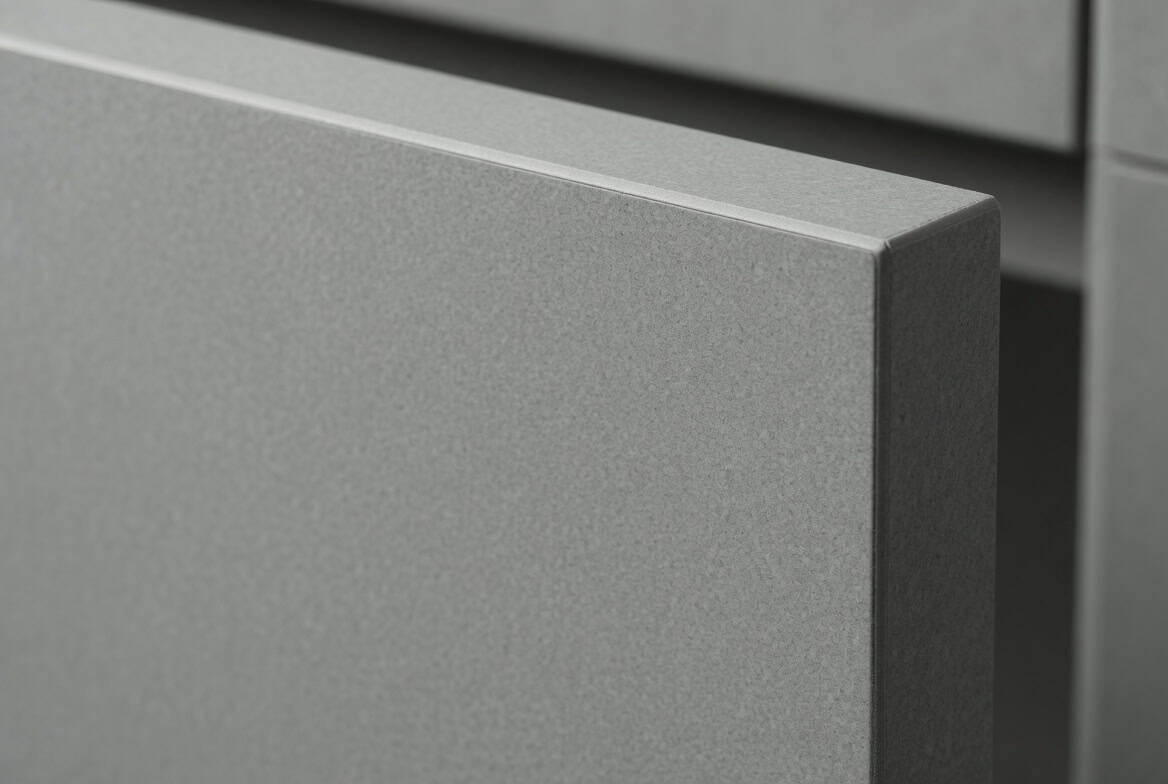
The most common cause of a drawer that has started to feel notchy isn’t a worn runner. It’s debris in the runner channel.
Cutlery drawers and pantry drawers collect crumbs, rice and the occasional bay leaf, and those work their way into the mechanism. Blum’s manual recommends removing the drawer to clean the intricate parts properly, and their TANDEMBOX and TANDEM systems are designed to be taken out and put back by hand without tools.
Lift the drawer slightly at the front, release the catches underneath at the back of each runner, and the box comes out. Vacuum the channel, wipe with a damp cloth, dry it, and slide it back until it clicks. That is the single most effective ten minutes of kitchen maintenance available, and it is free.
Doors That Have Dropped Or Stopped Closing Square
Cabinet doors move slightly in the first year as a house settles and the hinges bed in. A door sitting a couple of millimetres proud of its neighbour is normal, and on a quality hinge it’s adjustable rather than terminal.
Adjustment is a job worth getting right rather than guessing at, and it’s the one place we’d point you back to whoever installed the kitchen. A single door that’s dropped is a five-minute fix. A whole run that has gone out of line together is usually the cabinet or the floor rather than the hinges, and no amount of hinge adjustment will square it up. Knowing which of those two you’re looking at is the difference between a quick tweak and making it worse.
Soft-close that has stopped soft-closing is a different matter. Blum’s manual covers BLUMOTION as a clip-on component with documented removal and re-assembly, so a failed unit is a swap rather than a repair. Given Blum and Hettich hardware carries a lifetime warranty in our published guarantee schedule, a failed soft-close mechanism is worth reporting rather than living with.
💡 Design tip: Before you ring anyone about a sticking drawer, take it out and vacuum the runner channel. We would put money on debris being the cause more often than the mechanism, and it costs you ten minutes to rule out.
When To Ring Someone Instead
Cleaning, drawer removal and hinge adjustment are homeowner jobs. Anything structural isn’t.
Swollen or delaminating board, a benchtop join that has opened up, a crack running from a sink or cooktop cut-out, or a door that will not sit square after adjustment all need eyes on them. Cracks and chips sit outside the Caesarstone warranty as damage rather than material faults, but Caesarstone do say a damaged benchtop can be repaired and will refer you to a recommended service provider. So a chipped edge is worth a conversation rather than being written off.
For anything supplied through us, the claim path runs through us. That’s not a formality. Dezignatek require claims to be submitted by the joiner or kitchen manufacturer who installed the doors, after a physical inspection, so going direct just sends you back around the loop.
Look After It And It Will Outlast The Trend That Chose It
A custom kitchen is one of the largest single purchases most Auckland households make outside the house itself. The gap between one that still looks sharp at fifteen years and one that looks tired at six is rarely the money spent. It’s a soft cloth instead of a scourer, a trivet instead of a bare benchtop, a ducted rangehood instead of a recirculating one, and reporting a problem the week you notice it.
Everything here comes from documents your suppliers already publish and almost nobody opens. Now you’ve read them.
If you’re still at the specification stage, ask the maintenance question out loud before you choose a finish, not after. Dark matte, high-gloss acrylic and textured woodgrain all live differently in a real kitchen, and a good designer will tell you honestly which one suits the way you actually cook. That conversation is part of how we work through the kitchens we build and stand behind across Auckland, and it’s much cheaper to have early.
If your kitchen is a few years old and something here rang a bell, go and have a proper look this weekend. Pull out the sink cupboard, take out a drawer, stand back from the doors at arm’s length in daylight. Ten minutes now beats a phone call about a warranty clock you didn’t know was running.
➡ Book your free in-home design consultation with Little Giant Interiors
➡ See how our design and build process works
➡ Learn more about our custom kitchens in Auckland
Further reading from our team: our guides to Laminex kitchen cabinets, thermoform kitchen cabinet doors and engineered stone alternatives all go deeper on how each surface behaves before you commit to it.
How do you clean kitchen cabinets in NZ without damaging them?
Use a soft cloth with warm water and a small amount of detergent, and apply any cleaning product to the cloth rather than spraying it onto the door. Laminex New Zealand recommends finishing with a streak-free glass cleaner to remove residue. Always dry the surface afterwards, because moisture sitting on a door edge is what causes delamination over time. Never use abrasive cleaners or scourer pads on any decorative cabinetry surface.
Can I use Jif on my kitchen cabinets?
No. The Melteca Care and Maintenance Sheet published by Laminex New Zealand names Jif specifically in its list of abrasive cleaners that must never be used, alongside Ajax, Chemico, Brasso, oven cleaners, neat Janola, wire wool, scourer pads and sandpaper. Dezignatek also names Jif, Vim and Chemico as products not to use on any decorative surface. Using them can cause permanent damage and can also fall outside warranty cover.
Does using the wrong cleaner void a cabinetry warranty?
It can. The Melteca warranty applies only to panels that have been installed, maintained, used and protected in the manner recommended by Laminex New Zealand in its published literature, and it excludes damage caused by solvents or inappropriate cleaning products. Caesarstone excludes damage resulting from the product not being cleaned in accordance with its Care and Maintenance Guide. Following the care sheet is a condition of cover rather than general advice.
How long do I have to make a cabinetry warranty claim in NZ?
It depends on the supplier, and the windows are shorter than most people expect. Laminex requires notification within seven days of the defect first being noticed, or of when it ought reasonably to have been identified. The Caesarstone New Zealand warranty requires a written claim within 28 days of the event. Dezignatek requires claims within 30 days of the defect becoming apparent, submitted through the joiner or kitchen manufacturer who installed the doors.
Can I use a steam mop near my kitchen cabinets?
No. Dezignatek explicitly warn against using steam cleaners on or around thermoform doors, because moisture can permeate around the door edge and lead to delamination of the vinyl. Their warranty also excludes damage from exposure to excessive moisture. Kickboards and the lower edges of doors are the parts most at risk, since that is where a steam mop passes. Use a damp mop and dry the area instead.
Why do my dark matte cabinet doors show wipe marks?
Because darker surfaces reveal residue and cloth marks that lighter finishes hide. This is a known characteristic rather than a fault, and the Melteca warranty specifically lists wipe marks on darker colour surfaces among the things it does not cover. Caesarstone takes a similar position on concrete-look finishes, describing metal marks and fingerprints as part of the patina of that finish. Use a soft cloth and dry the surface fully after cleaning.
Does a kitchen cabinetry warranty transfer when I sell my house?
Often not. The Melteca warranty states that it is not transferable or assignable, and the Caesarstone New Zealand warranty applies to the original purchaser and is not transferable to subsequent owners. Both also exclude material moved from its original place of installation. Dezignatek differs, with the benefit of its warranty transferring to the homeowner on installation. The guarantee published by Little Giant Interiors is transferable to new owners.
How do I clean an engineered stone benchtop?
Caesarstone recommends warm soapy water and a clean damp cloth for everyday cleaning, avoiding plant oil soaps. For stubborn marks it suggests a 3M Foam Scrub with cream cleanser worked gently in a circular motion, leaving the lather up to two minutes. Rust and metal marks call for K2r rust remover or oxalic acid on a damp cloth with no abrasive scourer. Avoid cleaners with high or low pH levels.
Can I put a hot pan on a Caesarstone benchtop?
No. The Caesarstone New Zealand warranty specifically excludes any defect or damage resulting from placing hot items directly on the slab, including hot pans, electric frying pans and oven trays. Their care guidance is to always place hot cookware on a trivet or hot pads. Heat can also contribute to cracking, which the warranty treats as externally induced mechanical stress rather than a material fault, so it is not covered either.
How do I clean Blum drawer runners and hinges?
Blum describe their products as maintenance-free, so they need cleaning rather than servicing. Use a soft damp cloth followed by a dry cloth, and a commercial stainless steel cleaner on stainless components. Their manual prohibits scrubbing cleaners, bristly cloths and sponges, strong alkaline or acid substances, chloral cleaners, acetone solvents and nitro thinners. Removing the drawer to vacuum debris out of the runner channel fixes most notchy or sticking drawers.
Do I need a rangehood to protect my kitchen cabinetry?
Yes, and it is a Building Code requirement rather than a preference. Acceptable Solution G4/AS1 for clause G4 Ventilation, fifth edition effective 28 July 2025, requires spaces in household units containing cooktops to have mechanical extract fans with a flowrate of not less than 50 litres per second. The same document states that natural ventilation alone is not adequate to remove cooktop moisture. Every major cabinetry warranty excludes damage from excessive moisture.
Have you been putting off your kitchen renovation?
We offer flexible finance options to help you get your dream kitchen sooner. Learn more about our interest-free finance options.
References
- Laminex New Zealand — Melteca Care & Maintenance Sheet, November 2022
- Laminex New Zealand — Melteca 10 Year Warranty, October 2020
- Caesarstone New Zealand — 10 Year Limited Warranty Card
- Caesarstone New Zealand — Care & Maintenance, Mineral Surfaces
- Laminex New Zealand — How to Clean Your Melteca Cabinetry
- Dezignatek — Product Warranty & Care Guide, October 2023 (Technical Resources)
- Blum — Cleaning and Maintenance Manual
- MBIE Building Performance — Acceptable Solution G4/AS1 Ventilation, 5th edition, 28 July 2025
- Consumer Guarantees Act 1993 — New Zealand Legislation