

If you live on Auckland’s North Shore — whether that’s Takapuna, Devonport, Birkenhead, Browns Bay, or anywhere in between — you already know the drill. Your kitchen was built sometime in the 1970s, 80s, or maybe the early 2000s. The laminate is peeling, the pantry door swings the wrong way, and every time you have mates over for a dinner party you find yourself apologising for the bench space. Sound familiar?
A kitchen renovation on the North Shore is one of the single best investments you can make in your home — both for your everyday quality of life and for the resale value of your property. But it’s also one of the most complex home improvement projects you’ll ever take on, and walking into it without the right information is a guaranteed way to blow your budget and your timeline.
That’s exactly why we wrote this guide. At Little Giant Interiors, we’ve been designing, manufacturing, and installing custom kitchens across Auckland — including across the North Shore — for years. We’ve seen what works, what blows out, and what homeowners wish they’d known before they started. This blog pulls all of that together into one comprehensive resource: what to expect during a North Shore kitchen renovation, who you should be working with, and what it all actually costs in 2026.
We’ve broken it into three main sections so you can jump straight to whatever matters most right now:
- Section 1: What to Expect — the process, the timeline, the surprises
- Section 2: Who to Use — how to choose the right team for your project
- Section 3: What It Costs — honest, up-to-date cost breakdowns for North Shore renovations
Whether you’re just starting to think about a refresh or you’ve already got plans drawn up, this is the guide we wish every North Shore homeowner had before they picked up the phone.
Section 1: What to Expect From a Kitchen Renovation on the North Shore
From First Idea to Finished Kitchen: The Real North Shore Kitchen Renovation Process, Timeline & What Surprises Most Homeowners
Let’s start with what most people don’t tell you upfront: a kitchen renovation is a marathon, not a sprint. It’s also genuinely exciting — especially when you’re working with the right people. But if you go in expecting it to be a quick weekend job, you’ll be eating takeaways on your couch for a lot longer than planned.
Here’s a realistic, honest look at every stage of the process, tailored specifically to what homeowners across the North Shore actually experience.
Stage 1: The Discovery & Design Phase (Weeks 1–4)
Everything starts with a conversation. If you’re working with a reputable custom cabinetry company like Little Giant Interiors, the first step is an in-home consultation — ideally right there in your kitchen, so the designer can see the space, understand the flow, and start asking the questions that matter. Do you need more bench space or more storage? Are you dreaming of an island, or would that actually make the space feel cramped? Is the rangehood positioned in the right spot, or has it been annoying you for years?
“The design phase is arguably the most important part of the whole process. It’s where you lock in your layout, your materials, your finishes — and where you avoid the expensive mistakes that haunt homeowners later.” — Little Giant Interiors Design Team
After the initial consultation, you’ll typically receive the following within 1–2 days:
- A preliminary project estimate (ballpark cost based on what’s been discussed), including a wish-list summary
- A 2D floor plan showing the proposed layout
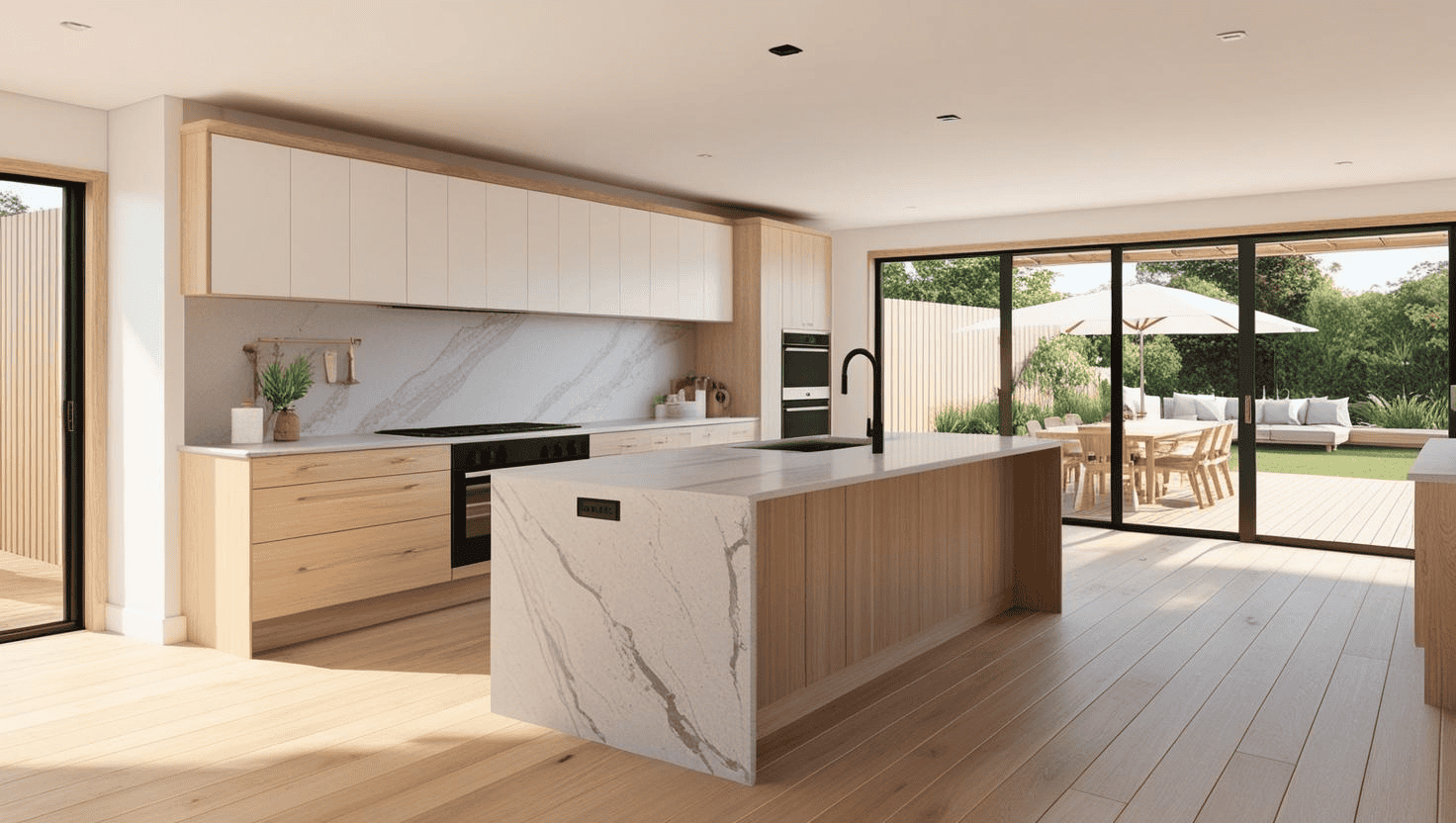
- A 3D render so you can actually visualise how the finished kitchen will look
This is also where material and finish selections start happening. You’ll be choosing cabinet door styles, benchtop materials, hardware, splashbacks, and appliances. It sounds fun (and it is), but it can also be overwhelming if you haven’t done your homework. We’d strongly recommend checking out our blog on kitchen design trends for NZ homes before your first design meeting — it’ll help you walk in with a much clearer sense of direction.
Pro Tip: Don’t be tempted to skip the 3D render to save a bit of money on design fees. Seeing your kitchen in three dimensions before a single cabinet has been ordered can save you thousands in changes later.
Stage 2: Finalising the Design & Getting Consent (Weeks 3–6)
Once you’ve signed off on the design and materials, the project gets accurately costed. This is where you move from a ballpark estimate to a proper quote — and it’s also when you start thinking about whether your renovation requires a building consent from Auckland Council.
When does a kitchen renovation require building consent on the North Shore?
- If you’re moving structural walls or removing load-bearing elements
- If you’re relocating plumbing or gas connections significantly
- If the work involves changes to the building’s structural elements
A straightforward kitchen renovation — new cabinetry, new benchtops, same layout — generally doesn’t require consent. But the moment you start talking about opening up walls, shifting the sink to the other side of the kitchen, or removing a wall between the kitchen and dining room, consent enters the conversation. Budget an extra $1,500–$4,000 and 3–6 weeks for the consent process if it’s required.
North Shore homes, particularly older character properties in Devonport, Birkenhead, and Northcote, often throw up surprises once walls come down — more on that shortly.
Stage 3: Final Site Measurement & Manufacturing (Weeks 4–8)
Once you’ve approved the final design and paid your deposit, our team carries out a final site visit to take precise, accurate measurements of your space. This is an important step that many kitchen companies skip — but at Little Giant Interiors it’s non-negotiable, because those exact measurements are fed directly into our automated manufacturing machines to ensure every cabinet fits perfectly.
Those measurements feed straight into our Auckland factory’s fully automatic German manufacturing equipment — machines that glue joints, apply lacquer, buff surfaces, trim cabinets, and edge-bind automatically, with no manual finishing required. That means no human error, no imperfections, and a consistently precise result every time. This is genuinely one of those behind-the-scenes details that makes a huge difference to the quality of your finished kitchen, even if you can’t see it.
Typical timeframes at this stage:
- Material procurement: up to 1 week
- Cabinet manufacturing: approximately 2–3 weeks
- Stone benchtop templating and fabrication (if applicable): 2–3 weeks after template
A note on benchtop lead times: If you’re going with an engineered stone or porcelain benchtop — think Caesarstone or Laminam porcelain benchtops from Laminex NZ — there’s a templating step that can only happen after the cabinetry is installed. This means stone benchtops are typically fitted 1–2 weeks after cabinets go in. Plan your temporary kitchen setup accordingly.
Stage 4: Demolition & Site Preparation (Days 1–3 of Installation)
This is the part that feels simultaneously satisfying and terrifying. Out come the old cabinets, the tired benchtop, the misaligned splashback. For a lot of North Shore homeowners — especially those in older homes in Devonport, Hauraki, or Birkenhead — this is also the stage where surprises emerge.
Common discoveries during North Shore kitchen demolitions include:
| Surprise Finding | Typical Impact | Approximate Additional Cost |
|---|---|---|
| Old wiring (not up to current code) | Requires licensed electrician to replace | $1,500–$4,000 |
| Old galvanised or lead pipes | Requires plumber to re-pipe | $1,500–$3,500 |
| Uneven or rotten subfloor | Requires remediation before new flooring | $800–$2,500 |
| Asbestos in older linings (pre-1990 homes) | Certified removal required | $2,000–$8,000+ |
| Walls not square or level | Additional carpentry work to compensate | $500–$2,000 |
This is exactly why we always recommend building a 10–15% contingency buffer into your kitchen renovation budget. It’s not pessimism — it’s just pragmatic. The homes across the North Shore that were built in the 1950s through 1980s are beautiful, but they often have layers of previous renovations and original infrastructure that don’t reveal themselves until you start pulling walls apart.
Stage 5: Installation (Cabinet Install: 1–2 Days; Full Completion: 2–4 Weeks)
This is the exciting bit — and it moves faster than most people expect. Cabinet installation itself typically takes just 1–2 days, overseen by a project manager. Because Little Giant Interiors’ cabinetry arrives pre-manufactured to exact site measurements, the install is efficient and precise — there’s no cutting, adjusting, or improvising on the day.
“Great design, beautifully built, now your kitchen has to be expertly installed. It’s the last kilometre of the race — and it matters enormously.”
After cabinets are installed comes the broader completion phase — and this is where the overall timeline extends. Your benchtop is templated (for stone or porcelain), taken to the fabricator, cut to exact specification, and returned for installation approximately 10 days later. During this window, temporary board sits in place over the cabinets so the kitchen remains usable.
Appliances (hob, oven) are connected once the benchtop is in. Splashbacks, final electrical connections, plumbing sign-off, and any painting or plastering wrap up the installation phase — typically bringing the total on-site completion phase to around 2–4 weeks from first cabinet going in to final handover.
Stage 6: Final Inspection & Handover
A quality kitchen renovation company will do a thorough walkthrough with you before calling the job done. This includes checking all drawer runners, hinge adjustments, door alignment, appliance function, and benchtop edge finish. At Little Giant Interiors, we back our work with an industry-leading warranty package — and one detail that stands out: if you ever sell your home, the guarantee transfers to the new owners. That’s peace of mind for you, and a genuine selling point when your home goes to market.
Here’s a summary of the key warranty terms that come with every Little Giant Interiors kitchen:
| Component | Warranty Period |
|---|---|
| Blum Hardware (hinges, drawer systems) | Lifetime |
| Hettich Hardware | Lifetime |
| Blanco Sinks | Lifetime |
| Caesarstone Benchtops | 10 Years |
| Laminex Products | 10 Years |
| Melteca & PrimePanels Laminates | 7 Years |
| Installation Workmanship | 5 Years |
| Electrical Workmanship | 12 Months |
Read the full details of our guarantee here.
Total Timeline: How Long Does a Kitchen Renovation Take on the North Shore?
| Renovation Scope | Typical Total Duration |
|---|---|
| Simple refresh (same layout, new cabinets + benchtop) | 6–10 weeks from consultation to handover |
| Mid-range renovation (new layout, island, new appliances) | 10–16 weeks |
| Full renovation with structural changes and consent | 16–24+ weeks |
The number one mistake North Shore homeowners make? Assuming they can start planning in October for a Christmas-ready kitchen. If you want your new kitchen ready for the summer entertaining season, you need to be starting your design conversations in July or August at the latest.
What Makes North Shore Renovations Unique?
The North Shore is architecturally diverse. You’ve got 1960s brick-and-tile homes in Glenfield and Hillcrest, Art Deco and villa-style homes in Devonport and Northcote Point, 1980s architecturally-designed houses in Milford and Castor Bay, and brand-new builds in Albany and Long Bay. Each of these housing types comes with its own renovation quirks.
Older character homes in Devonport and Birkenhead tend to have smaller, more enclosed kitchen layouts — often completely separated from the living areas. Homeowners frequently want to open these up, which requires structural assessments and usually building consent. It’s worth every dollar though: an open-plan kitchen transformation in a Devonport villa can feel like gaining an entirely new room.
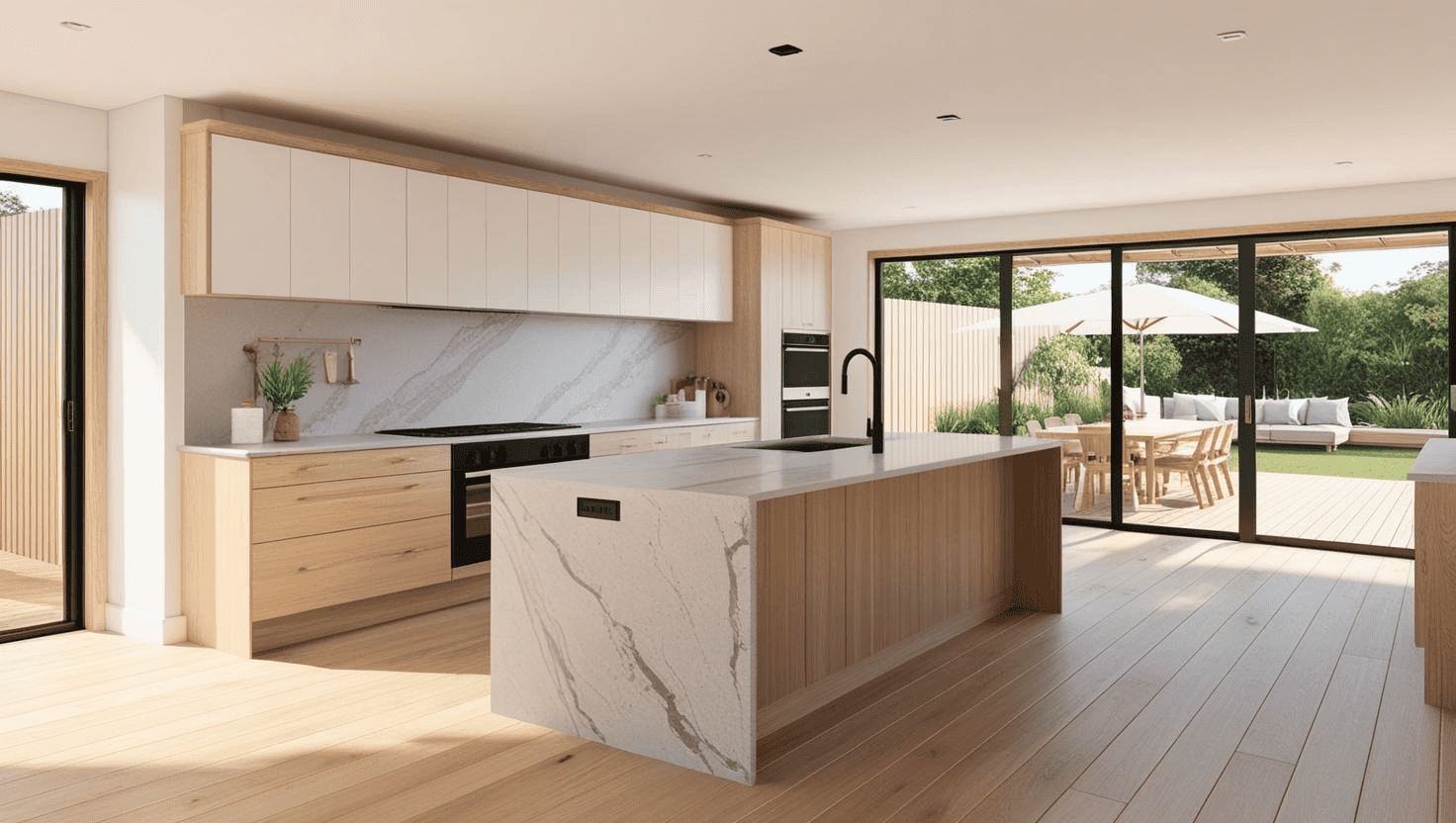
1970s–80s North Shore homes commonly have U-shaped or galley kitchens with low ceilings and dated configurations. These are often excellent candidates for an island conversion, where one run of cabinetry is removed and replaced with a freestanding or fixed island — dramatically improving both workflow and social connection.
Newer North Shore homes (particularly Albany and East Coast Bays) tend to have more generous proportions, but the original fit-out can feel dated within 10–15 years as trends evolve. Here, renovation tends to be more cosmetic — new cabinetry, benchtops, splashback, and appliances without major structural changes.
Living Through the Renovation: Practical Tips for North Shore Homeowners
Yes, you will be without a functioning kitchen for a period. How long depends on your renovation scope, but even a basic install means at least a week or two without a proper benchtop or working sink. Here’s how to manage it:
- Set up a temporary kitchen: A fold-out table, microwave, kettle, and toaster in the garage or dining room goes a long way. A portable induction cooktop costs $80–$150 at Mitre 10 or Bunnings and is worth every cent.
- Protect the rest of your home: Dust from demolition travels everywhere. Seal doorways with plastic sheeting, and ask your contractor to clean up at the end of each workday.
- Coordinate school holidays: If you have kids, try not to schedule your renovation over the school holidays — having the family stuck at home without a kitchen is a recipe for chaos.
- Keep a running list: Any small things you notice during the install — gaps, alignment issues, missing items — write them down in real time rather than trying to remember at handover.
Ready to think about what your design should actually look like? You might want to read our in-depth blog on kitchen colour tips for your next kitchen project before you go too far down the design rabbit hole.
Section 2: Who to Use for Your North Shore Auckland Kitchen Renovation
Choosing the Right Kitchen Company, Designer, and Trades for Your North Shore Kitchen Remodel
Here’s a truth most renovation companies won’t say out loud: who you choose matters more than almost any other decision you’ll make in this process. You can have a beautiful design and a generous budget, and still end up with a renovation disaster if the people doing the work aren’t the right fit. Conversely, a great team can stretch a modest budget further than you’d think possible.
The North Shore has no shortage of kitchen renovation options. So how do you sort through them and make the right call?
Understanding Your Options: The Different Types of Kitchen Renovation Providers
Not all kitchen companies are the same, and understanding the different models helps you make a smarter comparison.
| Provider Type | What They Do | Pros | Cons |
|---|---|---|---|
| Custom Cabinetry Manufacturer/Installer (e.g. Little Giant Interiors) | Design, manufacture, and install your kitchen in-house | Full control over quality, finish, and timeline; custom to your space | Higher investment than flat-pack; longer lead time |
| Kitchen Renovation Company (full project management) | Manages design, trades, and installation | Single point of contact; handles coordination of all trades | Less control over individual trade quality; margin stacking can inflate costs |
| Flat-Pack / Kit-Set Retailer (e.g. big-box stores) | Provides flat-pack cabinets for DIY or third-party install | Lower upfront cost; widely available | Limited customisation; quality varies; you manage the trades |
| Builder | Licensed Building Practitioner manages structural and installation work | Essential for structural work and consent; LBP accountability | Usually not a specialist in kitchen design; typically subcontracts cabinetry |
For most North Shore homeowners doing a mid-range to premium renovation, the best outcome usually comes from partnering a custom cabinetry specialist with a trusted independent builder (for any structural work), plumber, and electrician. This gives you the design quality and fit-out precision of a specialist, while ensuring all building compliance work is handled by licensed practitioners.
What to Look for in a North Shore Kitchen Designer and Cabinetry Manufacturer
There are a few non-negotiables worth checking before you commit to anyone.
1. They Have a Genuine Design Process — Not Just a Catalogue
There’s a difference between a designer who listens to how you actually use your kitchen and then designs around your life, versus one who shows you a brochure and asks which version you like. The best kitchen designers ask hard questions: How many people cook at once? Do you batch cook on Sundays? Do you have young kids who grab snacks every five minutes? Do you host formal dinner parties or casual Friday night drinks?
At Little Giant Interiors, our designers approach every project as a custom brief — because two kitchens in the same square footage can have completely different requirements depending on who lives in the home. Check out our working process to understand how we approach this.
2. Their Cabinetry is Manufactured to a High Standard — and They Can Prove It
Ask any kitchen company what materials they use in their cabinet carcasses. Budget manufacturers often use moisture-board (MDF or particleboard) that will swell or degrade in the humid environment around a sink or dishwasher. Quality kitchen cabinetry uses moisture-resistant board as standard, with proper edge-banding to protect all exposed edges.
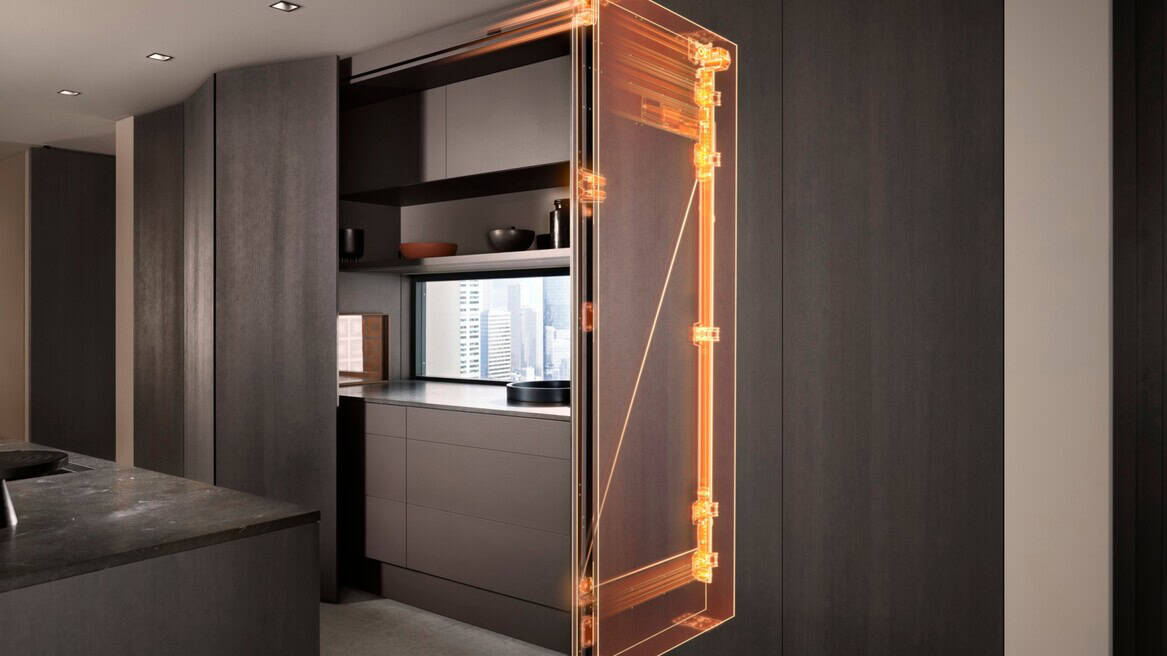
Ask about their hardware too. The two kitchen hardware brands that quality NZ cabinetry specialists specify are Blum and Hettich — both carry lifetime warranties and both set the benchmark for soft-close drawer systems, hinges, and pull-out mechanisms. At Little Giant Interiors, both carry lifetime warranty coverage. If a company is fitting unbranded or significantly cheaper alternatives to save money, you’ll feel it every single time you open a drawer.
3. They Use Precision Manufacturing Technology
Hand-cutting cabinetry introduces human error. The best manufacturers use fully automatic CNC machinery that requires no manual finishing to achieve tolerances that are impossible by hand. At Little Giant Interiors, we manufacture every kitchen in our Auckland factory using cutting-edge German automatic manufacturing equipment — it’s one of the reasons our finished kitchens look so precise and fit so cleanly.
4. They Have a Clear Guarantee and Transparent Communication
Any reputable kitchen company should be able to clearly articulate what they stand behind after installation. What happens if a drawer runner fails in 12 months? What if the door hinges go out of alignment? A vague or dismissive answer here is a red flag. Ask for the guarantee in writing before you sign anything.
5. Their Reviews Are Specific, Not Generic
Google and Facebook reviews are your friends here. But don’t just count the stars — read them. Specific reviews that mention a designer by name, describe a particular challenge and how it was resolved, or talk about the quality of the installation are worth far more than a string of “great work, highly recommend” entries. Check our client reviews here.
Choosing Your Builder, Plumber, and Electrician for a North Shore Kitchen Reno
If your renovation involves structural changes, you’ll need a Licensed Building Practitioner (LBP). This is a legal requirement in New Zealand — not a suggestion. An LBP has demonstrated competency in their field and is personally liable for their work. Always ask to see a contractor’s LBP registration before they start anything structural.
For plumbing and gasfitting, you need a Registered Plumber, Gasfitter, and Drainlayer (PGD). This is also a legal requirement for any gas appliance connections (rangehood, gas cooktop) or significant plumbing work. The consequences of using an unregistered tradesperson for gas work aren’t just financial — they’re safety risks.
Tips for finding good trades on the North Shore:
- Ask your kitchen company for their preferred tradespeople — reputable cabinetry companies often have established relationships with quality builders, plumbers, and electricians they work alongside
- Use the MBIE LBP register to verify a builder’s licence
- Get a minimum of three quotes for any structural or trade work
- Always have a written contract specifying scope of work, materials, timeline, and payment schedule
Questions to Ask Before You Sign Anything
Whether you’re talking to a kitchen designer, a builder, or a plumber, these questions will help you separate the good from the average:
- “What materials do you use in your cabinet carcasses, and why?”
- “What hardware brands do you specify, and are upgrades available?”
- “Who handles building consent if we need it — you, or me?”
- “What does your installation warranty cover, and for how long?”
- “Do you project-manage the trades, or do I need to coordinate separately?”
- “Can I see examples of similar projects you’ve completed in the North Shore?”
- “What’s your communication process during the project?”
The “Design Only” vs “Design and Build” Decision
Some homeowners choose to work with an interior designer or kitchen designer for the design phase, then go out to multiple manufacturers to tender the build. This can work well if you have specific design expertise you want to leverage — but it also adds a layer of complexity and cost. Most North Shore homeowners find that working directly with a kitchen company that does both design and manufacture produces a smoother result, because the designer understands what’s actually achievable in manufacturing and doesn’t spec finishes or configurations that create problems on the floor.
“The best kitchen renovations we see in Auckland are the ones where the design and build are completely integrated — where the designer and the manufacturer are having the same conversation.”
Thinking about how much detail to go into during the design phase? Our blog on the kitchen design mistakes Auckland homeowners most often overlook is worth a read before your first design meeting.
Little Giant Interiors and the North Shore: Why It Works
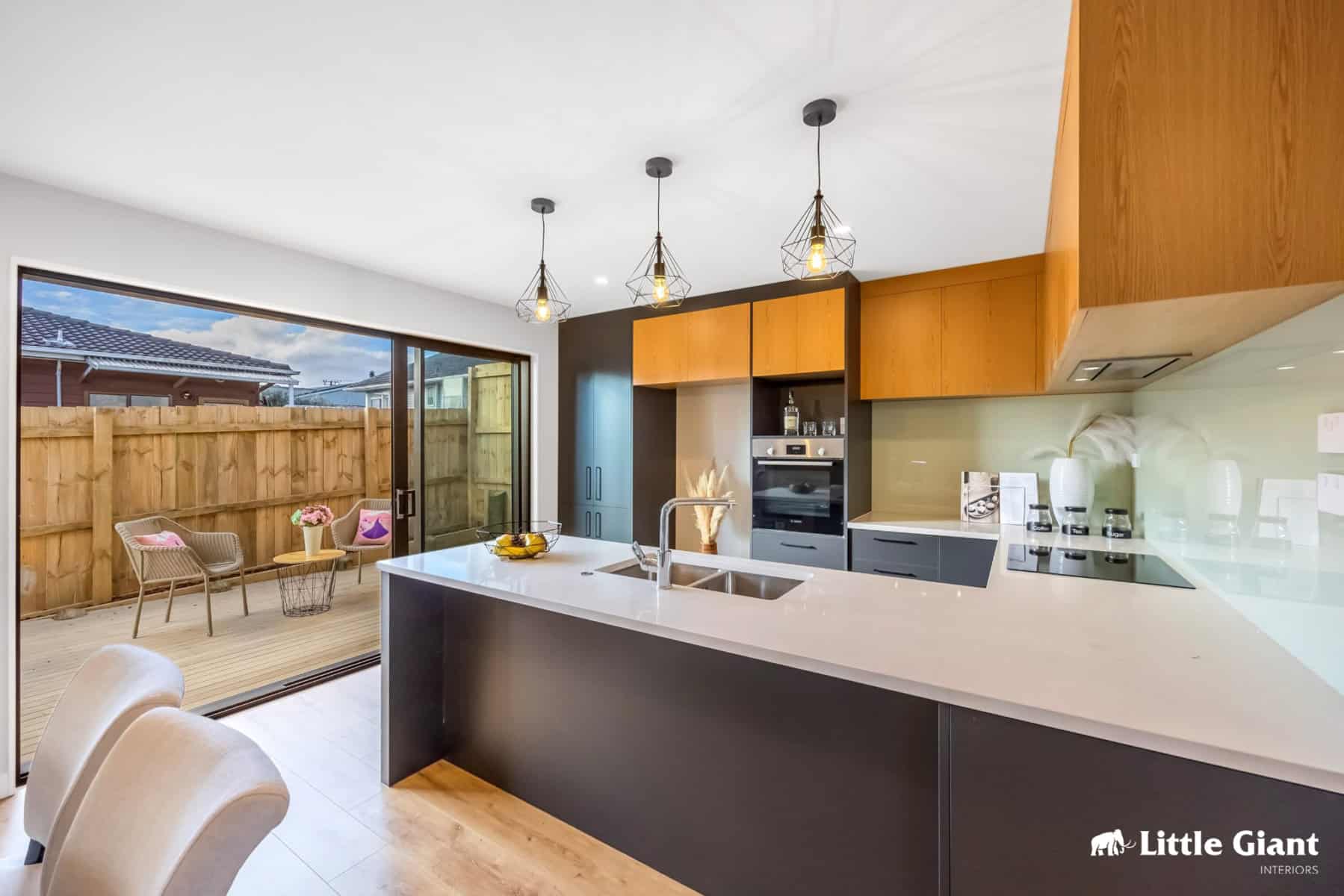
We’re based in Auckland and serve North Shore homeowners regularly — from Takapuna to Torbay, from Devonport to Dairy Flat. Our team has worked on everything from compact galley kitchens in Northcote to large open-plan renovations in Albany and Greenhithe. We understand the local housing stock, the suburb-specific design preferences (Devonport tends to lean toward classic and coastal; Albany and East Coast Bays often go for more contemporary), and the practical realities of working in occupied homes.
Our process is straightforward: in-home consultation → preliminary estimate → custom 3D design → accurate costing → manufacturing → installation → guarantee. There are no hidden surprises, no sub-contractors you haven’t met, and no disappearing acts after handover. Book your free in-home consultation here.
Section 3: What Does a Kitchen Renovation Cost on Auckland’s North Shore?
Honest Kitchen Renovation Costs for North Shore Auckland: A Complete 2026 Budget Breakdown
Right. Let’s talk money. Because if there’s one question we get asked more than any other, it’s some version of: “So… how much is this actually going to cost me?”
The honest answer is: it depends. But that’s not the cop-out it sounds like, because the factors it depends on are entirely knowable — and once you understand them, you can make genuinely informed decisions about where to invest and where to save.
Here’s the first thing to know about North Shore kitchen renovation costs: Auckland typically runs 10–20% above the New Zealand national average for renovation work, and North Shore projects often sit at the upper end of that Auckland range. Higher labour rates, strong demand for quality trades, premium material preferences in many suburbs, and the character of the housing stock all contribute to this.
The Big Picture: North Shore Kitchen Renovation Cost Ranges in 2026
| Renovation Tier | Typical Cost Range (North Shore) | What’s Included |
|---|---|---|
| Entry-Level Refresh | $15,000 – $28,000 | New cabinetry (semi-custom or quality flat-pack), laminate benchtop, same layout, basic appliances |
| Mid-Range Renovation | $28,000 – $55,000 | Custom cabinetry, engineered stone benchtop, new appliances, minor layout adjustments, quality hardware |
| Premium / Full Renovation | $55,000 – $100,000+ | Fully custom cabinetry, premium stone or porcelain benchtops, layout changes, integrated appliances, structural work |
| Luxury Renovation | $100,000+ | Bespoke everything: imported stone, top-tier European appliances, structural reconfiguration, smart home integration |
All figures are 2026 estimates for North Shore Auckland projects and include a 10–15% contingency buffer. Costs exclude appliances unless specified. GST inclusive.
Where Your Money Goes: A Detailed Cost Breakdown
Understanding the cost breakdown of a kitchen renovation helps you make better decisions about where to invest and where you can reasonably save. Here’s how a typical mid-range North Shore kitchen renovation budget is typically allocated:
| Cost Component | % of Total Budget | Typical Cost (Mid-Range) |
|---|---|---|
| Custom cabinetry (design, manufacture & install) | 35–45% | $12,000 – $25,000 |
| Benchtop (engineered stone, fabricated & installed) | 10–20% | $3,500 – $9,000 |
| Appliances (oven, rangehood, cooktop, dishwasher) | 10–15% | $4,000 – $10,000 |
| Plumbing (sink, tapware, connections) | 5–10% | $2,000 – $5,000 |
| Electrical (lighting, powerpoints, appliance connections) | 4–8% | $1,500 – $4,000 |
| Splashback (tile or glass) | 3–7% | $1,200 – $3,500 |
| Flooring | 2–5% | $800 – $3,000 |
| Builder / structural work | 5–15% (if required) | $2,000 – $8,000+ |
| Design fees | 3–6% | $1,000 – $3,500 |
| Contingency (10–15% recommended) | 10–15% | $3,000 – $8,000 |
“The single biggest cost in any kitchen renovation is almost always the cabinetry — and it’s also the element that has the greatest impact on quality of life in the kitchen every single day. Invest here wisely.”
Breaking Down the Main Cost Drivers
Cabinetry: The Biggest Investment With the Biggest Return
Custom cabinetry typically accounts for 35–45% of your total kitchen renovation budget — and it’s the component that determines how the kitchen actually looks, feels, and functions day to day. The difference between budget and premium cabinetry isn’t just aesthetic. It’s in the board quality, the jointing, the edge-banding, the hardware, and — crucially — the precision of the installation.
At Little Giant Interiors, all cabinetry is manufactured using moisture-resistant board with our fully automatic German manufacturing equipment — no manual finishing, no human error. Hardware is from Blum (blum.com/nz) and Hettich — both carry lifetime warranties and are the benchmark for soft-close drawer systems, SERVO-DRIVE mechanisms, and precision-adjustable hinges that will outlast the kitchen itself if maintained. Cabinet fronts and panels are sourced from leading NZ suppliers including Laminex NZ.
Benchtops: The Statement Piece
Benchtop choice is one of the most impactful decisions you’ll make — both visually and financially. Here’s how the main options stack up for North Shore kitchens:
| Benchtop Type | Approximate Installed Cost (3m run) | Best For |
|---|---|---|
| High-pressure laminate (HPL / Laminex Formica) | $800 – $1,800 | Budget-conscious renovations, rentals, secondary surfaces |
| Engineered quartz (Caesarstone, Silestone) | $2,800 – $5,500 | Mid-range to premium; durable, non-porous, wide colour range |
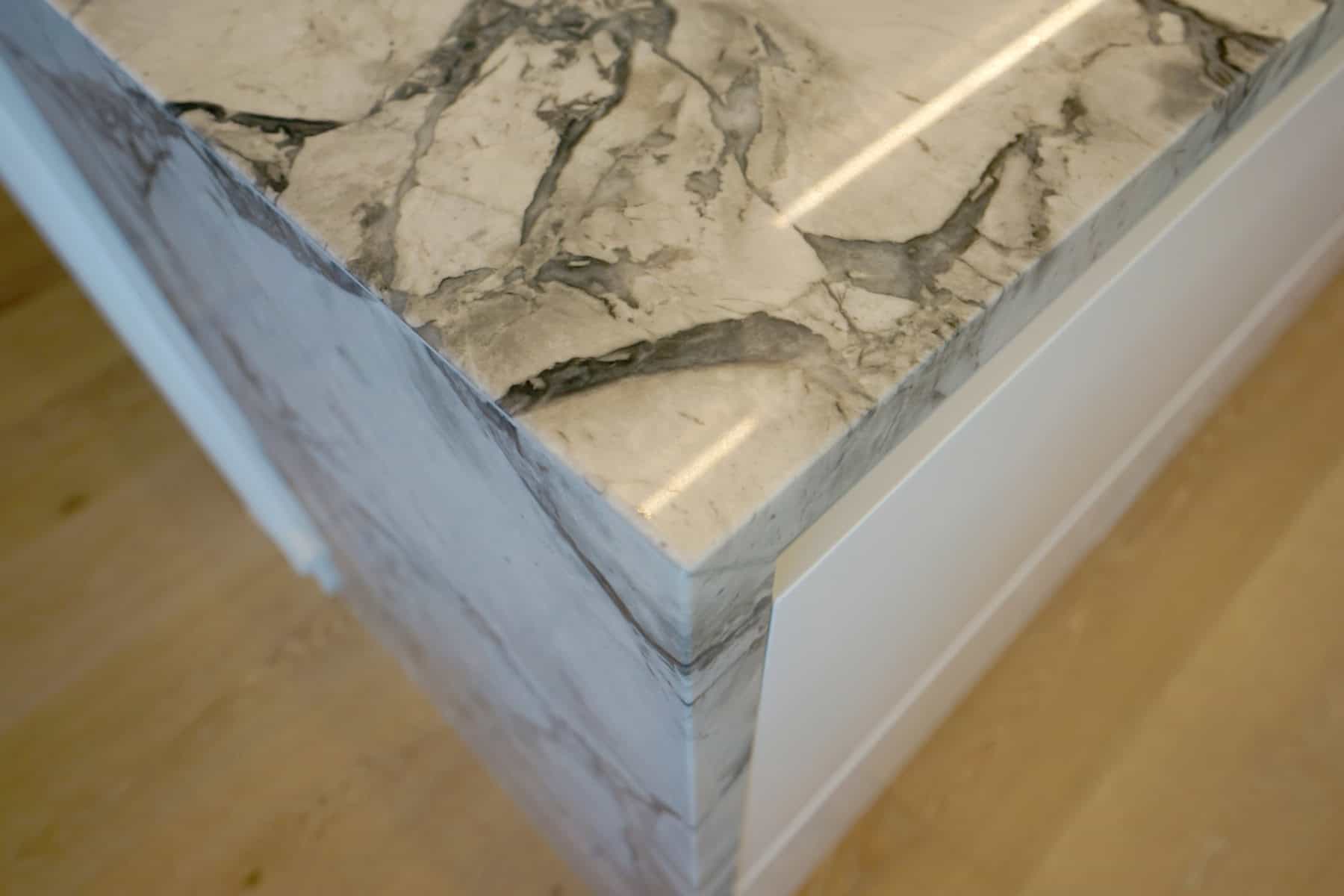
| Porcelain slab (Laminam) | $3,500 – $7,000 | Premium kitchens; heat-resistant, low silica, striking aesthetics |
| Natural granite or marble | $3,500 – $8,000+ | Luxury and character kitchens; requires sealing and maintenance |
| Solid timber | $3,000 – $6,000 | Coastal and character homes; warmth and texture; requires maintenance |
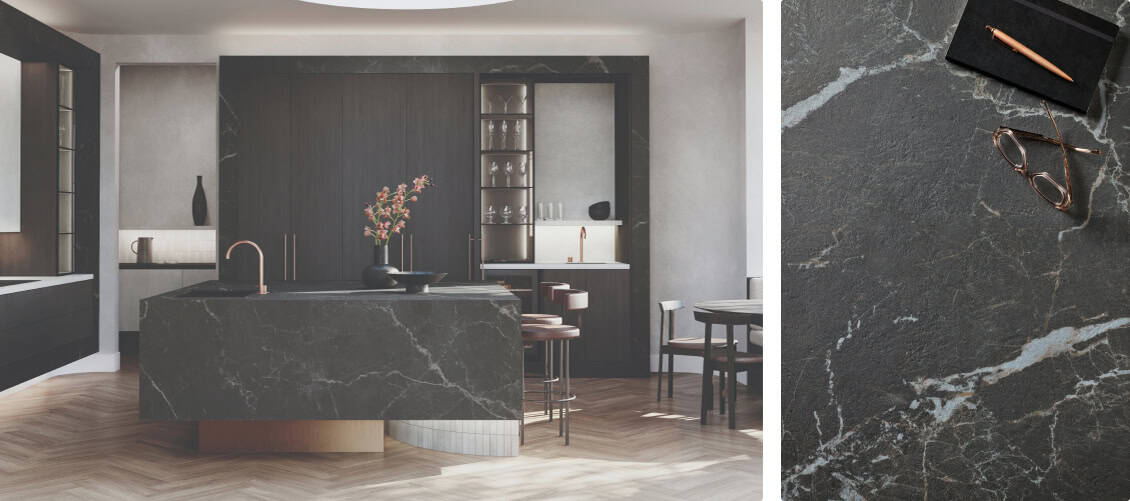
Caesarstone engineered quartz and Laminam porcelain from Laminex NZ are popular with North Shore homeowners because they combine genuine durability with striking design — and they’re low maintenance for busy households. Laminam in particular is worth a look if you’re considering a benchtop that can handle a hot pot directly, doesn’t require sealing, and has a very low silica content (important for fabricator safety).
Appliances: Where the Range is Widest
Appliance budgets vary enormously on the North Shore, from $4,000 for a functional mid-range package to $25,000+ for a full European suite with integrated fridge, steam oven, and induction cooktop. The most commonly renovated appliance set includes:
- Oven: $800 (entry-level NZ brand) to $5,000+ (European integrated)
- Cooktop: $600 (basic induction) to $4,000+ (professional gas or premium induction)
- Rangehood: $400 (ducted budget) to $3,500+ (concealed ceiling or island system)
- Dishwasher: $800 to $2,500
- Refrigerator/fridge-freezer: $1,200 to $8,000+ (integrated)
Practical tip: If budget is a concern, this is one area where you can invest less now and upgrade later without affecting the rest of your renovation. A kitchen with beautiful custom cabinetry and a mid-range oven looks and functions far better than a kitchen with cheap cabinets and an expensive oven.
Labour Rates on the North Shore (2026)
Labour costs on the North Shore are consistent with Auckland-wide rates, which run higher than the rest of NZ:
- Licensed Builder (LBP): $80–$130/hour
- Registered Plumber/Gasfitter: $100–$160/hour
- Registered Electrician: $90–$140/hour
- Tiler: $70–$110/hour
What Can You Save On — And What Shouldn’t You Scrimp On?
This is the question we get asked constantly, and the answer is genuinely useful if you’re working to a budget.
Areas Where You Can Save:
- Appliance brands: Mid-range NZ brands (Fisher & Paykel, Smeg mid-tier) perform excellently for most households and cost significantly less than premium European counterparts
- Splashbacks: Subway tiles are perennially popular, durable, and genuinely affordable — you don’t need to spend $300/m² on handmade ceramics to get a beautiful result
- Flooring: High-quality vinyl plank flooring has come a long way and is hard to distinguish from timber in most kitchens — at a fraction of the cost
- Benchtop edge profiles: Simple square or bullnose edges cost less to fabricate than complex waterfall or mitred profiles
Areas Where You Shouldn’t Cut Corners:
- Cabinet carcass quality: Cheap moisture board swells, warps, and degrades — especially around the sink and dishwasher. You’ll be replacing them within 5–8 years
- Hardware: Cheap hinges and drawer runners fail. Blum and Hettich hardware both carry lifetime warranties and last for decades — the difference is noticeable every single day
- Licensed trades: Using unlicensed plumbers or electricians to save money is genuinely risky — for safety, for insurance purposes, and for resale
- Installation quality: A beautifully designed kitchen can look terrible if the installation is rushed or imprecise. Don’t let installation be the area where costs are cut
Does a Kitchen Renovation on the North Shore Add Value to Your Home?
Yes — but the ROI depends heavily on the renovation quality and the suburb. Well-renovated kitchens in premium North Shore suburbs like Devonport, Milford, Castor Bay, and Takapuna can return 60–80% of renovation cost in increased property value, according to independent property advisors and REINZ data. In some cases — particularly where the original kitchen was very dated in an otherwise well-presented home — the return can be even higher.
The key is matching your renovation spend to the broader value and character of your home. A $100,000 kitchen in a $750,000 home is likely over-investing. A $45,000 kitchen in a $1.2m Takapuna home? That’s smart money.
Financing Your North Shore Kitchen Renovation
Kitchen renovations are a significant investment, and it’s worth knowing your options. Little Giant Interiors offers financing options to help spread the cost — read more about our finance options here. Other common approaches include:
- Home equity / revolving credit: If you have equity in your North Shore property, this is often the lowest-interest option
- Personal loan: Useful for smaller renovations; shop around for the best rates
- Staged renovation: Doing the cabinetry and benchtops now, and upgrading appliances in 12 months when cash flow allows, is a completely valid approach
One final thought on cost: the cheapest kitchen renovation quote is rarely the best value. A kitchen that fails in 5 years and needs replacing costs you more in the long run than a well-built kitchen that lasts 20 years. Ask for references, check the portfolio, and make your decision based on quality and trust — not just the bottom line of the quote.
Conclusion: Your North Shore Kitchen Renovation Starts With the Right Conversation
Whether you’re at the very beginning — just starting to wonder whether now’s the right time — or you’ve already got a stack of quotes and you’re trying to make sense of them, we hope this guide has helped you feel more confident and informed about what a kitchen renovation on the North Shore really involves.
Here’s the short version of what we’ve covered:
- What to expect: A quality kitchen renovation takes 6–24 weeks from first conversation to final handover. The process has distinct stages, older North Shore homes often throw up surprises, and a 10–15% contingency buffer is not optional — it’s essential.
- Who to use: Choose a team with a genuine design process, high-quality manufacturing, licensed trades, and clear accountability. Ask hard questions and read the reviews.
- What it costs: On the North Shore, expect $15,000–$28,000 for an entry-level refresh, $28,000–$55,000 for a quality mid-range renovation, and $55,000–$100,000+ for a full premium transformation. Invest in cabinetry and hardware quality — that’s what you’ll live with every day.
At Little Giant Interiors, we’ve spent years doing this — and we’re genuinely passionate about it. We don’t do cookie-cutter kitchens. We do custom kitchens that fit your home, your family, and your life. And we back them with a guarantee, because we’re proud of what we build.
Ready to start the conversation? Book your free in-home consultation with Little Giant Interiors today. We’ll come to you, take a look at your space, and give you an honest assessment of what’s possible, what it’ll cost, and what the next step looks like. No pressure, no hard sell — just good advice from people who know kitchens.
Have a question we didn’t answer here? Drop it in the comments below — we read every one and do our best to help.
How much does a kitchen renovation cost on Auckland's North Shore?
On the North Shore, kitchen renovation costs in 2026 typically range from $15,000–$28,000 for an entry-level refresh (new cabinetry, laminate benchtop, same layout) through to $28,000–$55,000 for a quality mid-range renovation (custom cabinetry, engineered stone benchtop, new appliances), and $55,000–$100,000+ for a full premium renovation with structural changes, integrated appliances, and high-end finishes. North Shore projects generally sit at the upper end of Auckland pricing, which itself runs 10–20% above the national NZ average. Always budget a 10–15% contingency buffer on top of your quoted costs for unexpected discoveries during demolition.
How long does a kitchen renovation take on the North Shore?
For a straightforward renovation (same layout, new cabinetry and benchtop), allow 6–10 weeks from initial consultation to handover. A mid-range renovation with a new layout or island typically takes 10–16 weeks. Full renovations involving structural changes and building consent from Auckland Council can take 16–24 weeks or more. The cabinet installation itself takes just 1–2 days — but the broader completion phase (benchtop templating, appliance connections, splashback, electrical sign-off) adds 2–4 weeks after that. If you want a new kitchen before Christmas, start your design conversations no later than July or August.
Do I need building consent for a kitchen renovation on the North Shore?
Not always. A like-for-like replacement — same layout, same plumbing and electrical positions, no structural changes — generally doesn't require building consent. However, if you're moving walls, relocating plumbing or gas connections significantly, or making any structural alterations, you'll likely need consent from Auckland Council. Budget an extra $1,500–$4,000 and 3–6 weeks for the consent process if required. Your kitchen company or builder should be able to advise you clearly on whether consent is needed for your specific project before any work begins.
What should I look for in a kitchen renovation company on the North Shore?
The key qualities to look for are: a genuine custom design process (not just a catalogue), high-quality in-house cabinetry manufacturing using precision automated equipment, premium hardware brands (Blum or Hettich — both carry lifetime warranties), licensed trades, specific and detailed customer reviews, and a clear written guarantee. At Little Giant Interiors, every kitchen includes a 5-year installation warranty, lifetime warranty on Blum and Hettich hardware, 10-year warranty on Caesarstone and Laminex products, and a transferable guarantee — meaning it passes to the new owners if you sell your home.
What are the most popular kitchen styles for North Shore Auckland homes in 2026?
North Shore homeowners in 2026 are gravitating toward handleless cabinetry with soft matte finishes, warm timber tones (particularly popular in Devonport and coastal suburbs), engineered quartz or porcelain benchtops, and open-plan layouts that connect the kitchen to living and outdoor areas. Butler's pantries and concealed appliance storage are also in high demand — especially in larger homes in Milford, Castor Bay, and Albany. For a full breakdown of current trends, read our Kitchen Design Trends for NZ Homes blog at littlegiants.co.nz.
What's the best benchtop for a North Shore kitchen renovation?
The most popular choices for North Shore kitchens in 2026 are engineered quartz (Caesarstone) and porcelain slab (Laminam from Laminex NZ). Both are durable, non-porous, easy to clean, and available in a wide range of finishes. Laminam is particularly well-regarded for heat resistance and its very low silica content. High-pressure laminate (HPL/Laminex Formica) is an excellent budget-conscious option that's come a long way in terms of design and performance. Natural stone (granite, marble) suits luxury and character homes but needs regular sealing. Key factors: your budget, how heavily the kitchen is used, and the overall design direction.
What surprises do homeowners typically find during North Shore kitchen demolitions?
Older North Shore homes — particularly those built between the 1950s and 1980s in suburbs like Devonport, Birkenhead, Northcote, and Glenfield — commonly reveal outdated electrical wiring, old galvanised or lead pipes, uneven subfloors, and occasionally asbestos in linings (pre-1990 homes). Asbestos removal by a certified contractor can add $2,000–$8,000+ to a budget. Outdated wiring typically adds $1,500–$4,000. This is why a 10–15% contingency buffer is essential in any North Shore kitchen renovation budget — not pessimism, just pragmatic planning.
What hardware should my North Shore kitchen cabinetry have?
The industry benchmark for quality kitchen hardware in New Zealand is Blum and Hettich — both European manufacturers whose soft-close drawer systems, hinges, and pull-out mechanisms are specified by the vast majority of quality kitchen companies in NZ. Crucially, both carry lifetime warranties. At Little Giant Interiors, Blum and Hettich hardware are standard across all our kitchen builds — not optional upgrades. If a kitchen company is fitting unbranded or significantly cheaper hardware to reduce costs, it's worth asking why.
Does renovating a kitchen on the North Shore add value to my home?
Yes — a well-executed kitchen renovation can return 60–80% of its cost in increased property value in North Shore suburbs. In high-value areas like Takapuna, Devonport, Milford, and Castor Bay, the return can be even stronger, particularly where the original kitchen was very dated in an otherwise well-presented home. The key is matching your renovation spend proportionally to your home's overall value — and choosing quality finishes that appeal to a broad buyer profile. A $45,000 kitchen in a $1.2m Takapuna home is smart money. A $100,000 kitchen in a $750,000 home is likely over-investing.
Can I live in my home during a North Shore kitchen renovation?
Yes — most homeowners do, but it requires some planning. Set up a temporary kitchen with a microwave, kettle, and portable induction cooktop (around $80–$150 at Mitre 10 or Bunnings). Protect adjacent rooms from construction dust with plastic sheeting over doorways. Expect to be without a fully functional kitchen for 2–4 weeks during the core installation and benchtop phase. The key is communicating your lifestyle needs clearly to your renovation team upfront so the schedule can be designed to minimise disruption — particularly if you have young children or are working from home.
How do I finance a kitchen renovation on the North Shore?
Common financing options for North Shore homeowners include: using home equity or a revolving credit facility (usually the lowest interest rate option if you have equity in your property), a personal loan for smaller renovations, or staged renovation — doing cabinetry and benchtops now and upgrading appliances in 12 months when cash flow allows. Little Giant Interiors also offers financing options to help spread the cost of your renovation. Visit littlegiants.co.nz/finance for details.
What is the process for a kitchen renovation with Little Giant Interiors?
Little Giant Interiors follows a clear 6-stage process: (1) Free in-home or showroom consultation — preliminary estimate and 3D design sent within 1–2 days. (2) Design finalisation — materials selection, 2D and 3D drawings, accurate fixed quote. (3) Deposit and final site measurement — precise measurements fed into automated manufacturing. (4) Manufacturing in our Auckland factory — using fully automatic German equipment with no manual finishing required. (5) Delivery and installation — cabinet installation typically takes 1–2 days; benchtop templating and fitting follows approximately 10 days later. (6) Final handover — backed by an industry-leading warranty package including lifetime warranty on hardware, transferable to new owners. Book a free consultation at littlegiants.co.nz/contact.