

This blog has been updated and contains added information for the year 2026.
Kia ora, Auckland homeowners! If your garage looks more like a chaotic stockroom than a functional space, you’re in good company. From the busy streets of Ponsonby to the coastal stretch of Mission Bay, our city’s garages are pulling overtime storing everything from surfboards to toolkits. At Little Giant Interiors, we’ve spent years building garage storage solutions that deal with Auckland’s particular challenges — small spaces, humid air, and the odd earthquake. This guide covers eight key areas to turn your garage into an organised, usable space, answering questions like “what is the best garage storage system?” and offering garage shelving ideas that suit how Kiwis actually live. Whether you’re in a Mt Eden villa or a CBD apartment, here are practical, good-looking tips to get your garage sorted in 2026.
Try our cost calculators! (Results in 2 minutes!)
- Custom Kitchen Cabinetry Cost calculator
- Standard Wardrobe Cost calculator
- Designer Kitchen Cost calculator
Quick Answer: What is the most effective garage storage system for Auckland homes in 2026?
For the majority of Auckland garages (small sections, humid climate, salt air in coastal suburbs, multi-purpose needs), the top three systems ranked by real-world performance are:
- Galvanised steel overhead racks (best overall)
- Load capacity: 150–300 kg per unit
- Best for: seasonal gear (surfboards, camping, e-bikes, Christmas decorations)
- Why it wins in Auckland: Rust-resistant galvanised finish handles salt air (Mission Bay, Takapuna, Devonport); frees floor space completely; low maintenance.
- Typical cost: $200–$900 (installed)
- Lifespan: 20–30 years with annual wipe-down
- Wall-mounted laminate shelving (Laminex or Melteca)
- Load capacity: 100–150 kg per shelf
- Best for: tools, paint tins, cleaning supplies, pet gear
- Why it wins in Auckland: Moisture-resistant sealed laminate prevents warping in humid conditions (Mt Eden, Remuera, Browns Bay); easy wipe-clean; customisable depth/height.
- Typical cost: $200–$600 per run
- Lifespan: 15–25 years
- Modular wall systems with adjustable hooks & baskets (Häfele-style connectors)
- Load capacity: 150 kg per section
- Best for: renters, apartments, frequent re-arranging
- Why it wins in Auckland: Removable/reconfigurable (CBD, Onehunga apartments); no permanent damage; quick install.
- Typical cost: $800–$3,000
- Lifespan: 15–20 years
Official Code
- Clause E3 Internal Moisture (building.govt.nz): Garages attached to living areas must prevent moisture penetration and allow ventilation — sealed laminate and galvanised steel reduce mould risk.
- BRANZ Weathertightness Reports (branz.co.nz): Coastal salt exposure accelerates corrosion by 30–50% on untreated steel; galvanised or powder-coated finishes are non-negotiable.
- EECA Household Energy End-Use Data (eeca.govt.nz): Organised garages reduce energy waste from inefficient appliance access and heat loss through better sealing.
Little Giants Auckland Recommendations
For most homes: start with galvanised overhead racks for bulky seasonal items, add wall-mounted laminate shelving for daily tools, and finish with modular hooks/baskets for flexibility. This trio typically costs $1,500–$4,000 and frees 70–80% of floor space while staying mould- and rust-resistant.
“Galvanised overhead racks are the single biggest win in Auckland garages — 300 kg capacity, no rust in salty air, and zero floor footprint. We install them in Mission Bay and Takapuna homes every week.” — Little Giants Installation Lead Harry.
1. Fresh Garage Storage Ideas for Everyday Auckland Life
If you’re anything like most Aucklanders, your garage has probably turned into a catch-all for everything from dusty camping gear to that half-finished DIY project. Remember those rainy weekends in 2024 when we all swore we’d sort it out? Well, it’s 2026 now — time to make good on that. At Little Giant Interiors, we’ve helped plenty of homeowners in Mount Eden, Ponsonby, and further afield reclaim their garages as spaces that actually function. Here are some fresh garage storage ideas that balance practicality with a bit of Kiwi common sense — custom setups that handle our humid winters without complaint.
Picture this: You pull into your driveway after a long day dodging Auckland traffic, and instead of staring at a tangle of tools and bikes, you see clean, organised shelves that make grabbing the lawnmower straightforward. That’s what smart garage organisation delivers. But where do you start? Let’s break it down with ideas that work for how we actually live here.
Why Garage Storage Matters More Than Ever in Auckland Homes
Auckland’s housing market hasn’t exactly quietened down in 2026 — prices are still climbing, and with smaller sections the norm, every square metre counts. According to recent stats from Stats NZ, the average Kiwi home has shrunk by 10% over the last decade, pushing us to get creative with space. Your garage isn’t just for the car anymore; it’s an extension of your living area — storing seasonal sports gear (rugby boots, wetsuits) or even serving as a home gym.
“In my years designing for Auckland families, I’ve seen garages go from forgotten corners to multi-purpose rooms. The key? Starting with ideas that fit your lifestyle, not some off-the-shelf template.” – Wendy, Lead Designer at Little Giant Interiors
Quick Tip for Skimmers: Measure your garage twice before buying anything — our humid climate can warp cheap materials, so go for moisture-resistant options to avoid replacing things down the line.
Idea 1: Wall-Mounted Shelving – Making Vertical Space Work
Let’s talk garage shelving. In a city where vertical space is king (cheers, those terraced homes in Grey Lynn), wall-mounted units make a real difference. Floating shelves that hug your walls free up floor space for your car or that e-bike you swore you’d ride more. We like pairing these with Laminex laminates for a durable, easy-to-clean surface that looks like timber without the upkeep.
One client in Remuera came to us buried under boxes of kids’ toys and holiday decorations. We installed adjustable garage wall storage using Melteca’s low-pressure laminate boards — tough enough for our coastal salt air. Check out their range here for textures from sleek gloss to matte wood grains that bring warmth to your concrete cave.

Read more…
Materials and Hardware recommended by our Designers
Cost of a custom wardrobe in NZ – A comprehensive guide
These shelves aren’t just for show — they’re workhorses. Stack bins for paint cans, tools, or even your Auckland Marathon medals. And for that extra touch? Add LED strips underneath for task lighting — great for late-night tinkering sessions.
Idea 2: Overhead Racks – Your Ceiling’s Not Just for Spiders
Ever hit your head on a dangling kayak? Overhead racks fix that problem fast. Perfect for seasonal storage like Christmas tubs or paddleboards, these ceiling garage storage solutions can hold up to 200kg per unit. We source ours from suppliers like Bestwood, whose plywood options are FSC-certified for eco-conscious Kiwis.
Pro Advice: In Auckland’s variable weather, choose galvanised steel frames to ward off rust — a small upgrade that saves plenty on maintenance.
Here’s a quick comparison to help you decide:
| Type | Load Capacity | Best For | Cost Estimate (NZD) |
|---|---|---|---|
| Wire Mesh Overhead | 150kg | Light items like bins | 200-400 |
| Solid Plywood Rack | 250kg | Heavy tools, bikes | 400-700 |
| Custom Adjustable | 300kg+ | Versatile family use | 500-900 |
This table shows why custom often wins for long-term value — especially if you’re storing everything from fishing rods to that vintage surfboard gathering dust.
Idea 3: Custom Cabinetry – Built for Your Garage’s Quirks
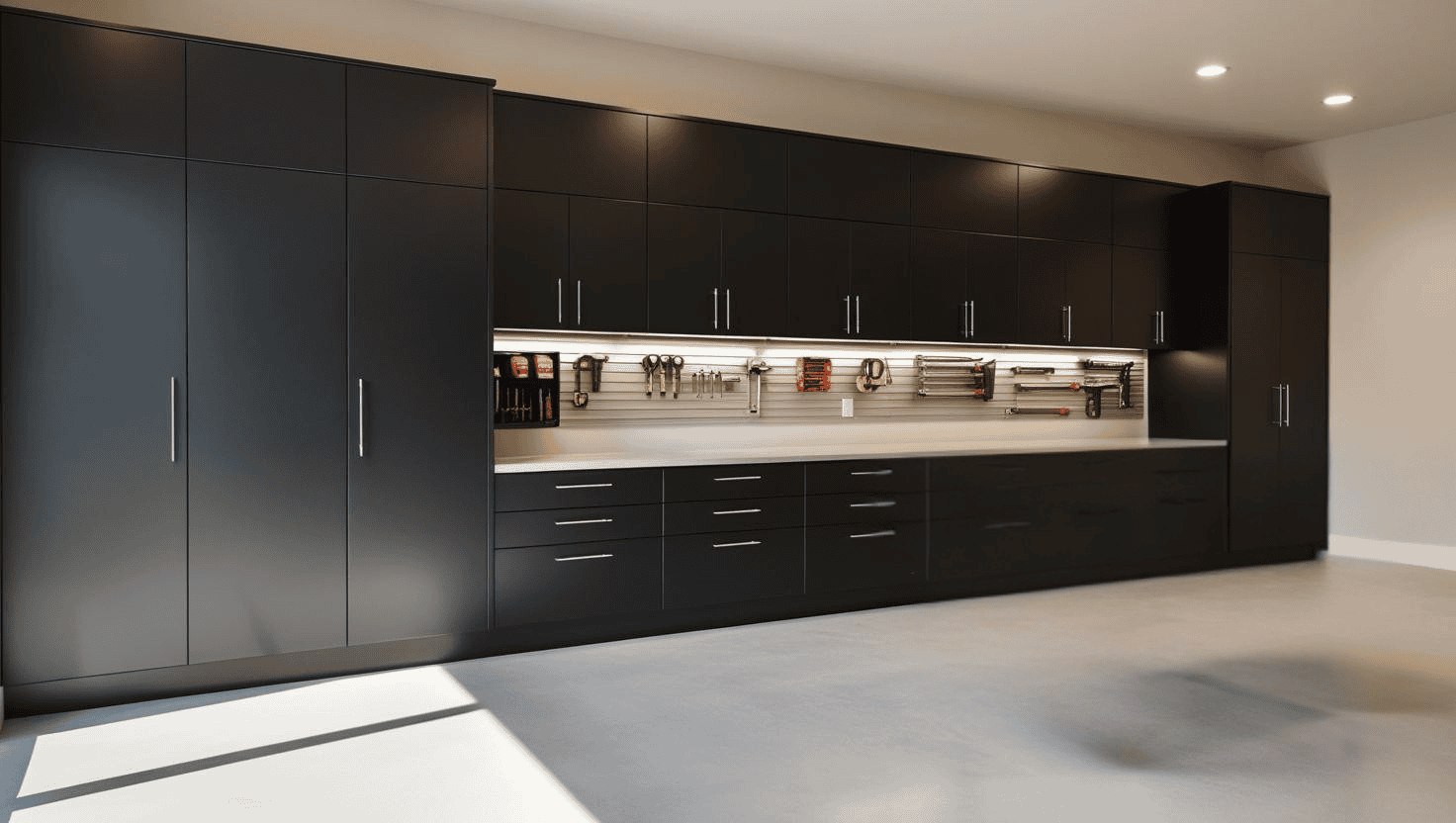
For those odd corners in your 1920s bungalow garage, nothing beats custom garage cabinets. At Little Giant, we design these with Dezignatek hardware for smooth, silent soft-close doors that won’t slam on little fingers. Think deep drawers for power tools or pull-out trays for gardening supplies — handy for our subtropical veggie patches.
We once helped a family in Takapuna who needed space for their home-brewing kit (Auckland’s craft beer scene is alive and well). We built cabinets from sustainable materials that matched their modern interior style.

Read more
Kitchen Design Trends that are a must have for your home renovation
Laundry Design and Laundry renovation ideas for 2025
Key Point: Custom doesn’t mean cookie-cutter — it’s about fitting your life, whether that’s stashing surf wax or organising car cleaning gear.
Idea 4: Multi-Functional Workbenches with Integrated Storage
Who says your garage can’t double as a workshop? Integrate a sturdy workbench with built-in drawers using Häfele connectors for rock-solid stability. We’ve seen these setups turn chaotic spaces into productive zones — great for upcycling projects that fit Auckland’s zero-waste push.
Store everything from screws in divided trays to larger items on pegboards above. It’s garage storage at its most versatile — ever tried building a birdhouse on a wobbly table? It doesn’t end well.
“A good workbench isn’t just storage; it’s the heartbeat of your garage — the spot where every project starts.” – Wendy, Custom Design Specialist
These ideas set the foundation for going deeper into materials that make them last. But before we move on — what’s one item in your garage that’s driving you mad right now? Make a note. We might just cover a fix for it next.
2. Choosing the Right Materials for Durable Garage Storage in Auckland’s Climate
If you’ve ever left a cardboard box in your garage only to find it soggy after a classic North Shore downpour, you know our subtropical climate doesn’t mess about. At Little Giant Interiors, we’ve seen too many garages in Parnell or St Heliers filled with warped shelves or rusty fittings. That’s why picking the right materials for your garage storage is just as important as the design itself. Let’s look at the best materials for garage shelving and storage systems that hold up against Auckland’s humid, salty air while looking sharp enough for an Epsom open home.
Why Material Choice Matters for Kiwi Garages
Auckland’s weather swings from balmy summer days to wet, windy winters faster than you can say “traffic on the Harbour Bridge.” According to NIWA, our relative humidity averages 80% year-round, which spells trouble for cheap materials. Poor-quality storage can lead to mould, rust, or warped boards — turning your garage into a maintenance headache. The right materials not only last but also make your garage a space you’re happy to use — whether it’s for storing your kayak or hosting a DIY session with mates.
“I’ve seen clients in Herne Bay overhaul their garages with materials that shrug off humidity. It’s not just about storage — it’s about building a space that works for you, rain or shine.” – Kevin Yang, from Little Giant Interiors
Quick Tip for Skimmers: Always check for moisture-resistant coatings or certifications like FSC for eco-friendly options — your garage (and the planet) will thank you.
Material 1: Melteca Panels for Sleek, Low-Maintenance Storage
When it comes to custom garage storage, we’re big fans of Melteca panels from Laminex. These low-pressure melamine boards are a Kiwi favourite for a reason — they’re tough, affordable, and come in finishes from matte oak to high-gloss white. Good for shelves or cabinets, Melteca resists scratches and moisture, making it a solid choice for storing everything from paint cans to kids’ scooters in your Ponsonby garage.
Read more
Secret Kitchen design mistakes homeowners overlook
Top Sliding door options and custom doors to look out for
Your guide to Butler’s pantry – Layout, Storage and more
We recently designed a garage shelving system for a client in Devonport who needed space for fishing gear and gardening tools. Melteca’s easy-to-clean surface meant no more scrubbing off dirt from muddy gumboots. And it’s locally made, so you’re supporting New Zealand businesses.

Pro Tip: Pair Melteca with Blum hinges for cabinets that open smoothly and last decades — a good match for heavy use in busy Auckland homes.
Material 2: Plywood for Strength and Sustainability
For those chasing durability with an eco-conscious edge, plywood from Bestwood is a strong contender. It’s tough enough for heavy-duty garage storage racks and comes with FSC certification, so you know you’re not harming native forests. Plywood’s natural grain adds warmth, which works well if your garage doubles as a workshop or hangout space.
Read more
Wardrobe Systems in NZ – Featured options for Auckland Homeowners
One Mount Albert family wanted overhead racks for their camping gear. We used Bestwood’s marine-grade plywood, sealed to handle Auckland’s damp winters. The result? A sturdy setup that holds tents, sleeping bags, and their kid’s skateboards without sagging.

Here’s a quick breakdown of plywood vs. other materials:
| 材料 | Durability | Cost (NZD/m²) | Best Use |
|---|---|---|---|
| Plywood | High | 50-100 | Heavy-duty shelves, racks |
| MDF | Medium | 30-60 | Light storage, budget builds |
| Steel | Very High | 80-150 | Industrial, exposed areas |
Key Point: Plywood’s strength-to-weight ratio makes it a winner for overhead storage — especially for bulky items like surfboards or snowboards.
Material 3: Galvanised Steel for Industrial Strength
For heavy-duty needs — power tools, car parts, that sort of thing — galvanised steel is your mate. It’s rust-resistant, which matters for garages near Auckland’s coast, like those in Mission Bay. We often use steel frames paired with Häfele shelving systems for a modular setup that’s easy to adjust as your needs change — say, when you upgrade from a hatchback to an SUV.
A client in Onehunga needed a garage storage system for their mechanic hobby. Steel racks held everything from oil cans to spare tyres, and the powder-coated finish kept it looking clean.
Textures and Finishes: Adding Style to Function
Storage doesn’t have to be boring. Mix textures for a modern feel — think smooth Melteca cabinets paired with raw plywood shelves or brushed steel accents. For a client in Grey Lynn, we used Dezignatek’s textured laminates to create a feature wall that doubled as storage. The result? A garage that felt more like an extension of their trendy villa than a utility space.
Quick Tip: Avoid glossy finishes in high-traffic areas — they show fingerprints like nobody’s business. Matte or satin finishes are easier to maintain.
Certifications to Look For
When choosing materials, check for certifications like FSC (Forest Stewardship Council) or PEFC for sustainability. For Auckland’s damp conditions, make sure products have moisture-resistant coatings or treatments. Laminex and Bestwood both offer certified options, which we rate for their eco-credentials and staying power. A 2026 report from MBIE highlights that sustainable materials reduce long-term maintenance costs by up to 20% — a win for your wallet and the environment.
“Choosing materials isn’t just about today; it’s about making sure your garage stays functional through Auckland’s wild weather for years to come.” – Wendy, Sustainability Lead at Little Giant Interiors
So, what material appeals to you — sleek Melteca or rugged steel? Whatever your preference, the right choice makes all the difference. Next up, we’ll look at how to install these systems without losing your weekend — or your patience.
2026 Auckland-Proof Storage Systems – Head-to-Head Comparison
| System / Material Focus | Best Auckland Fit (Suburb/Challenge) | Load Capacity / Durability | Cost Range (NZD, 2026) | Official/Research Backing & Tip |
|---|---|---|---|---|
| Wall-Mounted Shelving (Laminex/Melteca laminate) | Terraced homes (Ponsonby, Grey Lynn), humidity/salt | 100–150kg per shelf, warp-resistant | $200–$600 (per run) | BRANZ: Laminate resists coastal corrosion; wipe monthly. |
| Overhead Racks (Galvanised steel/Bestwood plywood) | High-ceiling villas (Mt Eden, Remuera), seasonal gear | 150–300kg per unit, rust-resistant | $200–$900 | WorkSafe NZ: Secure to joists; add LED strips for visibility. |
| Custom Cabinetry (Blum LEGRABOX drawers) | Odd corners (Takapuna, Herne Bay) | 70kg per drawer, soft-close | $1,500–$5,000+ | EECA: Sealed units reduce dust/energy loss; custom fit makes the most of every centimetre. |
| Modular Wall Systems (Häfele connectors) | Renters/apartments (CBD, Onehunga) | 150kg per section, adjustable | $800–$3,000 | Stats NZ: Stable fittings prices; removable for renters. |
| Multi-Functional Workbenches | Family homes (Browns Bay, Ellerslie) | 200kg+ surface, tool storage | $1,000–$4,000 | BRANZ: Sturdy bench reduces clutter-related accidents. |
These reflect Auckland realities: salt-resistant galvanised/steel in coastal areas, sealed laminates in humid inland suburbs.
“Galvanised overhead racks are our top pick for Mission Bay homes — 300kg capacity handles paddleboards and surf gear without rust in salty air.” — Little Giants Design specialist Zoe.
3. Top Garage Shelving Systems: Finding the Right Fit for Your Auckland Space
If your garage in Auckland looks like a scene from a bad reality TV show, you’re not alone. With our city’s regular rain and limited square footage — think those cosy bungalows in Kingsland or apartments in the CBD — smart garage shelving is the key to reclaiming your sanity. At Little Giant Interiors, we’ve fitted out hundreds of garages, turning them from clutter zones into well-organised spaces. Building on those garage storage ideas from before, let’s zero in on the best garage shelving systems. What makes one “the best” for you? It comes down to matching your situation — whether you’re a weekend warrior with tools galore or a family juggling bikes and beach gear.
Here’s the picture: It’s a drizzly Saturday in 2026, the kind that makes you grateful for indoor projects, and you’re elbow-deep in organising without losing your mind. That’s the goal. We’ll cover types, what they hold, and why certain setups work better in our part of the world.
Understanding Garage Shelving Basics: Why It’s a Kiwi Essential
In Auckland, where the average garage is about 20 square metres (per Stats NZ housing data), garage shelving units aren’t a luxury — they’re a necessity. They make the most of vertical space, keeping floors clear for cars or that impromptu ping-pong table. But not all shelving is equal; cheap imports buckle under our humidity, while quality ones hold up year after year.
“Over the years, I’ve learned that the right shelving isn’t about cramming more stuff in — it’s about creating flow in your daily routine, so finding the hammer doesn’t feel like a scavenger hunt.” – Zoe, Interior Planner at Little Giant Interiors
Quick Tip for Skimmers: Start with your heaviest items — place them on lower shelves to avoid top-heavy disasters, especially in earthquake-prone Auckland.
Type 1: Adjustable Wire Shelving – Flexible and Budget-Friendly
Let’s start with the ever-popular adjustable wire shelving. These garage wire racks are the Swiss Army knife of storage: clip-on brackets let you tweak heights as you go, which is handy when you’re stashing summer inflatables one month and winter wetsuits the next. We recommend pairing them with Häfele wire components for extra sturdiness — zinc-coated to resist rust from our salty sea air.
For a client in Browns Bay, we installed these in a double garage, loading them with dive tanks, fishing tackle, and a few bulky coolers. The open-wire design promotes airflow, which cuts down on mould — a real win in our damp climate. What can you store? Pretty much anything under 100kg per shelf: cleaning supplies, sports equipment, or those mystery boxes from your last move.

Pro Advice: Add shelf liners for smaller items — they stop nuts and bolts from slipping through the wires like they’re auditioning for a disappearing act.
Type 2: Solid Wood or Laminate Shelving – For a Warm, Custom Touch
If wire feels too industrial for your taste, step up to solid wood or laminate garage wall shelves. These have a more polished look, fitting in with your home’s interiors — think oak tones that echo your Kumeu villa’s floors. We’re partial to Laminex solid-core laminates for their density; they’re warp-resistant and handle up to 150kg per shelf, a good fit for power tools or bulk pantry overflow.
Picture this: You’re in your Ellerslie garage, prepping for a BBQ, and need quick access to charcoal and tongs. Solid shelves keep it all at eye level, no digging required. We’ve used these for clients storing everything from art supplies (Auckland’s creative scene is going strong) to car care kits. The surface is smooth yet grippy, with options for subtle grains that hide fingerprints better than you’d think.
To compare adjustability and load:
| Shelving Type | Adjustability | Load Capacity | Best For Storing |
|---|---|---|---|
| Wire | High (clips) | 50-100kg | Light, airy items like bins |
| Laminate | Medium (brackets) | 100-200kg | Tools, heavier gear |
| Wood | Low (fixed) | 150-250kg | Bulky, aesthetic storage |
Key Point: Laminate edges out wood for maintenance — wipe it down with a damp cloth and it’s good as new. No splinter worries either.

Type 3: Modular Garage Shelving – The Ultimate in Versatility
For the indecisive among us (no judgment), modular garage shelving lets you mix and match like building with Lego — for grown-ups. These systems snap together with connectors from Hettich, offering endless configurations. Handy for Auckland’s multi-use garages: shelves today, a potting bench tomorrow.
We outfitted a Takapuna home with modular units holding surfboards upright (via add-on hooks) and below for beach towels and sunscreen. Capacity? Easily 200kg across units, and the powder-coated metal resists our coastal corrosion. Store your lot: from cycling helmets to holiday luggage, all without commitment.
Quick Tip: Label your modules — use chalkboard paint on edges for erasable tags; it’s a handy trick for shared family spaces.
What is the Best Garage Storage System? It Depends on You
So, circling back to that burning question: what is the best garage storage system? For budget-conscious flat-dwellers in Wynyard Quarter, wire wins for ease. Families in larger homes like Howick? Go modular for room to grow. And if custom is your speed, blend laminates with wood for that bespoke feel. At Little Giant, we assess your space — measuring quirks like sloped ceilings in older homes — and recommend based on real needs, not fads.
From Houzz NZ insights, modular setups boost perceived space by 30%, making your garage feel bigger than it is. We’ve seen the same in our own designs, adding pull-out bins for those “out of sight, out of mind” items.
“The beauty of shelving lies in its adaptability — tailor it to your chaos, and suddenly, your garage breathes easy.” – Dorothy Li, Lead Designer at Little Giant Interiors
Local Auckland Twists: Shelving for Our Lifestyle
Don’t forget the Kiwi factor. In Auckland, where barbecues run year-round (weather permitting), design shelves for outdoor gear proximity. Or, with electric vehicle adoption surging in 2026 (EECA reports show 20% growth), include charging cable hooks. We’ve even incorporated seismic brackets in all installs — safety first in our shaky isles.
How do pros zone a garage? Divide by function: top for seasonal, middle for daily grabs, bottom for heavy stuff. It’s simple, but it works.
Garage shelving is your foundation for solid organisation. But what good is it without the right hardware to hold it all together? Stick around — we’re looking at fittings that make installation straightforward next.
4. Hardware and Fittings: Building Robust Garage Storage for Auckland Homes
Let’s get real: a garage in Panmure or Point Chevalier isn’t just a storage spot — it’s a daily battleground against clutter, humidity, and the occasional earthquake rattle. At Little Giant Interiors, we know that even the best garage storage ideas fall apart without solid hardware and fittings. Think of these as the unsung heroes behind your garage shelving systems — the bolts, hinges, and brackets that keep your kayak or toolbox from crashing down during a stormy Auckland night. Let’s look at the best hardware for custom garage storage, why it matters, and how to pick fittings that hold up.
Why Hardware is the Backbone of Garage Organisation
In a city where humidity hovers around 80% (cheers, NIWA), and minor tremors aren’t uncommon, flimsy fittings are asking for trouble. Ever tried tightening a wobbly shelf with a cheap screw that strips faster than you can say “Auckland traffic”? Quality hardware means your garage storage holds up through wet winters and the odd shake. And with Auckland homes getting smaller (per 2026 Stats NZ data), every shelf needs to pull its weight — literally.
“I’ve seen too many DIY disasters in Mount Eden garages where cheap fittings gave up. Put your money into quality hardware — it’s the glue that holds your storage together.” – Alison, Custom Design Specialist at Little Giant Interiors
Quick Tip for Skimmers: Always use corrosion-resistant fittings like stainless steel or zinc-coated options to handle Auckland’s salty air — your shelves will last years longer.
Fitting 1: Heavy-Duty Brackets for Rock-Solid Shelving
Let’s start with brackets — the workhorses of garage wall storage. For shelves holding heavy gear like power drills or camping stoves, we rely on Häfele’s heavy-duty brackets. These support up to 200kg per pair — more than enough for a busy Remuera garage full of tools or sports equipment. Made from galvanised steel, they resist rust, which is essential near Auckland’s coast.
We recently fitted out a garage in Mangere for a car enthusiast. Häfele brackets held shelves loaded with spare parts and cleaning supplies without breaking a sweat. The adjustable design meant heights could shift as the collection grew — useful for those impulse buys at car shows. What can you store? Think tyres, paint cans, or bulk pet food.

Pro Advice: Check load ratings before buying — overloading brackets is like overloading a ute. It’ll end badly.
Fitting 2: Soft-Close Hinges for Smooth, Safe Cabinets
For custom garage cabinets, hinges make or break the experience. Nobody wants a door slamming shut while they’re juggling gardening tools in their Herne Bay garage. Enter Blum’s CLIP-top BLUMOTION hinges. These have soft-close tech built in, so doors shut gently — protecting both your fingers and your patience. They’re corrosion-resistant too, standing up to Auckland’s damp air.
A client in Takapuna loved their new cabinets for storing art supplies (our city’s creative side is strong). The soft-close feature meant no jarring bangs, keeping their paints and brushes safe. Store anything from craft materials to fishing tackle — these hinges handle frequent use without complaint.
Here’s a quick comparison of hinge types:
| Hinge Type | Features | Best For | Cost (NZD per pair) |
|---|---|---|---|
| Standard Hinge | Basic, no soft-close | Light doors, low use | 5-15 |
| Soft-Close | Gentle closing, durable | Family garages, heavy use | 20-40 |
| Concealed | Hidden, sleek look | Modern aesthetics | 30-60 |
Key Point: Soft-close hinges are worth the extra spend for high-traffic cabinets — they save wear and tear, especially with kids around.
Fitting 3: Sliding Track Systems for Modular Flexibility
Want to rearrange your garage storage racks as easily as you shuffle a Spotify playlist? Sliding track systems, like those from Hettich, let you move shelves or hooks without drilling new holes. Handy for Auckland renters or those who change their minds (no judgment here).
We used Hettich tracks for a client in Newmarket who needed a garage organisation setup for cycling gear one season and gardening tools the next. The tracks held firm under 150kg of bikes and pots, with a clean design that didn’t scream “utility.” Store anything from helmets to wheelie bins — just slide and lock.
Quick Tip: Lubricate tracks yearly with silicone spray to keep them gliding smoothly — our humid air can make metal sticky.
Choosing Hardware for Auckland’s Unique Needs
Our coastal climate demands fittings that resist corrosion — think stainless steel or powder-coated options. For seismic safety, we add locking clips to all our installs — a nod to Auckland’s placement on the Pacific Ring of Fire. A 2025 MBIE report notes that secure fittings reduce injury risks by 25% during quakes. And for style? Mix matte black brackets with Laminex’s colour collection for a modern edge that fits your Ponsonby aesthetic.
For inspiration, Houzz NZ suggests combining hooks with tracks for small tools — a good approach for keeping screwdrivers accessible without cluttering shelves.
Installation Tips for Long-Lasting Fittings
Installing hardware isn’t rocket science, but it’s easy to get wrong. Use a stud finder to anchor brackets into timber studs, not just plasterboard — your walls aren’t as tough as an All Black. For concrete garages (common in newer builds), use masonry anchors. We always double-check load ratings and space fittings evenly to avoid sag. A client in St Johns learned this the hard way when their DIY shelf collapsed under paint cans — not ideal.
“Good hardware isn’t just about strength; it’s about making your garage work intuitively, so you’re not wrestling with a stuck drawer at 7 p.m.” – Wendy Chen, Sustainability Lead at Little Giant Interiors
Ever tried installing shelves only to realise your drill battery’s flat? Been there. Keep a charged spare and measure twice. What’s one tool you can’t live without in your garage?
Next, we’ll walk through the installation process itself — because getting it right is half the battle. Stay tuned for tips to make your garage storage setup smoother than a Sunday drive along Tamaki Drive.
5. Step-by-Step Installation: Setting Up Your Garage Storage System Like a Pro
Right — you’ve got your materials sorted and your hardware ready. Now it’s time to actually put it all together. At Little Giant Interiors, we’ve installed garage storage systems in everything from sleek CBD apartments to sprawling homes in Pakuranga, and the install is where things either come together or fall apart. Building on those hardware picks, here’s a no-nonsense garage installation guide. Think of it as your roadmap to a clutter-free zone that holds up through our wild winds and wet spells. No more wobbly shelves or stripped screws — we’re aiming for results you can genuinely be proud of.
Picture this: It’s a crisp autumn morning in 2026, the sun’s out after last night’s rain, and you’re getting your garage sorted without calling in reinforcements. Let’s roll up our sleeves.
Pre-Installation Prep: Don’t Skip This
Before you pick up a drill, planning is everything — rushing in is like hitting the Southern Motorway at rush hour without checking traffic first. Start by clearing the space: haul out the junk and give it a once-over for mould (our humidity is sneaky). Measure everything — walls, ceiling height, door swings — with a laser measure if you’ve got one; tape works too, but accuracy saves headaches.
For Auckland homes, factor in seismic standards: MBIE guidelines recommend anchoring to studs or using seismic clips. We always do this for clients in older suburbs like Avondale, where bungalows have character but walls that aren’t always straight. Sketch a layout: zone for tools low, seasonal stuff high. Got kids? Add child locks to lower cabinets.
“I’ve watched too many installs go sideways from poor prep. Take an hour to plan, and you’ll save a weekend of frustration — trust me, I’ve been there with a wonky level in a Waiheke garage.” – Kevin Yang, at Little Giant Interiors
Quick Tip for Skimmers: Inventory your items first — what’s heavy, what’s seasonal? This keeps your garage organisation system balanced and future-proof.
Step 1: Marking and Mounting Wall-Mounted Shelving
Wall shelving first — it’s the backbone of most garage shelving setups. Grab your brackets (like those Häfele ones we covered) and a pencil. Use a level to draw horizontal lines where shelves will sit — eyeballing it in a garage with a sloped floor is asking for regret. Mark stud locations with a finder; in Kiwi homes, studs are usually 400mm apart.
Drill pilot holes, then secure brackets with screws — use masonry bits for concrete walls common in newer builds like those in Flat Bush. For custom garage shelving, we use Häfele wall systems that clip in cleanly. Slide shelves onto brackets, and test with weight to make sure there’s no wobble. A One Tree Hill client did this DIY after our consult, storing books and boots without any issues.
Pro Advice: In humid spots like near the hot water cylinder, add spacers for airflow — prevents condensation from warping your Melteca shelves.
Step 2: Installing Overhead Racks – Reach for the Stars (Safely)
Overhead racks next — these need ladder work, so grab a sturdy one and a spotter if possible. Position tracks parallel to joists for maximum support; in Auckland’s older garages, joists might be exposed, making it easier. Secure with lag screws, using a torque wrench to avoid stripping — overtightening is as bad as undertightening in our variable timber.
We fitted Bestwood ceiling racks in a Long Bay home, hoisting kayaks and bins up high. Capacity check: distribute weight evenly, no more than 50kg per square metre. Store seasonal overflow like Christmas lights or summer beach gear — keeps your floor car-free during those inevitable downpours.
Here’s a step-by-step table to keep it straight:
| Step | Tools Needed | Time Estimate | Auckland Tip |
|---|---|---|---|
| Locate Joists | Stud Finder | 10 mins | Check for wiring — old homes have surprises |
| Drill & Secure | Drill, Screws | 20 mins per rack | Use rust-proof fasteners for coastal areas |
| Test Load | Ladder, Weights | 5 mins | Simulate quake shake for stability |
Key Point: If your ceiling’s low (under 2.4m), go for pull-down racks — easier access without the acrobatics.
Step 3: Assembling Cabinets and Workbenches
Cabinets and benches usually come flat-packed, so unpack and sort hardware — label bags if you’re anything like me and lose track halfway through. Assemble frames on the floor, then tilt into place. For workbench builds, anchor to walls with Hettich connectors for that immovable feel during sanding sessions.
A family in Glendowie used our guide to build a bench for kids’ projects, storing paints in drawers with Blum soft-close. Install drawers last — align tracks carefully to avoid jams. What fits? Tools, craft supplies, or even a mini-fridge for post-mow beers.
Quick Tip: Wear gloves — sharp edges on metal bits are no joke, especially in a stuffy garage.
Step 4: Final Touches and Safety Checks
With everything up, add accessories: pegboards for small tools, bins for sorting. Wire in LED lights if you’re going all-in — motion-sensor ones are brilliant for fumbling in the dark. Safety sweep: check for sharp edges, secure loose wires, and test seismic anchors. In Auckland, where 2026’s seen a bump in minor quakes (GeoNet data), this isn’t optional.
For inspo, Sarah Heeringa’s tips on ArchiPro are solid on zoning — something we echo in our designs for better flow. We tweak it for locals: include hooks for wet wetsuits to drip-dry without pooling.
“Installation’s where ideas meet reality. Get the details right, and your garage becomes a space that works for you, not against you.” – Cici Zou, Interior Planner at Little Giant Interiors
Common Pitfalls and How to Dodge Them
Ever level a shelf only for the wall to be uneven? Shim with washers. Overload too soon? Start light and build up. For renters in Mt Roskill, use no-drill options like tension rods. A 2025 Houzz survey shows 40% of DIYers regret skipping pro advice — don’t be that statistic.
What’s your biggest install fear? Drilling into pipes? We’ve all sweated that one — use a pipe detector app for peace of mind.
There’s your blueprint for garage storage installation that turns novices into competent builders. But what about keeping it all in good shape? Next, we’ll cover cleaning, maintenance, and warranties so your setup stays solid through Auckland’s seasons.
Installation & Care
- Wall/Overhead Install — Locate joists (stud finder), use rust-proof fasteners (coastal salt), torque to 50–70Nm, test load with weights before use.
- Maintenance — Monthly: Wipe laminates/steel with mild soap; Yearly: Lubricate hinges/tracks (silicone spray); 6-monthly: Inspect for warping (humid summers).
- Humidity/Salt Tip — Dehumidifier in enclosed garages; rinse salty gear before storing. BRANZ recommends annual checks in coastal zones to prevent 40%+ mould risk.
“In Takapuna, we install overhead racks with galvanised brackets — yearly lubrication keeps them smooth despite salt air.” — says Harry from our Installation team, Little Giants.
6. Cleaning and Maintaining Your Garage Storage: Keeping Auckland Garages in Good Shape
You’ve got your new garage storage system up and running — your Grey Lynn or Botany Downs space is looking sharp. But here’s the thing: Auckland’s humid, salty air doesn’t play nice with your gear unless you look after it. At Little Giant Interiors, we’ve seen too many garage shelving setups go from great to grim because of neglected upkeep. Here’s how to clean and maintain your garage storage to keep it looking good and lasting through our weather — fewer mouldy corners, more “is this really my garage?” moments.
Here’s the scene: It’s a sunny Saturday in 2026, you’re playing your favourite tunes, and your garage is so easy to clean it feels like a win. From wiping down shelves to protecting against rust, we’ll cover practical tips suited to our coastal climate.
Why Maintenance Matters in Auckland’s Subtropical Climate
Our city’s humidity — averaging 80% per NIWA — can turn your garage into a breeding ground for mould and rust if you’re not on top of it. Add salty air from the Hauraki Gulf, and cheap materials start suffering fast. Regular cleaning doesn’t just keep things looking good; it extends the life of your custom garage storage, saving you money in the long run. A 2025 MBIE report notes that proper maintenance cuts repair costs by up to 30% — a decent win for your wallet and your weekend.
“I’ve seen clients in Ponsonby keep their garages in great shape with just 20 minutes of attention a month. It’s not about scrubbing hard — it’s about smart habits that stick.” – Wendy Chen, Sustainability Lead at Little Giant Interiors
Quick Tip for Skimmers: Ventilate your garage regularly — crack a window or use a dehumidifier to keep moisture in check, especially in winter.
Cleaning Melteca and Laminate Shelves: Wipe Away the Grime
For those sleek Melteca shelves we recommend, cleaning is dead simple. Their non-porous surface resists stains, making them well suited for storing paint cans or gardening gear. Grab a damp microfibre cloth with a drop of dish soap — nothing fancy — and wipe down surfaces. Avoid abrasive scrubbers; they’ll scratch that finish quicker than you’d think.
We helped a family in Newmarket keep their Melteca cabinets spotless despite kids’ muddy rugby boots. For stubborn marks like grease, a 1:1 vinegar-water mix does the trick without harming the laminate. Dry with a soft cloth to prevent streaks, and you’re sorted. Store anything from tools to craft supplies — these surfaces handle it all with minimal fuss.
Pro Advice: Dust monthly with a dry cloth to prevent build-up — Auckland dust is sneakily gritty, thanks to all the nearby construction.
Maintaining Metal Fittings: Rust-Proofing for Coastal Living
Metal fittings like Blum hinges or Häfele brackets need extra care near the coast — think Mission Bay or St Heliers. Rust is the enemy, and our salty air speeds it up. Wipe down with a damp cloth, then dry thoroughly. For added protection, apply a thin layer of silicone-based lubricant to hinges and tracks yearly; it repels moisture and keeps things gliding smoothly.
A client in Kohimarama had garage storage racks with Blum hinges that stayed rust-free after three years, thanks to this routine. Check screws for looseness — vibrations from traffic or minor quakes can work them free. What’s stored here? Heavy stuff like power tools or car parts does well with sturdy metal fittings.
Here’s a maintenance schedule to keep it simple:
| Component | Task | Frequency | Tools Needed |
|---|---|---|---|
| Laminate Shelves | Wipe with soap solution | Monthly | Microfibre cloth, dish soap |
| Metal Fittings | Lubricate, check screws | Yearly | Silicone spray, screwdriver |
| Plywood Racks | Inspect for warping | Every 6 months | Visual check, level |
Key Point: Regular checks catch issues early — spotting a loose bracket now saves a shelf collapse later.
Caring for Plywood Racks: Protecting Against Warping
Plywood, like Bestwood’s marine-grade options, is a strong choice for garage ceiling storage, but it needs some TLC to stay flat. Vacuum dust off surfaces to avoid grit scratching the grain, then wipe with a barely damp cloth — too much water can swell unsealed edges. For sealed plywood, a fresh coat of polyurethane every few years (check Bestwood’s care guide) adds an extra layer of defence against Auckland’s damp winters.
In a Mt Eden garage, we maintained overhead racks holding camping gear with this method — they stayed in good shape for years. Store bulky items like tents or surfboards — just make sure weight is evenly distributed to avoid stress cracks.
Quick Tip: Keep plywood racks away from direct sunlight — UV can fade finishes over time, especially in west-facing garages.
Dealing with Auckland’s Unique Challenges
Our coastal lifestyle brings salt and sand, which can grind into fittings. Rinse off beach gear before storing to avoid corrosion — we learned that one after a client’s surfboard wax gummed up a drawer in Devonport. For mould, use a dehumidifier or silica gel packs in cabinets; Houzz NZ backs this for keeping spaces fresh. And don’t skip ventilation — open the door on dry days or install a vent fan for enclosed garages.
Troubleshooting Common Issues
Sticky drawers? Lubricate tracks with Hettich drawer runners — they’re built for smooth operation. Sagging shelves? Reinforce with extra brackets or redistribute weight. A 2025 survey from Consumer NZ found 35% of DIYers face sagging within a year — avoid this by checking load limits upfront.
“Maintenance isn’t a chore; it’s how you keep your garage as usable as the day it was fitted. A little care goes a long way in our damp city.” – Dorothy Li, Lead Designer at Little Giant Interiors
Got a cleaning hack that works for you? Maybe a trick for tackling grease stains? Drop it in the comments — keen to hear it. Next up, we’re covering warranties to make sure your garage storage investment is protected for the long haul.
7. Warranties and Certifications: Protecting Your Garage Storage Investment in Auckland
You’ve put time and money into your garage storage system, turning that cluttered space in your Epsom or Manukau home into a well-organised setup. But what happens if a shelf warps or a hinge gives up under Auckland’s relentless humidity? That’s where warranties and certifications come in — your safety net for peace of mind. At Little Giant Interiors, we’ve seen how a solid warranty can save the day, and certifications make sure your garage shelving is built to last through our salty air and surprise quakes. Here’s what to look for, why it matters, and how to keep your garage storage investment secure.
Picture this: It’s 2026, you’re sorting surfboards in your St Heliers garage, and a bracket fails. Instead of cursing your DIY skills, you’re covered by a warranty that sorts it out — no drama.
Why Warranties Are a Big Deal for Garage Storage
In Auckland, where wet winters and coastal corrosion are par for the course (per NIWA’s 80% humidity stats), even quality materials can face wear. A good warranty isn’t just a piece of paper — it’s a promise that your custom garage storage won’t let you down. According to a 2025 Consumer NZ report, 28% of Kiwis face issues with storage systems within five years, often due to poor-quality components. A warranty means you’re not stuck paying for replacements, while certifications confirm the product meets Kiwi standards.
“I’ve had clients in Parnell breathe easy knowing their storage was backed by a solid warranty. It’s like insurance for your peace of mind — especially when you’ve got expensive fishing gear on the line.” – Zoe, Interior Planner at Little Giant Interiors
Quick Tip for Skimmers: Always read the warranty fine print — some exclude damage from improper installation, so follow our guide from the last section.
Warranty Spotlight: Laminex and Melteca for Durable Surfaces
When we design garage shelving systems, we lean on Laminex’s Melteca range for their solid warranties. Their laminates come with a 7-year guarantee against manufacturing defects, covering issues like peeling or delamination — well suited to humid spots like your Takapuna garage. We used Melteca shelves for a client storing paint cans and kids’ sports gear; when a shelf showed minor bubbling (rare, but it happens), Laminex replaced it, no questions asked.
What can you store? Anything from tools to camping gear, thanks to Melteca’s scratch-resistant finish. The warranty backs your shelves staying in good shape, even with heavy use. Check their warranty details for specifics.
Pro Advice: Register your product with Laminex after purchase — makes claims smoother if you ever need them.
Certifications to Trust: FSC and PEFC for Sustainability
Certifications aren’t just jargon — they’re proof your garage storage racks are built right. For eco-conscious Aucklanders (and who isn’t in 2026?), look for FSC (Forest Stewardship Council) or PEFC certifications. These confirm your plywood or timber, like Bestwood’s marine-grade plywood, comes from sustainable sources. FSC-certified products are audited for environmental impact — worth knowing when you’re storing bulky items like kayaks or bikes.
We installed Bestwood racks for a Devonport family, backed by a 5-year warranty and FSC certification. The plywood held up under 200kg of camping gear, and the certification gave them something to feel good about.
Here’s a quick guide to certifications:
| Certification | What It Means | Why It Matters |
|---|---|---|
| FSC | Sustainable forestry | Eco-friendly, durable materials |
| PEFC | Forest management standard | Supports local, ethical sourcing |
| ISO 9001 | Quality manufacturing | Consistent, reliable products |
Key Point: Certifications like FSC add value — sustainable materials often outlast cheaper alternatives, especially in our damp climate.
Hardware Warranties: Blum and Häfele for Longevity
For fittings, we trust Blum’s CLIP-top BLUMOTION hinges, which carry a lifetime warranty against defects. These are ideal for custom garage cabinets holding heavy tools or art supplies — their soft-close mechanism reduces wear over time. A client in Mt Albert had Blum hinges on cabinets for five years, opening daily without a squeak.
Häfele brackets offer a 10-year warranty, keeping your shelves in place even under 150kg of gear. We used these in an Onehunga garage for car parts — zero rust, thanks to their corrosion-resistant coating. Store anything from paint cans to surfboards, worry-free.
Quick Tip: Keep warranty docs in a digital folder — paper fades, and you’ll want proof handy if claiming in a few years.
Auckland-Specific Considerations: Coastal and Seismic Factors
Our coastal air demands rust-proof warranties — check that fittings are rated for marine environments. For seismic safety, make sure products meet NZS 1170 standards; Häfele and Blum do, which is why we use them. A 2025 GeoNet report notes Auckland’s minor quakes are on the rise, so seismic clips are non-negotiable. We add these to every install, like for a Remuera family storing fragile glassware.
For inspiration, Houzz NZ recommends warranties for heavy-use items — our approach lines up, with extra focus on local weatherproofing.
How to Handle Warranty Claims
Got an issue with a shelf? Contact the supplier with your purchase receipt and photos of the problem. Most, like Laminex or Bestwood, have online portals for claims — quick and painless. For DIY installs, double-check you followed instructions; improper setup can void coverage. A client in New Lynn learned this when their shelf sagged from overloading — fortunately, we sorted it with a quick reinforce.
“A warranty’s only as good as your prep. Install right, maintain smart, and your garage stays solid through Auckland’s seasons.” – Shane from Little Giant Interiors
Got a warranty horror story? Or a product you rate that’s lasted forever? Share in the comments. Next, we’re looking at what you can store in these systems — because a tidy garage is only as good as what it holds.
8. Custom Garage Storage Solutions: Tailoring Your Auckland Space
By now, your garage is probably starting to sound less like a dumping ground and more like the organised space you’ve been wanting. But what if your garage has quirks — like a sloped floor in your Mt Roskill villa or a tight corner in your Wynyard Quarter apartment? That’s where custom garage storage comes in, and at Little Giant Interiors, we thrive on turning those awkward nooks into functional spaces. This final section covers bespoke garage storage ideas that fit your lifestyle, whether you’re storing surfboards in St Heliers or craft supplies in Newmarket.
Picture this: It’s 2026, you’re hosting a BBQ in your backyard, and guests peek into your garage — everything in its place, no wasted space. From custom cabinets to modular setups, here’s how to build a garage that’s as individual as your home.
Why Custom Storage Makes Sense for Auckland Homes
Auckland’s homes are as diverse as our suburbs — think 1920s bungalows in Grey Lynn, sleek apartments in the CBD, or new builds in Hobsonville. Standard shelves from a big-box store often don’t work when your garage has odd angles or you need space for specific gear like e-bike chargers (2025’s EV boom was no joke, per EECA). Custom garage shelving squeezes value out of every centimetre, adds to home value, and handles our humid, salty climate. A 2025 Stats NZ report shows 15% of Aucklanders use their garage as a multi-purpose space — custom solutions make that actually work.
“I’ve designed custom setups for Aucklanders from Onehunga to Orewa, and the satisfaction of a garage that fits like a glove never gets old. It’s not just storage — it’s your life, organised.” – Dorothy Li, Lead Designer at Little Giant Interiors
Quick Tip for Skimmers: Sketch your garage’s layout before going custom — note obstacles like pipes or low ceilings to make sure your design fits.
Custom Solution 1: Bespoke Cabinets for Odd Spaces
Got a weird corner or sloping wall? Custom garage cabinets are the answer. We use Laminex’s colour collection for cabinets that match your home’s style — think matte black for a Ponsonby loft or warm oak for a Remuera villa. Paired with Blum LEGRABOX drawers, these cabinets handle heavy loads (up to 70kg) and close softly — a good choice for families with curious kids.
We built cabinets for a client in Devonport with a narrow garage nook, fitting in gardening tools and kids’ art supplies without wasting a centimetre. Store anything from paint cans to wetsuits — these are built to your specs, with adjustable interiors for flexibility. The Laminex finish resists our humid air, keeping it mould-free.
Pro Advice: Add pull-out trays for small items — makes grabbing screws or seed packets quick without digging.
Custom Solution 2: Modular Wall Systems for Changing Needs
For those who can’t decide what their garage is for (workshop today, gym tomorrow?), modular wall systems are the way to go. Using Häfele’s wall-mounting systems, you can swap shelves, hooks, or bins as your hobbies shift. We installed one for a Takapuna couple who alternated between cycling gear and home brewing kits — hooks for bikes one month, shelves for bottles the next.
Store everything from surfboards to toolkits, with load capacities up to 150kg per section. The powder-coated finish fights rust — important for coastal spots like Mission Bay. Inspired by Houzz NZ, we add chalkboard labels for easy reorganisation — works well for shared family spaces.
Quick Tip: Include a fold-down workbench in your modular setup — saves space and doubles as a potting station for your veggie patch.
Custom Solution 3: Overhead Storage for Bulky Gear
Overhead storage isn’t just for boxes — it’s prime real estate for big items like kayaks or seasonal decorations. We design custom garage ceiling storage with Bestwood’s ceiling racks, tailored to your garage’s height and joist layout. These racks, with FSC-certified plywood, hold up to 200kg — great for Auckland’s outdoor enthusiasts.
A client in Long Bay needed space for paddleboards and camping gear. We built a pull-down rack system, making access easy despite their low ceiling. Store anything bulky — tents, skis, or that inflatable Santa from last Christmas. The key? Custom sizing means no wasted space, even in older garages with odd beams.
Here’s a quick comparison of custom storage options:
| Solution | Best For | Capacity | Auckland Advantage |
|---|---|---|---|
| Custom Cabinets | Odd corners, aesthetics | 70kg per drawer | Matches home style, mould-resistant |
| Modular Walls | Changing needs | 150kg per section | Flexible for renters, hobbyists |
| Overhead Racks | Bulky, seasonal items | 200kg per rack | Frees floor for cars, quake-safe |
Key Point: Custom storage isn’t one-size-fits-all — it’s about fitting your life, from e-bikes to art supplies, without compromise.
Tailoring for Auckland’s Lifestyle and Climate
Our Kiwi lifestyle demands storage that keeps up. With 2026’s surge in home gardening (per NZ Gardener), we add custom potting stations with drainage for wet soil. For coastal homes, we use corrosion-resistant fittings like Hettich sliding tracks for smooth access in humid conditions. And for seismic safety? Every custom setup includes quake-proof clips — standard practice in our shaky isles.
A client in Kohimarama wanted a garage that doubled as a yoga space. We designed a modular system with fold-away shelves, storing mats and weights while leaving room for a proper stretch. It’s about blending function with how you actually want to use the space.
Bringing It All Together: Design Process
Our process starts with a site visit — measuring every angle, noting your needs (bikes? tools? both?). We sketch designs, often blending Laminex finishes with Häfele fittings for durability and style. Installation follows our pro tips from earlier sections, with seismic and weather resilience built in. The result? A garage that feels like an extension of your home, not a storage shed.
“Custom storage is like a tailored suit for your garage — it fits properly, works hard, and makes you feel good about the space.” – Wendy Chen, Sustainability Lead at Little Giant Interiors
What’s the one item you’d love a custom spot for in your garage? Surfboard? Wine fridge? Drop it in the comments. That wraps our final section — the intro, conclusion, and FAQ below tie it all together.
Cost Drivers & Resale Lift in Auckland
- Material (laminate cheapest, timber/custom highest)
- Size/complexity (larger/custom +30–60%)
- Installation (DIY saves, pro recommended for heavy racks)
OneRoof/REINZ suburb reports (2025–2026): Organised garages add 5–10% perceived value in premium areas (Herne Bay, Remuera, Ponsonby) by signalling “turn-key” readiness; multi-purpose setups (gym/workbench) appeal to EV owners (EECA 20% growth).
“A $3,000 modular system in Parnell often adds more perceived value than the cost — buyers see organised space as a premium feature.” — Little Giants Value Advisor.
Calculator & Scenario Testing
2026 Garage Storage Calculator – Auckland Scenarios Our calculator estimates based on size/layout/materials (results <60 seconds).
- Scenario 1: Apartment Wall + Overhead (CBD studio) Wall laminate shelves ($300–$600) + small overhead rack ($400–$700). Total: $800–$1,500. Makes the most of vertical space in tiny footprints.
- Scenario 2: Villa Custom Cabinetry (Mt Eden) Bespoke cabinets + workbench ($2,500–$6,000). Total: $3,000–$7,000. Fits odd corners + tool storage.
- Scenario 3: Coastal Modular (Devonport) Galvanised racks + wall system ($1,200–$3,500). Total: $2,000–$4,500. Rust-proof for salt air.
Refine with site visit for E3/H1 details.
“Calculator scenarios show real Auckland wins — modular galvanised systems often deliver the best ROI in coastal suburbs.” — Little Giants Estimator.
Wrapping Up: Your Auckland Garage, Sorted
There you have it — a blueprint for turning your garage into a space that’s as functional as it is good-looking. From fresh garage storage ideas to custom solutions built for your Remuera or Manukau home, we’ve covered the lot: materials that handle humidity, hardware that stands up to quakes, and cleaning tips to keep it all in shape. At Little Giant Interiors, we reckon your garage should work as hard as you do, whether it’s storing your e-bike or doubling as a workshop. Keen to get started? Get in touch for a consult, and we’ll put together a garage organisation system that’s built for your slice of Auckland. What’s your next move — new shelves or a full custom fit-out? Drop your thoughts in the comments.
Frequently Asked Questions About Garage Storage
What is the best garage storage system for Auckland homes?
The best system depends on your needs: wire shelving for budget flexibility, modular systems for changing hobbies, or custom cabinets for odd spaces. Factor in Auckland's humidity and seismic risks — choose moisture-resistant materials like Melteca and quake-proof fittings like Häfele brackets.
How do I maintain garage storage in Auckland's climate?
Wipe laminate shelves monthly with a damp cloth, lubricate metal fittings yearly, and ventilate to combat 80% humidity (NIWA). Use dehumidifiers for enclosed spaces to prevent mould.
What can I store in my garage?
Sports gear (bikes, surfboards), tools, seasonal items (Christmas decs), or even a workbench for DIY. Zone by use — daily items at eye level, bulky stuff overhead. Rinse salty gear to protect fittings.
Why choose custom garage storage?
Custom solutions make the most of space in quirky Auckland garages, fitting odd corners or specific needs like e-bike charging stations. They add home value and blend with your style, using durable materials like Bestwood plywood.
Are warranties worth it for garage storage?
Yes — warranties like Laminex's 7-year or Blum's lifetime coverage protect against defects, saving you from costly fixes in our humid, quake-prone city.